Kitchen Stove Direction as per Vastu: A Practical Guide
Learn how to position your kitchen stove according to vastu principles. Practical, safety-focused guidance on stove orientation, balancing fire and water, and practical layout tips for modern kitchens.


In this guide, you’ll learn how to align your kitchen stove with vastu principles to balance fire energy in the kitchen. The primary recommendation is placing the stove in the southeast with the cook facing east; if moving is not possible, adapt with safe adjustments.
What vastu says about kitchen stove direction
Vastu Shastra treats the kitchen as a space where fire energy, represented by the stove, interacts with water and air. The traditional guidance places emphasis on favorable directions to promote harmony, safety, and efficient cooking. The core idea is to align the stove with the fire element (Agni) in a way that supports energy flow rather than obstructs it. For many homes, this means choosing a direction that supports the cook’s focus, reduces conflicts between elements, and avoids obstacles that could disturb balance. When you examine your kitchen through this lens, you’ll look at doorways, windows, and the main work zones to determine how fire energy interacts with other elements. In the context of modern kitchens, you can adapt these principles with practical adjustments that fit your space while maintaining the spirit of vastu. This approach helps home cooks create a calm, efficient cooking environment that supports daily routines.
Quick note on terminology and intent
In vastu, the fire corner is traditionally identified as the southeast (the Agni kon). The goal is to place the stove in or near this zone to optimize fire energy and kitchen circulation. It’s not a strict one-size-fits-all rule; many homes have fixed layouts. In those cases, the spirit of vastu can still guide placement choices, color schemes, and workflow to reduce conflicts between fire and water elements. The Stove Recipe Hub team emphasizes balancing practical kitchen design with vastu concepts, so you still get a kitchen that is both functional and energy-conscious.
How to map directions in your kitchen
Start with a reliable compass or a smartphone app to find true north. Mark walls and corners with painter’s tape to visualize vastu zones: southeast for Agni (fire), northeast for water, and northwest for air. Consider the stove’s position relative to these zones, but also account for traffic flow, ventilation, and electrical outlets. If your kitchen’s doorway faces directly toward the stove, explore subtle adjustments like relocating a small prep area or using orientation cues to guide cooking posture. The goal is to create a layout where fire energy is supported by appropriate wind flow, accessible space, and clear paths for movement.
Practical takeaway for homeowners
Even if you cannot rearrange your entire kitchen, you can apply vastu concepts by adjusting how you cook, where you place utensils, and how you position your body during cooking. Small changes—like ensuring the cook faces east while handling the stove, using glass or reflective surfaces to keep energy in motion, and keeping clutter away from the stove—can make a meaningful difference in energy balance and functionality.
How this integrates with modern kitchen design
Modern kitchens prioritize efficiency and safety, which often aligns with vastu goals. For example, placing the stove near the southeast can work with contemporary layouts like L-shaped or galley kitchens. You can preserve aesthetics by choosing warm, inviting colors in the Agni zone, using heat-resistant materials, and incorporating task lighting that enhances visibility without creating glare. The vastu-minded approach encourages mindful placement of appliances, better spatial planning, and a calmer cooking environment.
Tools & Materials
- Measuring tape(To verify room dimensions and align stove placement with vastu zones (SE corner).)
- Compass or smartphone compass app(To determine true cardinal directions in your kitchen.)
- Masking tape or chalk(For marking the Agni corner and stove position on the floor/wall.)
- Level(Ensure stove and countertops are level; helps with safety and balance.)
- Temporary storage organizers(Clear clutter around the stove to maintain vastu-friendly fire energy.)
Steps
Estimated time: 2-4 hours
- 1
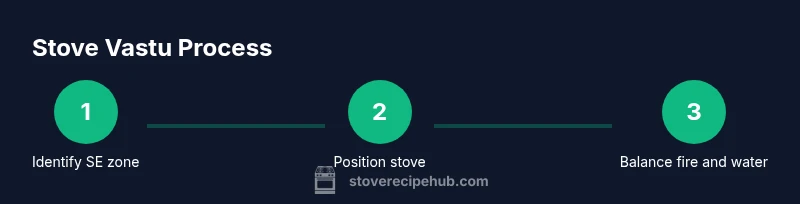
Identify the Agni corner
Use a compass to locate true south and east; position yourself in the kitchen to map the southeast corner as the primary fire zone. Mark this area on the floor with tape to visualize the ideal stove location. If the kitchen layout can’t place the stove here, aim to keep the closest possible alignment to the southeast while preserving safety.
Tip: If the doorway blocks direct placement, create a clear boundary line using tape to reinforce the fire zone visually. - 2
Position the stove in the southeast
Move or rearrange the stove to the southeast corner where feasible. The cook should ideally face east while cooking to align with the natural energy flow. When a move isn’t possible, orient the cooking habit so the main action occurs in the SE zone, using mirrors or reflective backsplashes to reflect energy.
Tip: Do not place the stove under a beam; ensure overhead clearance to avoid energy distortion. - 3
Balance fire with water elements
Keep the sink in the northeast if possible to balance water and fire. Avoid placing the sink directly to the left or directly opposite the stove if space allows. Water fixtures close to the fire can dampen energy balance; plan routes that separate heavy water usage from primary cooking activities.
Tip: If moving the sink isn’t possible, reduce direct sightlines between stove and sink with cabinet configurations. - 4
Organize the kitchen workflow
Create a cooking flow that follows the kitchen triangle: stove, sink, and refrigerators arranged to minimize back-and-forth movement. Ensure there is ample clearance around the stove for safe cooking and easy access to utensils.
Tip: Keep frequently used spices near the stove for quick access and to maintain smooth energy flow. - 5
Use color and materials to support energy
Choose warm colors (reds, oranges, earth tones) in the SE zone and around the stove to reinforce fire energy. Use heat-resistant countertops and avoid heavy metal accents directly above the stove. Lighting should be bright but soft to keep focus without glare.
Tip: Avoid dark, dull paint above the stove; instead, opt for a soft warm glaze that reflects ambient light. - 6
Maintain cleanliness and order
Keep the stove and surrounding area clean and clutter-free. A tidy space supports the positive flow of energy and reduces distractions while cooking. Regularly declutter shelves and countertops to maintain vastu-friendly balance.
Tip: Daily wipe-downs and weekly organization sessions prevent energy stagnation. - 7
Safety and accessibility checks
Ensure proper ventilation, functional smoke detectors, and accessible exits. Aligning with vastu should not compromise safety; install or test exhaust hoods and ensure gas lines and electrical connections meet local codes.
Tip: Schedule routine maintenance and safety inspections to maintain both vastu alignment and code compliance. - 8
Testing and refinement
After adjustments, cook a few simple meals to observe how the space feels. Note any improvements in focus, calm, or efficiency, and tweak layouts as needed. Small refinements can yield noticeable benefits over time.
Tip: Keep a simple journal of what feels easier or more balanced after changes. - 9
Long-term maintenance plan
Create a quarterly review of kitchen layout, especially stove placement, ventilation, and storage. Reassess if you undergo renovations or add appliances; vastu alignment should adapt with changes while preserving safety.
Tip: Document measurements and positions to simplify future updates.
Common Questions
What is the ideal kitchen stove direction according to vastu?
The traditional guidance places the stove in the southeast corner (the Agni kon) with the cook facing east. If relocation isn’t possible, aim to approximate this alignment and support energy flow with thoughtful layout and ventilation.
In vastu, the ideal direction is the stove in the southeast with cooking facing east. If you can’t move the stove, make small, safe adjustments to approximate this setup.
Can I adjust if my kitchen cannot move the stove?
Yes. You can optimize by ensuring the SE zone is the primary fire area, improving ventilation, and aligning the cook’s posture toward east. Use reflective surfaces or cabinet arrangements to preserve energy flow.
If moving isn’t possible, center the fire energy in the SE zone and have the cook face east whenever feasible.
Does the position of the sink affect vastu in the kitchen?
Yes. Placing the sink in the northeast helps balance water energy with fire. Avoid placing the sink directly opposite or too close to the stove if space allows, to prevent energy clash.
Northeast is preferred for the sink to balance water with fire energy.
What safety considerations matter when applying vastu?
Always prioritize safety: proper ventilation, flame clearance, and secure gas lines and electrical connections. Vastu should complement safe kitchen practices, not override them.
Safety first; ensure ventilation and secure gas/electrical setups while following vastu ideas.
If I have a small kitchen, can vastu still help?
Absolutely. In small kitchens, focus on keeping the SE zone clear for cooking, maintain good airflow, and use color and lighting to reinforce fire energy without overcrowding the space.
Even in small kitchens, you can emphasize the SE zone and use lighting to support energy flow.
Are there colors or materials to support vastu in the kitchen?
Yes. Warm colors in the SE zone, heat-safe materials, and balanced lighting support vastu energy. Avoid heavy, cold colors directly around the stove.
Warm colors near the stove boost energy balance; choose heat-resistant materials.
Watch Video
Top Takeaways
- Place the stove in or near the southeast corner when possible.
- Cook facing east to align with vastu energy and workflow.
- Balance fire with water by situating the sink in the northeast when feasible.
- Maintain cleanliness and clear pathways to support energy flow.
- Adapt vastu principles practically for safety and modern layouts.