Stove Is Burning Orange: Urgent Troubleshooting Guide
Urgent guide to diagnose why your stove flame is orange, the safety risks, and step-by-step troubleshooting for dirty burners, air supply issues, and ignition problems. Learn to restore safe, blue flames and prevent CO risks.


A stove flame that burns orange typically signals incomplete combustion due to insufficient oxygen or a dirty burner, which can produce carbon monoxide and odors. Immediately turn off burners if you smell gas or hear hissing, ventilate the area, and avoid leaning over the flame. Then check gas supply, burner cleanliness, and igniter function.
Understanding orange flames on gas stoves
When a gas stove flame turns orange, it is a warning sign that the air-fuel mix is not ideal. A healthy flame should burn blue with a pale yellow tip, indicating complete combustion. An orange flame points to incomplete combustion, which can release carbon monoxide in enclosed spaces and create a visible, sometimes irritating, odor. The causes can be broad: blocked burner ports, misassembled burner caps, clogged air vents, dirty igniters, or issues with the gas regulator or supply. This isn’t a problem to ignore, especially in small kitchens or if anyone in the home has respiratory issues or nausea after cooking. If you notice orange flames, prioritize safety, improve ventilation, and perform a careful inspection of the burner components. According to Stove Recipe Hub, recurring orange flames often trace back to physical blockages or air supply problems rather than a faulty sensor.
Immediate safety steps if you notice orange flame
Safety first. If you smell gas, hear a hiss, or feel dizzy, evacuate the room and call emergency services or your gas utility from a safe location. Do not operate electrical switches or create sparks. If it seems safe to stay in the kitchen, turn off the affected burner using the control knob, then shut off the main gas valve if you can do so safely. Open windows to ventilate, and keep children and pets away. Do not attempt to relight the burner until a professional inspects the system. Once this initial risk is addressed, you can proceed with a careful, methodical check of the burner components.
Common causes of orange flames and how to verify
- Dirty burner ports or caps: Debris can block gas flow, altering the flame color. Remove the burner cap and clean ports with a soft brush or a wooden toothpick, taking care not to enlarge or damage the ports.
- Incorrect burner cap placement: After cleaning, ensure the cap is seated correctly. A cap that sits crooked or partially off can funnel gas improperly, turning the flame orange.
- Blocked air supply: Air must mix with gas for a blue flame. Check vents and ensure the burner is properly aligned. If the air shutter is adjustable, set it to the correct position per your stove model manual.
- Gas pressure or regulator issues: Low or unstable gas pressure can cause orange flames. If you suspect pressure problems, do not force the flame higher or use other appliances on the same line. Call your gas provider or a licensed technician to test the line.
- Build-up from cleaners or spills: Residues can affect combustion. Wipe the area around the burners after cooking and avoid spraying cleaners directly into ports.
Diagnostic flow you can follow at home
This section guides you through a safe at-home diagnosis without professional tools. Start with the simplest checks and escalate only as needed. If at any point you detect a gas smell, persistent odor, or you cannot safely perform a step, exit the kitchen and contact a licensed professional immediately.
Step-by-step overview of fixes for the most common causes
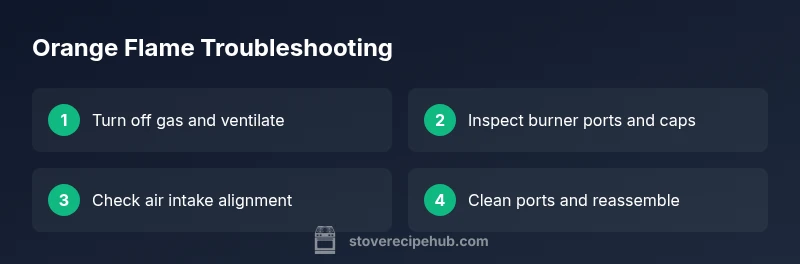
Begin with the easiest fixes. Clean burner ports and caps, reassemble them properly, and test the flame. If the flame remains orange after cleaning, verify that the air intake is unobstructed and the cap is correctly positioned. Should issues persist, inspect the gas supply line and regulator for abnormal pressure. Only proceed to more involved checks if you’re comfortable and safe doing so; otherwise, call a pro.
Prevention: maintenance tips to keep flames blue
To prevent orange flames, establish a light maintenance routine: clean burners monthly, inspect igniters for soot or residue, and keep the burner area free of food debris. Store cleaning products away from your cooking area and avoid spraying cleaners into ports. Test the flame color after each cleaning. Regular professional inspections are recommended for gas connections and regulators, especially if you notice repeat issues.
When to call a professional
If you cannot identify the cause, you smell gas, or the flame stays orange after cleaning and reassembling, stop and call a licensed technician or your gas utility. Do not rely on DIY fixes for gas pressure or regulator issues. A pro can safely test for leaks, verify line pressure, and confirm components are within spec. Safety is the priority, so escalate promptly when in doubt.
Steps
Estimated time: 30-60 minutes
- 1
Ensure safety and cool the burner
Turn off the affected burner and, if safe, the main gas valve. Allow the burner to cool completely before handling any parts.
Tip: If you suspect a leak, leave the area and call for help rather than trying to tighten fittings. - 2
Remove and inspect the burner cap and ports
Lift off the burner cap and grates. Inspect for debris and corrosion. Clean ports with a soft brush; avoid using metal tools that could enlarge or damage the holes.
Tip: Keep a small container nearby to collect debris so it doesn’t fall back into the burner assembly. - 3
Clean and reassemble
Rinse or wipe components gently, then reassemble in the correct orientation. Ensure there are no gaps and that the cap sits firmly in place.
Tip: Double-check the alignment against your stove’s diagram or manual. - 4
Test the flame color
Light the burner and observe the flame color. A healthy blue flame should appear with a pale yellow tip. If it remains orange, proceed to check air intake.
Tip: Do this in a well-ventilated area to monitor any residual odor. - 5
Assess gas supply and call a pro if needed
If cleaning and realignment do not restore a blue flame, or if you smell gas, shut off all gas and call your gas provider or a licensed technician for a thorough inspection.
Tip: Never attempt to modify gas lines or regulators yourself.
Diagnosis: Orange flame on stove burner
Possible Causes
- highDirty burner ports or misaligned burner caps
- mediumBlocked air intake or improper air mix
- lowGas pressure or regulator issue
Fixes
- easyClean burner ports and ensure caps are seated correctly
- easyCheck air vents/shutters and reseat caps to restore proper air mix
- mediumTest gas supply and regulator with a professional if orange flame persists
- easyIf in doubt or if you smell gas, evacuate and call a licensed professional immediately
Common Questions
What causes orange flames on a stove?
Orange flames typically indicate incomplete combustion due to restricted air, dirty burner ports, misaligned caps, or issues with gas pressure. Cleaning and proper cap placement often resolve the issue, but persistent orange flames may require professional gas service.
Orange flames are usually due to incomplete combustion caused by air or burner issues. Cleaning and correct cap placement often fix it, but call a pro if it persists.
Is an orange flame dangerous?
Yes, orange flames can indicate incomplete combustion and potential carbon monoxide production in enclosed spaces. Ventilate and avoid using the burner until you fix the issue or have it inspected.
Yes, it's potentially dangerous due to carbon monoxide risk. Ventilate and seek inspection if needed.
Can I fix orange flames myself?
Some fixes, like cleaning burner ports and reseating caps, are safe for a confident homeowner. If the flame remains orange or you suspect gas pressure issues, stop and contact a licensed technician.
You can try safe cleaning, but stop if the flame stays orange or you suspect gas pressure issues.
When should I call a professional?
Call a professional if cleaning and reseating caps don’t restore a blue flame, if you detect a gas odor, or if you’re unsure about gas pressure or regulator conditions.
Call a professional if the flame stays orange after cleaning or you smell gas.
Can a dirty stove cause CO poisoning?
Indirectly. Incomplete combustion from a dirty burner can produce carbon monoxide in enclosed spaces. A functioning CO detector and proper venting reduce risk.
Dirty burners can contribute to carbon monoxide risk if combustion is incomplete. Use a CO detector.
What color should the stove flame be?
A proper gas stove flame is blue with a pale yellow tip. Any persistent orange flame warrants inspection and potential maintenance.
Blue with a pale yellow tip is normal; orange means it needs checking.
Watch Video
Top Takeaways
- Blue flame indicates proper combustion
- Shut off gas and ventilate if orange flame appears
- Clean ports and re-seat burner caps regularly
- Call a professional for persistent orange flames or gas smells