What to Do If Stove Flame Is Orange: A Practical Troubleshooting Guide
Urgent, step-by-step guide to diagnose and fix an orange stove flame. Learn common causes, safe checks, and when to contact a professional for gas appliances safely at home


An orange flame usually means incomplete combustion or a contamination on the burner. For safety, turn off the burner, unplug appliances if accessible, and ventilate the area. Do not ignore a persistent orange flame. Start with simple checks: verify burner ports are clear, ensure the control knob is fully on, and check for gas smells. If the flame stays orange, stop using the stove and seek professional help.
What orange flame on a gas stove indicates
If you’re wondering what to do if stove flame is orange, start with safety and a quick diagnosis. The color of a stove flame is a useful indicator of how well the fuel is burning. A blue flame with a pale inner cone signals proper combustion, while orange or yellow suggests incomplete combustion or contamination. According to Stove Recipe Hub, such flames can point to buildup in burner ports, misalignment of the air intake, or more serious gas-supply issues. In homes with gas appliances, promptly addressing orange flames reduces risk of carbon monoxide and potential gas leaks. This section explains why color matters and what to check first, so you can act quickly and safely without risking harm to people or property.
What to do next depends on whether you smell gas, hear hissing, or notice persistent orange flames after a quick cleaning attempt. Stay calm, prioritize safety, and work through the steps methodically. The goal is to restore a clean blue flame or determine if professional service is required.
Quick safety checks and initial steps
This block walks you through immediate safety checks that you can perform before taking the burner apart. If you detect a gas smell, evacuate and call the gas emergency line right away. If the area is safe, turn off the burner and any nearby knobs, open a window or door for ventilation, and do not spark or ignite anything else in the room. Do not attempt to fix gas leaks or dabble with the regulator unless you are a trained professional. Consider shutting off the gas valve at the appliance if you can do so safely. These steps reduce exposure to potential hazards while you investigate.
Diagnostic checklist: dirty burners and clogged ports
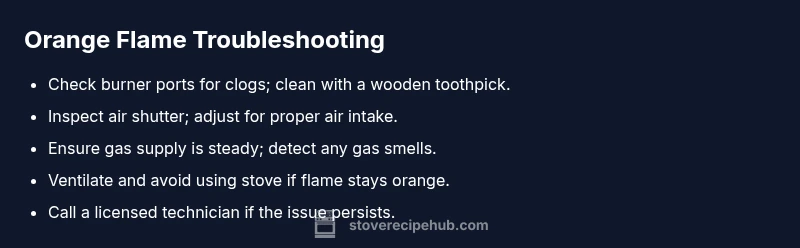
Clogs in burner ports are a common cause of orange flames. Turn off the burner, remove the grate and cap, and inspect the ports for debris. Use a wooden toothpick or a soft brush to clear obstructions; avoid metal objects that could damage the ports. After cleaning, reassemble the burner and relight. If the flame turns blue, the issue was buildup. If it remains orange, proceed to check air flow and gas supply. Remember to reconnect everything securely before testing.
Air supply and misadjusted venturi: common but fixable
An improperly balanced air-to-fuel ratio can cause orange flames. Check the air shutter or venturi (the airway that lets air mix with gas). If your model has adjustable air intake, ensure it is aligned to provide adequate air for complete combustion. A partially closed air shutter can starve the flame of oxygen, turning it orange. Follow the manufacturer’s guidance to adjust in small increments and test the flame color after each adjustment. If you’re unsure how to adjust safely, skip to professional help.
Gas supply, regulator issues, and leaks: when to pause and call a pro
Gas supply problems or a faulty regulator can produce persistent orange flames. If you notice a gas smell, hissing, or any signs of a leak, immediately shut off the gas supply and evacuate. Do not attempt repairs yourself if you suspect a leak. Contact your local gas utility or a licensed technician for a thorough inspection. If the flame remains orange after all checks, professional intervention is essential to ensure your safety and proper appliance operation.
How to safely clean burner ports and grills
When cleaning, ensure the stove is off and cool. Remove the burner cap and skirt, then use a non-metallic brush or a wooden pick to clear clogged ports. Do not force debris through ports or use metal tools that could scratch or deform the burner. After cleaning, reassemble and ignite gently to observe the flame color. If you see blue with a light inner cone, you’ve likely resolved the clog. If not, proceed to the next diagnostic steps.
Adjusting air shutter: tuning the flame color
Some stoves require precise air shutter adjustments to achieve the correct flame color. Refer to your user manual for the correct setting, then make small adjustments while observing the flame. A blue flame with a pale blue inner core is ideal. If you can’t get the flame blue after careful adjustment, or if you’re uncomfortable making adjustments, seek professional service. Air shutter tuning should be done with the gas supply off and the area well-ventilated.
When to call a professional and maintenance planning
If orange flames persist after all basic maintenance, it’s time to involve a licensed technician. A pro can safely assess gas pressure, regulator function, and venturi alignment. Establish a routine maintenance plan: clean burners after heavy use, inspect ignition systems, and schedule an annual professional check for gas appliances. Regular maintenance helps prevent orange flames and ensures your stove operates safely.
Safety reminder: monitor for changes and stay proactive
Keep a safety mindset: monitor flame color, odor, and heat distribution. A blue flame should be steady and even; any orange tint or irregular flame indicates a problem. Use smoke and CO detectors in the kitchen area and ensure proper ventilation during cooking. Training yourself to recognize early signs helps you act quickly to protect your household.
Steps
Estimated time: 60-90 minutes
- 1
Ensure safety and prep
Turn off the burner and allow the stove to cool. Open nearby windows for ventilation and avoid creating any sparks. Confirm there is no gas odor before proceeding.
Tip: Always prioritize safety; if you smell gas, evacuate immediately. - 2
Remove burner components
Carefully lift off the grate and burner cap to access the ports. Do not force parts; consult your manual if something won’t budge.
Tip: Take a photo before disassembly so you can reassemble correctly. - 3
Inspect and clean ports
Look for lint, food debris, or mineral buildup in the ports. Use a wooden toothpick or soft brush to clear obstructions. Re-check the ports after cleaning.
Tip: Avoid metal tools that could scratch or bend delicate ports. - 4
Check air intake/venturi
Ensure the air shutter or venturi is not blocked and is positioned per the model’s guidance. Make subtle adjustments and observe flame color changes.
Tip: Small adjustments yield noticeable flame color changes; don’t over-tighten settings. - 5
Reassemble and test
Re-seat the burner cap, grate, and other components. Light the burner slowly and observe the flame color and stability.
Tip: Test with a brief, controlled flame to gauge color before heavy use. - 6
Evaluate flame color
A clean blue flame with a pale inner cone is ideal. If orange persists, proceed to professional inspection instead of further DIY tweaks.
Tip: Document observable changes to describe to a technician. - 7
Know when to escalate
If there is any gas smell, hissing, or flame changes return after adjustments, stop and call a licensed professional immediately.
Tip: Preserve your safety insurance by not risking large-scale DIY fixes on gas lines.
Diagnosis: Orange flame on gas stove burner
Possible Causes
- highDirty burner ports causing incomplete combustion
- mediumAir intake misalignment or clogged venturi
- lowGas supply pressure or regulator issues
- lowGas leak or hazardous condition
Fixes
- easyClean burner ports with a wooden toothpick and soft brush; re-test flame color
- easyInspect and adjust air shutter/venturi per manual guidelines; retest
- easyShut off gas supply and evacuate if you smell gas; call emergency or utility
- mediumIf orange flame persists after cleaning and air adjustment, contact a licensed technician
Common Questions
Why is my stove flame orange even after cleaning?
An orange flame after cleaning could mean there are air intake issues or gas supply problems beyond surface debris. If cleaning doesn’t help, inspect air flow and consider consulting a professional.
An orange flame after cleaning can mean air flow or gas supply problems; if it stays orange, consider professional help.
Is an orange flame dangerous?
Yes. An orange flame can indicate incomplete combustion and potential carbon monoxide risk. Ventilate the area and seek evaluation from a professional if it persists.
Yes. It can be a warning sign of hazardous combustion; get the stove checked.
What should I do first if I smell gas?
Leave the area immediately and call your gas utility or emergency services. Do not operate switches or use open flames.
If you smell gas, leave now and call for help; do not use any flames.
Can I fix orange flames myself?
You can perform simple cleaning and checks, but for air/gas issues, professional service is recommended.
You can do basic cleaning, but for gas issues, a pro is safer.
How often should I maintain burners?
Clean burners after heavy use and have a yearly professional check to ensure safe operation.
Clean regularly and get a yearly professional check.
What indicates it’s time to call a pro?
If the flame stays orange after cleaning and air adjustments, or you notice gas smells, contact a licensed technician.
If orange flames persist or there’s a gas smell, call a professional.
Watch Video
Top Takeaways
- Blue flame indicates proper combustion; orange signals issues.
- Start with safety checks, then clean and re-check flame color.
- If orange flame persists, call a licensed professional.
- Regular maintenance helps prevent orange flames and CO risks.