Yellow Flame on Gas Stove: Troubleshooting Guide
Urgent troubleshooting guide to diagnose and fix a yellow flame on your gas stove. Learn safety steps, common causes, and a practical step-by-step cleaning flow to restore a blue flame.


The most likely cause of a yellow flame on a gas stove is incomplete combustion from dirty burner ports or a clogged inlet. Quick fix: power off the burner, remove the grate and cap, clean the ports with a soft brush or a pin, and reignite. If the flame remains yellow, shut off gas and call a professional.
Understanding the Significance of a Yellow Flame on a Gas Stove
If you notice a yellow flame on your gas stove, take it seriously. A yellow flame indicates incomplete combustion, which can produce carbon monoxide in poorly vented kitchens. For home cooks who rely on the stove daily, addressing this promptly reduces safety risks and ensures efficient fuel use. According to Stove Recipe Hub, diagnosing the color of the flame is a key safety check for responsible stove-top cooking. In many cases, a simple cleaning or adjustment corrects the flame color, but persistent yellow flames warrant professional evaluation to rule out gas pressure or venting issues. This guide focuses on practical steps you can take right now to restore a healthy blue flame and keep your kitchen safe while cooking on the stove.
Immediate Safety Actions You Should Take
Safety comes first. If you smell gas, hear a hissing sound, or notice a strong gas odor, evacuate and call emergency services. If it is safe to stay, turn off the burner, do not light anything, and ventilate the area by opening windows and doors. Move people and pets away from the stove and avoid using electrical switches that could spark. Do not attempt major repairs or disassemble gas fittings unless you are trained. When in doubt, assume a gas emergency and seek professional help. The Stove Recipe Hub Team emphasizes safety as the highest priority in any yellow flame situation.
Common Causes of Yellow Flames on Gas Stoves
Typical reasons for a yellow flame include clogged burner ports, a soiled burner cap, or an improper air-gas mix caused by dirty components. Other contributors can be a partially blocked vent, mismatched burner type for your gas supply, or a faulty regulator letting too little air mix with gas. Each cause affects flame color and heat delivery differently. The most actionable fixes start with cleaning and inspecting the burner, then moving to more involved checks if cleaning does not restore a blue flame. Remember: never ignore the color cue, as it can indicate safety and efficiency problems in your stove system.
Diagnostic Flow: From Symptom to Solution
Symptom: Yellow flame on gas stove.
Possible causes:
- Burners with clogged ports (high likelihood)
- Dirty burner caps or cap alignment (medium)
- Inadequate air supply due to venting or air shutter issues (medium)
- Gas pressure or regulator problems (low)
Recommended fixes: start with cleaning, then check air flow and venting, then assess gas supply. If the flame color does not improve, escalate to a professional assessment. This flow emphasizes safety and minimizes unnecessary disassembly of gas components.
Step-by-Step Cleaning and Adjustment
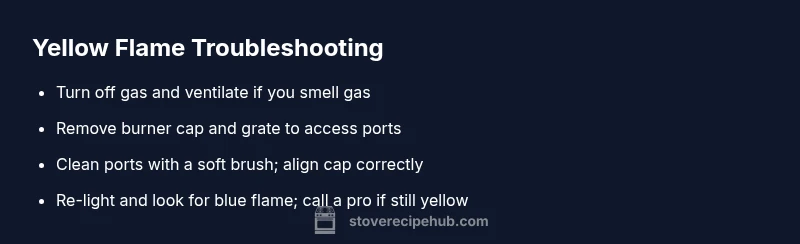
- Prepare and safety-check. Ensure the stove is off, the surface is cool, and the area is well-ventilated. Remove cookware and the grate.
- Remove burner cap and grate. Gently lift the burner cap to access the ports beneath. Do not use force; consult your stove’s manual if you’re unsure.
- Inspect and clean ports. Use a soft brush or a thin, non-metallic tool to clear debris from ports. Avoid sharp metal objects that could bend or enlarge ports.
- Check the cap orientation. Ensure the cap sits flat and aligned with the burner body; misalignment can affect air mixing and flame color.
- Reassemble and test. Replace the burner cap and grate, light the burner, and observe the flame. A healthy flame should be mostly blue with a stable inner cone.
- If yellow persists, shut off gas and call a licensed technician. Do not attempt advanced repairs beyond cleaning.
Prevention Tips to Keep Your Flame Blue
- Clean burners regularly to prevent port clogging and maintain efficient combustion.
- Use appropriate cookware and avoid placing heavy objects on the burner head, which can distort flame patterns.
- Check for gas odor or hissing; if detected, evacuate and seek professional help immediately.
- Schedule annual stove maintenance to verify burners, regulators, and venting remain in good condition.
When to Seek Professional Help
If you have performed cleaning and basic checks but the flame remains yellow, or you notice gas smell or hissing, contact a licensed gas appliance technician immediately. Do not continue to use the stove in this state for cooking. Persistent yellow flames may indicate regulator or gas line issues that require specialized equipment and testing. The Stove Recipe Hub Team recommends prioritizing safety and professional evaluation when DIY fixes don’t restore a blue flame.
Quick Checks After Fixes
After any cleaning or adjustment, verify flame color across all burners. Ensure each burner shows a stable blue inner cone with little to no yellow at the base. If color improves but heat feels weak, re-check the burner alignment and air shutter settings. Maintain a habit of periodic cleaning and inspection to keep your stove performing safely and efficiently.
Steps
Estimated time: 20-40 minutes
- 1
Safety prep and power down
Turn off the burner and ensure the surface is cool. If you smell gas, leave the area immediately and contact emergency services. Prepare your cleaning tools and a well-lit workspace.
Tip: Always prioritize personal safety; if in doubt, step away and call a pro. - 2
Remove burner components
Gently remove the burner cap and grate to access the ports. Take note of how parts sit so you can reassemble correctly.
Tip: Take a quick photo before disassembly to aid reassembly. - 3
Clean ports and surfaces
Use a soft brush or a non-metallic tool to scrub ports and the cap. Avoid metal probes that can damage ports. Wipe away residue.
Tip: Do not use harsh chemicals that could leave residues. - 4
Check cap alignment and reassemble
Place the burner cap back, ensuring proper alignment. Reinstall the grate and ensure nothing is loose.
Tip: A misaligned cap can recreate yellow flames even after cleaning. - 5
Test the flame color
Light the burner and observe. A proper blue flame has a defined inner cone. If yellow persists, proceed to step 6.
Tip: Light with a stable fuel mixture and avoid over-turning gas controls. - 6
Call a professional if needed
If yellow continues after cleaning, do not continue DIY attempts. A licensed technician should inspect gas pressure, regulator, and venting.
Tip: Document any odor or irregularities to discuss with the technician.
Diagnosis: Yellow flame on gas stove
Possible Causes
- highClogged burner ports
- mediumDirty burner cap or misalignment
- mediumRestricted air supply or wrong air/gas mix
- lowGas pressure or regulator issue
Fixes
- easyClean burner ports and check cap alignment
- mediumInspect air intake and venting; clear obstructions
- hardTest gas pressure and regulator with professional equipment
Common Questions
What does a yellow flame really mean on a gas stove?
A yellow flame usually indicates incomplete combustion, which can produce carbon monoxide in poorly vented kitchens. It often results from dirty burner ports or an air-gas mix issue. Cleaning the ports and ensuring proper alignment can resolve many cases.
A yellow flame means incomplete burning. Cleaning the burners and checking for proper air mix can fix it, but if it persists, you should call a professional for safety.
Is a yellow flame dangerous to breathe?
Yes, prolonged incomplete combustion can release carbon monoxide. Ventilate well and avoid using the stove until the flame color returns to blue. Seek professional help if the problem continues.
Yes, it can be dangerous. Ventilate and avoid using the stove until the flame is blue again, and contact a professional if it stays yellow.
How can I safely clean burner ports?
Power off the burner, cool the surface, remove the cap and grate, and gently brush ports with a soft brush. Do not force any debris. Reassemble and test the flame color.
Turn off the stove, cool it, take off the cap, and gently brush the ports. Reassemble and test the flame color.
Should I replace the regulator if flames stay yellow?
If cleaning and adjustments don’t fix the flame, a regulator issue may be present. A licensed technician should test gas pressure and replace faulty components if needed.
If cleaning doesn’t fix it, a pro should test the gas pressure and regulator and replace faulty parts.
Can altitude or gas type affect flame color?
Yes, different gas compositions and altitude can influence flame color, but persistent yellow typically points to burner or air-massage issues rather than natural variation. Seek inspection if uncertain.
Gas composition and altitude can affect flames, but a persistent yellow flame usually means something needs cleaning or adjusting.
Watch Video
Top Takeaways
- Identify yellow flame as a signal for potential safety risk.
- Start with safe cleaning of ports and cap alignment.
- If the flame stays yellow, seek professional inspection promptly.
- Prevent future issues with regular cleaning and maintenance.