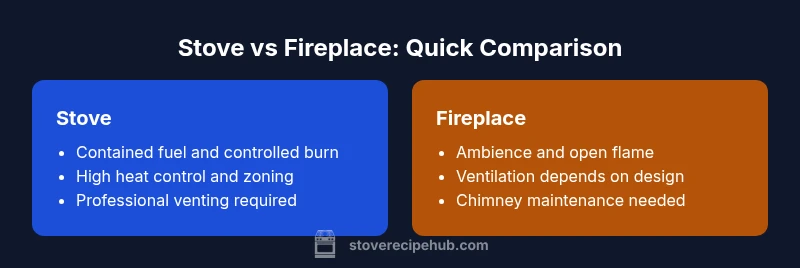
Stove or Fireplace: A Data-Driven Comparison for Home Heating
A data-driven, objective comparison of stove vs fireplace for home heating, covering heat control, installation, safety, maintenance, costs, and environmental impact.


For most homes, a stove offers tighter heat control and higher efficiency, while a fireplace delivers ambience and a traditional hearth. The choice depends on space, venting, and maintenance tolerance. This comparison outlines key differences in fuel types, installation, safety, and long-term costs to help you decide whether a stove or fireplace best suits your needs.
Context and scope: stove or fireplace in modern homes
When considering how to heat a living space, many households weigh a stove or fireplace as central options. The term stove or fireplace covers a range of devices from solid-fuel wood stoves and pellet stoves to gas fireplaces and classic wood-burning hearths. The choice influences not only warmth but also maintenance routines, installation requirements, and the room’s overall ambiance. In this section we set the stage for a data-driven comparison, focusing on practical, real-world factors homeowners encounter—space, ventilation, fuel logistics, and daily usability—so you can decide which path aligns with your values and living situation.
Fuel types and heat profiles
The fuel options and resulting heat profiles are among the most important differentiators when deciding between a stove or fireplace. A stove typically uses an enclosed burn chamber with doors that control airflow, allowing precise heat output and safer operation. Modern stoves often support multiple fuel types, including wood, pellets, gas, or even electricity, with predictable performance. A fireplace, by contrast, may rely on an open hearth or a semi-closed insert and is frequently associated with wood, gas, or electric alternatives wrapped in a traditional mantle. Heat distribution tends to feel different: stoves can offer steady, zoned warmth, while fireplaces provide a broader, more ambient glow that may be slower to adjust.
Installation and space planning
Installation considerations are a practical barrier that many households confront early in the decision process. Stoves usually require a sealed connection to a venting system, clean installation clearances, and sometimes a dedicated chimney liner or venting kit. Fireplaces may demand a larger footprint, a proper hearth, and robust clearance to surrounding walls and furniture, with chimney or direct-venting requirements depending on the fuel choice. The space planning implications matter: a compact living area might favor a freestanding stove with a corner install, whereas a living room designed around a traditional hearth may lean toward a fireplace with integrated seating.
Heat distribution and comfort strategies
Heat distribution is a practical concern for comfort and energy efficiency. Stoves are typically designed to distribute heat locally, so you can zone heat to occupy core living spaces while avoiding unnecessary warmth in unused rooms. This zoning is especially effective in homes with open floor plans or multi-story layouts, where a well-placed stove can act as a heat anchor. Fireplaces, particularly large mantled units or open hearths, radiate heat more broadly but can be less immediate in delivering consistent warmth to distant rooms. Comfort strategies include using fans, heat risers, and properly placed furniture to maximize the perceived warmth from either option.
Efficiency and long-term costs
Efficiency and long-term cost considerations shape both the upfront investment and ongoing operating expenses of stove vs fireplace. Modern stoves burn fuel with a high degree of efficiency, often achieving superior fuel economy and cleaner combustion when properly vented and maintained. Fireplaces can provide enjoyable ambiance but may exhibit more variable efficiency, especially older or poorly vented units. Long-term costs should factor in fuel price volatility, maintenance intervals (creosote cleaning for wood-burning options and periodic chimney servicing), and potential energy savings from better insulation and airtight building envelopes. These factors collectively influence the total cost of ownership for each path.
Safety, codes, and maintenance
Safety is non-negotiable when weighing a stove or fireplace. Both options require appropriate clearances, door seals or screens to prevent sparks, and correct installation to minimize fire risk. Wood-burning fireplaces and stoves produce creosote buildup in chimneys, necessitating periodic chimney sweeps and inspections to prevent chimney fires. Gas and electric variants may reduce some ash and creosote concerns but introduce electrical or gas-safety considerations and carbon monoxide monitoring requirements. Regular maintenance, including gasket checks, seal inspections, and vent system upkeep, is essential to keep either option operating safely over time.
Environmental considerations and emissions
Environmental impact depends on fuel type, combustion efficiency, and emission controls. Pellet stoves and modern gas fireplaces commonly offer cleaner combustion and lower particulate emissions than older wood-burning fireplaces. However, true environmental performance also hinges on local fuel supply, fuel moisture content, burn practices, and how well a system is maintained. If minimizing air pollution and greenhouse gas output is a priority, selecting a high-efficiency appliance with proper venting and operator education is crucial when choosing between a stove or fireplace.
Ambience and daily use: balancing romance with practicality
Ambience is a defining characteristic of fireplaces. The crackle and glow of a traditional wood fire can transform a room’s atmosphere, making it appealing for social evenings and cozy mornings. Stoves, while offering dramatic design options, prioritize practical heat delivery and schedule-friendly operation. For daily use, consider your routine, whether you want targeted heat, rapid warm-up, or a centerpiece that anchors the room’s aesthetic. The best choice blends performance with mood, without compromising safety or comfort.
Integration with other heating systems: how they co-exist
Most homes do not rely on a single heating source. A stove or fireplace often exists alongside a central heating system, providing supplemental warmth or acting as a backup during peak demand. Planning for integration includes evaluating ductwork, radiant floor considerations, and thermostat compatibility. A stove with a dedicated zone can complement a furnace-based system, while a fireplace might serve as a secondary heat source in living areas. Thoughtful system integration can maximize comfort and energy efficiency.
Retrofitting and upgrades: modernization paths
If you already own a home with a wood-burning fireplace or an older stove, retrofitting can enhance safety, efficiency, and control. Upgrades include installing a certified insert, chimney liner, or a contemporary, low-emission stove insert. Gas fuesing options may require venting upgrades or direct-vent installations. For many homeowners, upgrades yield meaningful improvements in heat output, easier maintenance, and improved indoor air quality, making the stove or fireplace choice more flexible in future renovations.
Regional considerations and fuel availability
Regional realities shape the practicality of stove vs fireplace. In rural areas with abundant wood supply, a wood-burning option may be convenient and cost-effective, while urban settings with limited storage space might favor gas or pellet stoves for cleaner, compact operation. Fuel availability, local regulations on emissions, and access to skilled installers influence the decision heavily. Evaluating regional norms helps homeowners align the choice with not only comfort and aesthetics but also practicality and compliance.
Myths vs facts: debunking common beliefs
Several myths persist around stove vs fireplace. A common belief is that all fireplaces are equally inefficient; reality varies widely with design and installation. Another myth is that stoves are inherently expensive to operate; actual costs depend on fuel type, burn rate, and insulation. Understanding the facts—compatibility with your home, venting options, and maintenance needs—helps prevent overestimating or underestimating true performance. Always verify claims with independent data before deciding.
Decision framework: a practical checklist
To decide between a stove or fireplace, use a structured checklist: layout and space constraints, ventilation and chimney realities, desired heat control vs ambiance, maintenance tolerance, and fuel availability. Rate each option against these criteria and consider future needs such as renovations or additions. This framework translates the abstract attributes into actionable choices, guiding you toward a well-supported decision that aligns with both practical and lifestyle goals.
Next steps: planning your installation or upgrade
With a clearer understanding of stove or fireplace trade-offs, the next steps are actionable. Gather local quotes for installation, assess existing chimneys or venting, and choose a model that matches your space and lifestyle. Prioritize safety features, compatibility with your thermostat strategy, and certified maintenance plans. A well-chosen stove or fireplace can deliver reliable warmth, distinctive ambiance, and lasting value for years to come.
Comparison
| Feature | Stove | Fireplace |
|---|---|---|
| Fuel Type | Contained fuel: wood, pellets, gas, or electricity (with controlled burn) | Open or semi-closed cavity for wood, gas, or electric insert |
| Heat Output & Control | Regulated via damper, doors, and controls; can be zoned | Heat depends on draft and airflow; often less controllable |
| Ventilation & Installation | Requires proper venting/chimney and professional installation | Chimney or direct-venting; some ventless gas options exist |
| Maintenance | Regular cleaning of ash, chimney, and stove pipes; periodic service | Chimney cleaning and vent cleaning; creosote risk with wood; gas inserts require less ash |
| Ambience & Aesthetics | Modern designs with clean lines; flame visibility varies | Classic hearth ambiance with visible flames and crackle |
| Cost & Renovation | Upfront cost varies by type; installation may be modular | Higher due to chimney work, hearth construction, and labor |
| Regional Availability | Common in new builds or renovations; adaptable to interior design | Widely available; depends on space and home orientation |
Upsides
- Better heat control and zoning with stoves
- Higher efficiency in modern stoves
- Ambience and traditional charm of a fireplace
- Flexible fuel options (wood, pellets, gas)
- Easier to retrofit in existing spaces with stoves
Downsides
- Chimney maintenance and creosote risk with wood options
- Potentially higher upfront installation complexity for fireplaces
- Heat can be uneven without proper design or fans
- Gas fireplaces may require plumbing/gas line work and code compliance
Stove wins on efficiency and heat control; fireplace wins on ambiance and traditional hearth appeal
Choose a stove if you value precise heat, zoning, and fuel flexibility. Pick a fireplace if you want ambiance and a classic hearth. For many homes, a mixed approach (stove for daily warmth, fireplace for ambiance) offers the best balance.
Common Questions
What is the main difference between a stove and a fireplace?
The main difference is enclosure and heat control: stoves are enclosed, highly controllable heat sources, while fireplaces are open or semi-closed and emphasize ambiance and room aesthetic. Fuel options and venting requirements also diverge.
Stoves are enclosed heat sources with good control; fireplaces are open and ambience-focused with venting needs.
Which option is more energy-efficient for daily use?
Modern stoves generally offer higher efficiency and controllability for daily use, especially pellet or gas models. Fireplaces can be efficient when well-designed, but performance varies more with the design and venting.
Modern stoves tend to be more efficient day-to-day, though a well-made fireplace can also be efficient.
Is a fireplace safer for indoor use than a stove?
Both can be safe when properly installed and maintained. Wood fireplaces require regular chimney cleaning to mitigate creosote buildup; sealed stoves offer controlled burns and safer venting with appropriate clearances.
Safety depends on installation quality and maintenance, not just the device type.
Do I need a professional to install either option?
Yes. Both options typically require professional installation to ensure correct venting, clearances, and compliance with local codes. Gas models may need gas line work and gas-fitting certification.
Professional installation is essential for safety and code compliance.
Can I use both a stove and a fireplace in the same home?
Yes. Many homes use a stove for daily heating and a fireplace for ambience or backup heat. Ensure proper zoning, chimney safety, and thermostat integration to optimize performance.
Many homes blend both—stove for daily heat, fireplace for ambiance.
What maintenance is required for each option?
Stoves require regular ash removal, chimney or flue cleaning, and periodic servicing. Fireplaces need chimney maintenance and ash management, with gas options reducing ash but requiring gas-safety checks.
Maintenance depends on fuel type; regular inspections help prevent problems.
Top Takeaways
- Assess space and venting before choosing
- Prioritize heat control and zoning with stoves
- Value ambiance with fireplaces for living areas
- Consider fuel availability and maintenance burden
- Modern options offer cleaner combustion and flexible installation