Wood Burning Stove vs Pellet Stove: In-Depth Comparison
An analytical comparison of wood burning stoves and pellet stoves, covering fuel, efficiency, maintenance, emissions, safety, and cost to help homeowners decide which heating option fits their home.


When choosing between a wood burning stove and a pellet stove, the key differences are fuel source, ease of use, and maintenance. Wood stoves rely on user-supplied firewood and produce strong radiative heat with manual stoking, while pellet stoves use compressed pellets and automatic feeding for more consistent heat. Both require proper venting and EPA-certified models to minimize emissions.
Fuel Fundamentals and Sourcing
At its core, the choice between a wood burning stove and a pellet stove hinges on fuel logistics. A wood burning stove consumes seasoned hardwood or softwood logs, stored on-site and burned in batches. A pellet stove relies on compact biomass pellets produced from compressed sawdust or other residues. Pellets are fed into the burn pot by an auger, creating a steadier flame and more automated operation. For homeowners, the decision often comes down to access: abundant, free, or low-cost wood versus the convenience of consistent pellet supply. According to Stove Recipe Hub, fuel availability and storage space are the largest practical constraints driving the long-term suitability of each system. Consider your climate and seasonal demand, as peak heating periods will stress fuel logistics differently for each option. In addition, regional incentives or local regulations may influence your choice, especially if you prioritize low emissions and cleaner combustion. This section lays the groundwork for how fuel type shapes performance, maintenance needs, and operating costs over time.
- Firewood requires space, dryness, and seasoning; poor storage leads to inefficiency and smoke.
- Pellets demand a reliable supply chain and a small, clean storage area to prevent moisture absorption.
- Both options benefit from choosing EPA-certified models to minimize emissions and maximize efficiency.
Quick takeaway
- Fuel sourcing is the single biggest ongoing cost factor for either stove, so plan around access, storage, and regional supply reliability.
wordCountDerivation":null},
Heating Performance and Real-World Output
Performance is where wood burning stoves and pellet stoves diverge most noticeably, yet both aim to deliver dependable warmth with predictable operation. Wood stoves typically generate high peak heat with strong radiant output; the temperature can swing based on fuel moisture, airflow, and damper settings. The result is a cozy room with a visible flame and a high-heat feel, especially in larger spaces. Pellet stoves tend to offer smoother, more controllable heat output due to an automated feed mechanism and a built-in fan, which helps distribute warmth evenly. The trade-off is that pellet systems may feel less “visceral” than a wood fire, but they excel in maintaining a steady temperature with less hands-on attention. In practical terms, if you aim for rapid, dramatic warmth on cold days, a wood stove might be preferable; for consistent comfort with less manual fiddling, a pellet stove has the edge. Both options benefit from properly sized units matched to room square footage and insulation quality. When evaluating performance, prioritize heat distribution and controllability over raw flame aesthetics, especially in open-plan living spaces.
- Pellet stoves offer steady heat thanks to automated feed and blower wheels.
- Wood stoves deliver strong radiant heat, useful for fast warming in drafty rooms.
- Correct sizing and room insulation are critical for achieving efficient heat in either system.
wordCountDerivation":null},
Installation and Venting Realities
Venting requirements strongly shape the practicality of each stove option. Wood burning stoves require a dedicated, properly lined chimney to vent combustion byproducts safely. This often involves inspection, sizing, and potential retrofits, which can raise installation costs but yield long-term reliability. Pellet stoves vent through a directly connected exhaust vent to the outside; some installations allow horizontal runs, but most require a vertical vent for optimal draft. Pellet systems usually have sealed combustion chambers, which reduces room air intrusion and improves overall efficiency, but they depend on a steady electrical supply for hopper feeding and combustion control. Electrical power also means that a power outage can interrupt heat unless you have a backup heat plan.
Before deciding, have a professional assess your home’s existing venting and electrical capacity. For older houses with limited attic/ceiling clearance, retrofitting a wood stove can be more invasive, while newer homes may welcome the convenience of pellet venting. A careful assessment of chimney height, venting route, and clearances to combustibles will reveal the true installation cost delta between the two options.
- Wood stoves need a chimney or flue; pellet stoves require a vent pipe and may need wall thimbles and proper exterior termination.
- Pellet stoves typically rely on electricity for feeding and fans, adding to utility considerations.
- Proper professional installation is essential for safety, efficiency, and code compliance.
wordCountDerivation":null},
User Experience: Fire Control and Convenience
User experience is where the two types diverge in daily operation. A wood stove offers ritual and atmosphere: loading logs, watching flames, and adjusting damper settings to modulate heat. It rewards attention with rapid, high heat and a homey ambiance, but it demands time and physical effort. A pellet stove prioritizes convenience with automated feeding, programmable thermostats, and built-in fans that distribute warmth. The trade-off is reliance on electricity and pellets, plus a potential delay in responding to sudden temperature changes if the pellet supply runs low.
From a practical perspective, households that value hands-on engagement and instant heat spikes may prefer a wood stove; households seeking predictable, set-it-and-forget-it warmth with less maintenance may favor a pellet stove. In any case, choose a model with intuitive controls, clear maintenance indicators, and accessible replacement parts.
- Wood stoves reward manual control and flame aesthetics.
- Pellet stoves excel in automation and schedule-based heating.
- Modern models across both categories offer smart features and safety shutoffs to improve usability.
wordCountDerivation":null},
Maintenance, Cleaning, and Lifespan
Maintenance needs are a major ongoing consideration for any heating appliance. Wood stoves require periodic creosote checks and chimney cleaning to prevent buildup and reduce fire risk. The frequency depends on burn rate, fuel quality, and the chimney’s condition. In contrast, pellet stoves require internal cleaning of the burn pot, ash pan, and exhaust venting system, plus hopper maintenance and occasional auger inspection. Pellet stoves generally have fewer creosote concerns since their combustion is cleaner, but their complexity means more moving parts that can wear over time. A well-maintained unit—regular ash removal, timely part replacements, and annual professional service—will outlast many budget models. Both options benefit from using dry, well-seasoned fuel and scheduling annual checkups, especially for venting integrity and gaskets.
- Regular cleaning reduces emissions and improves efficiency.
- Pellet stoves need hopper and auger maintenance alongside vent inspections.
- The lifespan of either stove is shaped by build quality, usage patterns, and how proactively you service it.
wordCountDerivation":null},
Emissions, Indoor Air Quality, and Certification
Emissions and air quality are central to any heating appliance decision. EPA-certified wood stoves meet stricter emission standards, reducing particulate matter with advanced burn technologies and secondary combustion. Pellet stoves also emphasize clean burning, often achieving very low emissions when operated with dry fuel and proper maintenance. Regardless of type, combustion quality increases with proper fuel moisture content, correct installation clearances, and regular service. Indoor air quality is further enhanced when the stove is properly vented to the outdoors and a sealed combustion process is maintained. If minimizing indoor pollutants is a priority, favor models with certified efficiency and low particulate emission ratings, and ensure you follow manufacturer guidelines for routine maintenance.
- Emissions can be significantly influenced by fuel moisture and installation quality.
- Certification programs exist to guide buyers toward cleaner, safer options.
- Proper operation and venting are essential for achieving intended environmental benefits.
wordCountDerivation":null},
Reliability During Power Outages
Power availability often tilts the decision toward wood vs pellet, because pellet stoves typically require electricity for the auger, fans, and control electronics. In a prolonged outage, a well-fed wood stove can continue to emit heat using natural draft, assuming the flue remains clear and the room is adequately insulated. Some modern pellet models include battery backups or manual modes, but such features add cost and complexity. If you live in an area prone to outages, a wood-burning stove may provide more reliable heat during long winter events, while a pellet stove can offer better daytime comfort when power is reliably available.
- Wood stoves generally perform without electricity, in limited fashion, during outages.
- Pellet stoves rely on electricity and may require a backup plan for prolonged outages.
- For critical spaces, consider a dual-heat strategy or a backup heat source.
wordCountDerivation":null},
Environmental and Seasonal Considerations
Sustainability considerations extend beyond immediate fuel costs. Wood is a renewable resource when harvested responsibly, but the carbon impact hinges on harvest methods and processing. Pellet fuel is also biomass-based and often sourced from wood industry residues, which can improve overall efficiency of the supply chain but introduces dependency on pellet production cycles and truck transport. In winter, pellet stoves can be a good fit for homes needing consistent daily warmth with moderate emissions; wood stoves shine in scenarios where high heat is needed quickly and fuel access is reliable. If your climate requires long, continuous heating, evaluate the relative carbon footprint of your fuel supply, waste streams, and possible incentives for cleaner energy use.
- Consider fuel lifecycle and local supply chains when evaluating environmental impact.
- Pellet stoves can leverage centralized production waste streams for cleaner energy, while wood stoves vary by wood type and moisture.
- Seasonal demand should guide efficiency optimization and fuel planning.
wordCountDerivation":null},
Safety, Clearances, and Child/Pet Considerations
Safety is non-negotiable with any heating appliance. Both wood and pellet stoves require appropriate clearances from walls and furnishings, a compliant hearth, and a properly installed chimney or vent. Glass on modern pellet stoves can get extremely hot, and doors must be closed during operation to prevent burns. Wood stoves have hot metal surfaces and potential sparks, so a sturdy hearth pad and screen may be necessary in homes with children or pets. Use of smoke and carbon monoxide detectors across living spaces is essential, along with routine maintenance and professional inspections. Investing in safety features, such as automatic shutoffs and thermal sensors, enhances resilience against accidental exposure to heat, sparks, or poorly vented exhaust.
- Child-safe guards and clearances reduce risk in household settings.
- Regular vent and seal inspections help prevent leaks and fires.
- Always operate with appropriate detectors and a clear maintenance schedule.
wordCountDerivation":null},
Cost of Ownership: Upfront and Long-Term
Cost considerations span upfront purchase price, installation, annual operating expenses, and maintenance. Wood stoves may have a lower initial price tag, but chimney installation and lining can increase upfront costs. Pellet stoves often come with a higher initial price due to integrated electronics, auger feed systems, and fans, yet they can offer more predictable annual fuel costs and less intensive daily maintenance. Ongoing costs depend on fuel prices, efficiency ratings, and usage patterns. When evaluating total cost of ownership, include installation complexity, fuel delivery logistics, maintenance plans, and potential software updates for advanced models. A systematic comparison of projected yearly costs will reveal long-term value more clearly than sticker price alone.
- Upfront costs vary widely by model and required venting work.
- Fuel costs depend on local markets and heat usage patterns.
- Annual maintenance and efficiency upgrades influence long-term value.
wordCountDerivation":null},
Space, Design, and Aesthetics Impact
Beyond heat, the visual and spatial footprint matters. Wood stoves deliver dramatic flame visuals that can anchor a living space and become a design feature, but require space for proper clearance and a substantial hearth. Pellet stoves tend to have a sleeker footprint with glass fronts and modular venting options, which can suit modern interiors and tighter rooms. When selecting a unit, consider not only heat output but also the stylistic integration with your home, such as the stove’s color, finish, and how it complements other heating systems and furnishings.
- Aesthetics influence user satisfaction and perceived warmth.
- Footprint, venting, and installation space should align with room layout and traffic flow.
- Consider future reconfigurations or changes in living space as you plan.
wordCountDerivation":null},
Decision-Making Framework: When to Choose Wood vs Pellet
Creating a practical decision framework helps translate the above considerations into a clear choice. Start with fuel access and storage: if you have easy access to dry firewood and a functional chimney, a wood burning stove could provide robust, immediate heat and a traditional flame experience. If you value consistent temperature control, minimal daily maintenance, and a cleaner burn with fewer emissions, a pellet stove is often the better option. Consider your electrical reliability, space, and willingness to manage pellets and hopper refills. Finally, assess local incentives or regulations related to emissions, wood burning restrictions, and energy efficiency programs. A balanced decision will prioritize safety, reliability, and long-term comfort, while aligning with your home’s design and energy goals.
Practical checklist
- Confirm venting paths and clearance requirements with a pro.
- Compare EPA-certified models for both types.
- Assess storage needs for wood or pellets and seasonal demand.
- Plan for annual maintenance and possible service contracts.
- Evaluate the impact on indoor air quality and CO monitoring in your home.
wordCountDerivation":null}],
comparisonTable":{"items":["Wood-burning stove","Pellet stove"],"rows":[{"feature":"Fuel source","values":["Wood logs","Compressed wood pellets"]},{"feature":"Ease of use","values":["Manual fueling and tending","Automated feeding with programmable controls"]},{"feature":"Maintenance","values":["Chimney cleaning and creosote checks","Ash pan and hopper maintenance; vent cleaning"]},{"feature":"Heating efficiency","values":["High peak heat, variable distribution","Steady, even heat with fan-assisted distribution"]},{"feature":"Installation","values":["Chimney or flue required","Direct venting to outside; electrical connection often needed"]},{"feature":"Best for","values":["Traditional ambiance and rapid heat bursts","Consistent heat with minimal manual effort"]}]} ,
prosCons":{"pros":["Strong heat output and traditional ambiance with wood","Consistent heat and ease of use with pellets","EPA-certified options available for cleaner combustion","Flexible installation options with modern designs"],"cons":["Requires regular chimney maintenance for wood","Depends on electricity for reliable pellet operation","Pellets may have higher ongoing fuel costs in some regions"]},
verdictBox":{"verdict":"Pellet stoves are typically better for consistent, low-maintenance heating in modern homes, while wood stoves excel when you value ambiance and rapid, high heat with access to dry wood.","confidence":"high","summary":"Choose a pellet stove if you want steady heat, fewer daily chores, and cleaner operation with modern controls. Pick a wood stove if you have reliable wood access, value flame aesthetics, and don’t mind the ongoing chimney maintenance. The right choice hinges on fuel logistics, power availability, and long-term cost considerations."}
keyTakeaways":["Assess fuel access and storage for wood vs. pellets","Prioritize safety, venting, and EPA certifications","Weigh the impact of power outages on operation","Plan for annual maintenance and professional inspections"],
faqSection":{"items":[{"question":"Which is cheaper to operate: a wood burning stove or a pellet stove?","questionShort":"Operating cost",“answer”:“Operating costs depend on local fuel prices, efficiency, and usage. Pellet stoves often offer more predictable annual fuel costs due to automated feeding, while wood can be cheaper if you have inexpensive, dry wood and low installation costs. A precise estimate requires modeling your seasonal heat load and fuel prices over a year.”,
voiceAnswer":"Pellet stoves usually cost less to run day-to-day because of automated feeding, but fuel prices vary. If you have cheap wood and a simple installation, wood may win overall."
priority":"high"},{"question":"Do pellet stoves require electricity to operate?","questionShort":"Electricity need",“answer”:“Yes. Pellet stoves rely on electricity for the auger feed, blower, and control systems. A power outage can stop heat unless you have a backup heat source. Always plan for outages and consider a unit with a battery backup if available.”,
voiceAnswer":"Yes, pellet stoves need electricity for feeding and fans. A prolonged outage could affect heating, so plan accordingly.","priority":"high"},{"question":"Can I install a wood stove or pellet stove myself?","questionShort":"DIY installation","answer":“Installation is strongly regulated. Both require proper venting, clearances, and sometimes building permits. A professional installation ensures code compliance and safety. Do not attempt to install a stove without professional guidance.”,
voiceAnswer":"No—professional installation is recommended to ensure safety and code compliance.","priority":"medium"},{"question":"Are pellet stoves more eco-friendly than wood stoves?","questionShort":"Eco-friendly","answer":“Both can be eco-friendly when properly installed and operated. Pellet stoves often burn more cleanly due to controlled combustion, while properly installed EPA-certified wood stoves reduce emissions significantly. Local fuel quality and moisture content also influence environmental impact.”,
voiceAnswer":"Pellet stoves can be cleaner with proper maintenance, but well-installed wood stoves with certified emissions can be very eco-friendly too.","priority":"medium"},{"question":"What maintenance is required annually for each type?","questionShort":"Annual maintenance","answer":“Wood stoves require chimney inspection, creosote removal, and flue checks. Pellet stoves need hopper cleaning, burn pot and ash pan maintenance, vent inspection, and occasional auger servicing. Scheduling professional service annually is advisable for both.”,
voiceAnswer":"Annual chimney and vent checks for wood stoves; hopper and burn pot cleaning plus vent checks for pellet stoves.","priority":"medium"},{"question":"Which is safer for homes with children and pets?","questionShort":"Safety with kids/pets","answer":“Both require strict safety clearances and maintenance. Wood stoves have hot surfaces and embers; pellet stoves have glass doors and moving parts. With proper barriers, monitoring, and detectors, both can be safe options.”,
voiceAnswer":"With proper setup and supervision, both can be safe, but wood stoves often require stricter physical barriers due to hot surfaces.","priority":"low"},{"question":"How should I decide between heat output and convenience?","questionShort":"Heat vs convenience","answer":“If you need fast, high heat during extreme cold, a wood stove with a large firebox is advantageous. If you want steady temperatures with minimal daily effort, a pellet stove’s automation is preferable. Match your choice to your climate, schedule, and willingness to manage fuel.”,
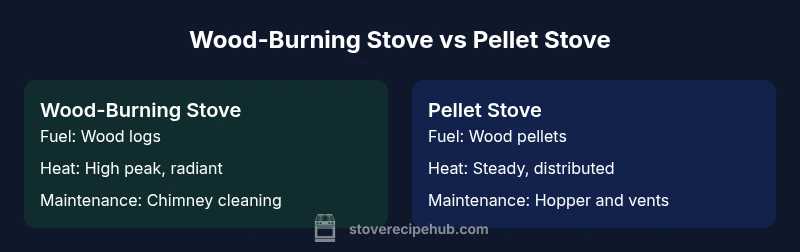
voiceAnswer":"Choose wood for quick heat bursts and ambiance; choose pellet for steady, automated comfort.","priority":"low"}]},"mainTopicQuery":"wood stoves"}},"mediaPipeline":{"heroTask":{"stockQuery":"wood burning stove in cozy living room","overlayTitle":"Stove Comparison","badgeText":"2026 Guide","overlayTheme":"dark"},"infographicTask":{"type":"comparison","htmlContent":"<div class="w-[800px] p-6 bg-slate-900 text-white"><h3 class="text-xl font-bold text-center mb-4">Wood-Burning Stove vs Pellet Stove</h3><div class="grid grid-cols-2 gap-6"><div class="p-4 bg-green-700/20 rounded-xl"><h4 class="text-lg font-semibold">Wood-Burning Stove</h4><ul class="space-y-2"><li>Fuel: Wood logs</li><li>Heat: High peak, radiant</li><li>Maintenance: Chimney cleaning</li><li>Power: Independent of electricity</li></ul></div><div class="p-4 bg-blue-700/20 rounded-xl"><h4 class="text-lg font-semibold">Pellet Stove</h4><ul class="space-y-2"><li>Fuel: Wood pellets</li><li>Heat: Steady, distributed</li><li>Maintenance: Hopper and vents</li><li>Power: Requires electricity</li></ul></div></div></div>","altText":"Infographic comparing wood-burning stove and pellet stove","caption":"Wood-burning stove vs pellet stove: quick visual"}},
Comparison
| Feature | Wood-burning stove | Pellet stove |
|---|---|---|
| Fuel source | Wood logs | Compressed wood pellets |
| Ease of use | Manual fueling and tending | Automated feeding with programmable controls |
| Maintenance | Chimney cleaning and creosote checks | Ash pan and hopper maintenance; vent cleaning |
| Heating efficiency | High peak heat, variable distribution | Steady, even heat with fan-assisted distribution |
| Installation | Chimney or flue required | Direct venting to outside; electrical connection often needed |
| Best for | Traditional ambiance and rapid heat bursts | Consistent heat with minimal manual effort |
Upsides
- Strong heat output and traditional ambiance with wood
- Consistent heat and ease of use with pellets
- EPA-certified options available for cleaner combustion
- Flexible installation options with modern designs
Downsides
- Requires regular chimney maintenance for wood
- Depends on electricity for reliable pellet operation
- Pellets may have higher ongoing fuel costs in some regions
Pellet stoves are typically better for consistent, low-maintenance heating in modern homes, while wood stoves excel when you value ambiance and rapid, high heat with access to dry wood.
Choose a pellet stove if you want steady heat, fewer daily chores, and a cleaner operation with modern controls. Pick a wood stove if you have reliable wood access, value flame aesthetics, and don’t mind ongoing chimney maintenance. The right choice hinges on fuel logistics, power availability, and long-term cost considerations.
Common Questions
Which is cheaper to operate: a wood burning stove or a pellet stove?
Operating costs depend on local fuel prices, efficiency, and usage. Pellet stoves often offer more predictable annual fuel costs due to automated feeding, while wood can be cheaper if you have inexpensive, dry wood and low installation costs. A precise estimate requires modeling your seasonal heat load and fuel prices over a year.
Pellet stoves usually cost less to run daily because of automated feeding, but fuel prices vary. If you have cheap wood and a simple installation, wood may win overall.
Do pellet stoves require electricity to operate?
Yes. Pellet stoves rely on electricity for the auger feed, blower, and control systems. A power outage can interrupt heat unless you have a backup heat source. Always plan for outages and consider a unit with a battery backup if available.
Yes, pellet stoves need electricity for feeding and fans. A prolonged outage could affect heating, so plan accordingly.
Can I install a wood stove or pellet stove myself?
Installation is strongly regulated. Both require proper venting, clearances, and sometimes building permits. A professional installation ensures code compliance and safety. Do not attempt to install a stove without professional guidance.
No—professional installation is recommended to ensure safety and code compliance.
Are pellet stoves more eco-friendly than wood stoves?
Both can be eco-friendly when properly installed and operated. Pellet stoves often burn more cleanly due to controlled combustion, while properly installed EPA-certified wood stoves reduce emissions significantly. Local fuel quality and moisture content also influence environmental impact.
Pellet stoves can be cleaner with proper maintenance, but well-installed wood stoves with certified emissions can be very eco-friendly too.
What maintenance is required annually for each type?
Wood stoves require chimney inspection, creosote removal, and flue checks. Pellet stoves need hopper cleaning, burn pot and ash pan maintenance, vent inspection, and occasional auger servicing. Scheduling professional service annually is advisable for both.
Annual chimney and vent checks for wood stoves; hopper and burn pot cleaning plus vent checks for pellet stoves.
Which is safer for homes with children and pets?
Both require strict safety clearances and maintenance. Wood stoves have hot surfaces and embers; pellet stoves have glass doors and moving parts. With proper barriers, monitoring, and detectors, both can be safe options.
With proper setup and supervision, both can be safe, but wood stoves often require stricter physical barriers due to hot surfaces.
Top Takeaways
- Assess fuel access and storage for wood vs. pellets
- Prioritize safety, venting, and EPA certifications
- Weigh the impact of power outages on operation
- Plan for annual maintenance and professional inspections