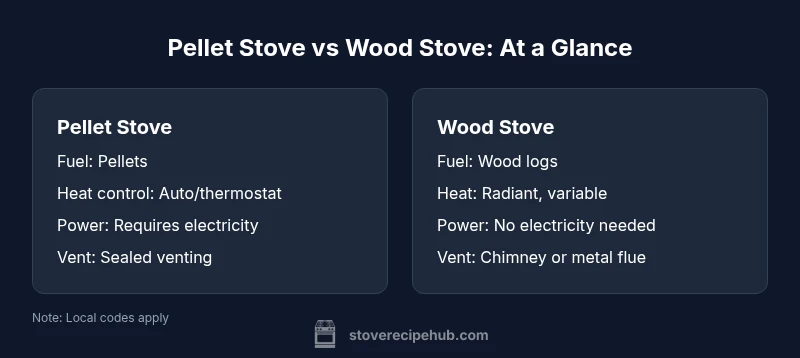
Pellet Stove vs Wood Stove: Which Is Right for Your Home?
Compare pellet stoves and wood stoves on heat delivery, efficiency, costs, and maintenance. Learn which fits your home, fuel sources, and lifestyle with practical guidance from Stove Recipe Hub.


Pellet stove vs wood stove is usually a question of automation, heat stability, and lifestyle. According to Stove Recipe Hub, pellet stoves offer automatic feeding, precise temperature control, and cleaner startup, while wood stoves deliver rugged heat and ambience with lower upfront cost. For many homes, pellet stoves win on convenience, though wood stoves excel when off-grid resilience or timber is readily available.
What Makes Pellet Stoves Distinct
Pellet stoves use compressed pellets and an automatic feed system to deliver steady heat with minimal manual input. The stove is typically powered by electricity to run the auger, hopper, and convection blower, which gives you precise control over temperature. From Stove Recipe Hub, pellet stoves excel in homes where space for firewood is limited and where residents value convenience and consistent warmth. A well-sized pellet stove can maintain comfortable temperatures with less user effort, but you will rely on a steady pellet supply and a steady electrical supply. Modern pellets produce a clean and predictable burn when the unit is properly installed and serviced. In comparison, wood stoves rely on manually loaded fuel and operator-controlled burn rates, which can introduce variability but can deliver strong heat without electrical power during outages.
What Makes Wood Stoves Distinct
Wood stoves burn logs in a traditional firebox, radiating heat directly into the living space. They require manual loading, tending, and regular ash cleanup, but they don’t inherently rely on electricity to produce heat (aside from optional fans). Wood stoves offer rugged performance, the possibility of using locally sourced wood, and ambiance that many homeowners crave. When sized correctly and installed with a compliant chimney, wood stoves can deliver strong, immediate heat and a classic aesthetic that remains highly valued in both rural and urban settings. The flexibility to burn locally sourced fuel can translate into substantial long-term savings in regions with abundant timber. However, performance hinges on proper operation and periodic maintenance to prevent creosote buildup and ensure safe venting.
Pellet Stove vs Wood Stove: Key Differences in Operation
The core differences revolve around fuel handling, heat control, and dependence on power. Pellet stoves are fed automatically from a hopper, with electronic controls that modulate burn rate and maintain a steady room temperature. Wood stoves require manual loading and ongoing heat adjustments via damper settings and fire management. These design differences affect reliability during power outages, heat consistency, and user effort. In terms of emissions, pellet stoves often produce cleaner combustion when properly installed, while wood stoves’ emissions depend on wood quality and burning practices. Maintenance tasks diverge as well: pellet units require regular auger and hopper maintenance plus ash removal, whereas wood stoves focus on chimney inspection, ash removal, and creosote prevention.
Efficiency, Emissions, and Indoor Air Quality
Efficiency in heating terms reflects how well a stove converts fuel into usable warmth. Pellet stoves typically achieve high efficiency in part due to their sealed combustion and controlled burn cycles, which can translate into cleaner emissions with proper venting. Wood stoves rely on radiant heat and secondary combustion features to improve efficiency, but performance is highly sensitive to fire management and wood moisture. Indoor air quality hinges on proper running conditions and venting integrity; both systems benefit from regular cleaning of the stove, chimney, and vent runs, plus timely service checks to prevent creosote buildup and ensure proper draft. In both cases, choosing appliances that are certified for emissions standards and properly installed components is essential for healthy indoor environments.
Cost of Ownership: Purchase, Fuel, and Maintenance
Initial cost varies by design, size, and installation complexity. Pellet stoves typically command higher upfront costs due to automation, electronics, and hopper systems, while wood stoves can be more affordable to purchase but may incur higher ongoing fuel handling costs. Fuel costs depend on local prices: pellets are relatively stable in many regions, whereas firewood pricing can swing with timber supply and seasonality. Maintenance costs also diverge: pellet stoves require regular auger and hopper maintenance and periodic professional servicing, while wood stoves demand chimney inspections, creosote prevention, and more frequent ash cleanup. Over time, total cost of ownership will hinge on fuel availability, energy prices, and the firewood supply chain in your area.
Installation, Venting, and Safety Considerations
Venting requirements for pellet stoves usually involve a dedicated vent system and approved vent runs that connect to a heat exchanger or a chimney-style path. Wood stoves must be installed with proper clearance, a suitable chimney or venting system, and adherence to local codes. Safety considerations include carbon monoxide detectors, regular chimney cleaning, and proper use of hearth protections. Both options benefit from professional installation to ensure airtight seals, correct clearances, and optimal draft. If you live in an apartment or a tight space, a pellet stove with a compact footprint and a venting plan that respects building codes may be ideal; for older homes with a masonry chimney, a wood stove can integrate more naturally.
Real-World Scenarios: Which Is Best for Your Home?
- Urban homes with limited storage space: pellet stoves can offer consistent heat with minimal storage needs and cleaner maintenance.
- Rural homes with easy access to timber: wood stoves might deliver lower ongoing fuel costs and a traditional heating experience.
- Homes prone to power outages: wood stoves provide reliable heat when the electrical grid is down, while pellet stoves rely on electricity for feeding and operation.
- Homes prioritizing ambience and a crackling fire: wood stoves deliver a classic aesthetic, while pellet stoves can mimic consistent warmth with a quieter operation when paired with a modern thermostat.
- New construction or renovations in areas with strict emissions standards: pellet stoves may meet stricter local codes more easily due to engineered combustion and electronic controls.
Sizing, Fuel Supply, and Long-Term Planning
Accurate stove sizing is critical for comfort and efficiency. Start by calculating the heating load of the space, considering insulation, window area, and climate. For pellet stoves, assess pellet supply chains and storage capacity; for wood stoves, plan timber sources and seasonal drying. Consider utility reliability in your region: if you value off-grid performance, wood stoves offer resilience, while pellet stoves deliver steady heat with precise regulation in climate-controlled homes. Finally, plan for maintenance visits and potential upgrades to meet evolving safety and emissions standards over time.
Comparison
| Feature | Pellet stove | Wood stove |
|---|---|---|
| Fuel source | Pellets (compressed wood byproducts) | Logs or cordwood |
| Heat control | Electronic thermostat and auto-feed with controlled burn | Manual loading and burn management |
| Electricity needs | Yes (auger, blower, controls) | No (except for optional fans) |
| Emissions/air quality | Engineered combustion; often cleaner with proper venting | Emissions depend on wood quality and burning practices |
| Maintenance effort | Regular hopper cleaning and periodic servicing | Regular ash removal and chimney maintenance |
| Best for | Convenience-focused homes with reliable pellet supply | Ambience-focused homes with timber access and off-grid needs |
Upsides
- High convenience with automated fuel feeding and heat regulation
- Predictable heat output and easier temperature control
- Lower perceived emissions with certified models and proper venting
- Wood stoves offer off-grid resilience and traditional ambiance
Downsides
- Pellet systems require electricity and can have higher upfront costs
- Wood stoves require more manual work and regular ash/creosote management
- Pellet fuel availability can vary by region and supply chain
- Both require proper sizing, installation, and maintenance to maximize safety
Pellet stove vs wood stove: Pellet stoves are the better choice for convenient, consistent heating; wood stoves are preferable for cost flexibility and traditional ambiance.
The Stove Recipe Hub Team notes that the best option depends on lifestyle, power reliability, and fuel access. For modern homes with steady electricity and a desire for hands-off heat, pellet stoves are typically preferred. For off-grid living, timber availability, or a love of real-fire ambience, wood stoves often win.
Common Questions
Is a pellet stove more expensive to run than a wood stove?
Running costs depend on local fuel prices and electricity rates. Pellet stoves typically offer predictable fuel use with automated controls, which can lower labor costs, while wood stoves rely on manual handling and variable fuel quality. In many cases, pellet stoves provide better control over heat and may reduce waste, but wood can be cheaper where timber is abundant and electricity is costly.
Pellet stoves often save time and reduce labor, but wood can cost less where timber is plentiful and electricity is expensive.
Do pellet stoves require electricity to operate?
Yes. Pellet stoves require electricity to run the hopper auger, feed system, and convection blower. Some models include battery or generator backup options, but electricity is essential for automatic operation and precise heat control.
Yes. They rely on electricity for feeding and fans.
Which is easier to install: pellet stove or wood stove?
Wood stoves often require a masonry chimney or metal flue and can be simpler to install where a pre-existing chimney exists. Pellet stoves need a dedicated vent system and electrical supply, which can complicate installations in older homes or apartments. Hiring a qualified installer helps ensure proper clearance, venting, and overall safety.
Wood stoves are easier if you have a chimney; pellet stoves need venting and power.
Can I burn wood pellets in a traditional wood stove?
No. Wood pellets are designed for pellet stoves with specific fuel feeding and burn characteristics. Using pellets in a traditional wood stove can cause improper combustion and safety hazards. If you want pellet-like convenience, choose a certified pellet stove or a dual-fuel appliance where allowed by code.
Pellets aren’t designed for traditional wood stoves; use a proper pellet stove.
What maintenance tasks are common to both pellet and wood stoves?
Both systems require regular cleaning and inspection. Pellet stoves need hopper and auger maintenance plus ash removal, while wood stoves require chimney cleaning, creosote prevention, and ash disposal. Scheduling professional inspections helps keep ventilation safe and efficient.
Regular cleaning and annual inspections help both stoves stay safe and efficient.
Which stove is better for off-grid homes?
Wood stoves typically perform better off-grid since they do not require electricity to burn. Pellet stoves can still function during power outages if you have a backup power source, but they rely on electricity for the automated feeding and blower. Assess your access to fuel, ventilation, and backup power when choosing.
Wood stoves excel off-grid; pellet stoves need power, unless you have backups.
Top Takeaways
- Define your heating priorities: convenience vs ambiance
- Assess fuel availability and long-term costs in your region
- Check electrical needs for pellet systems before buying
- Plan proper venting and local code compliance
- Size the stove to match room heat and insulation