Wood Stove vs Fireplace: A Practical Heating Comparison
A data-informed comparison of wood stoves and traditional fireplaces, exploring heat delivery, efficiency, maintenance, safety, and costs to guide homeowners in 2026.


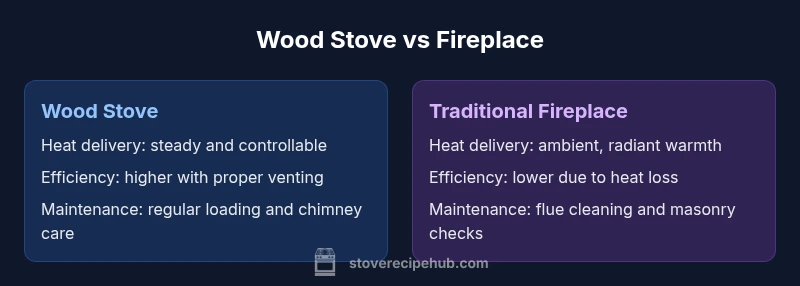
Between a wood stove and a traditional fireplace, the choice hinges on heat control, efficiency, and maintenance. A well installed wood stove typically delivers steadier heat with less heat loss, and safer containment, though it requires regular loading, ash cleaning, and proper venting. If you value reliable warmth and responsive heat, a wood stove often wins in modern homes.
Why a wood stove instead of fireplace
For many homeowners, the question of why a wood stove instead of fireplace often centers on heat efficiency, safety, and ongoing usability. A properly installed wood stove focuses heat where you need it, minimizes room drafts, and curbs heat loss up the chimney when compared with a masonry fireplace. This difference matters in 2026 as homes aim to reduce overall energy use while preserving comfort. According to Stove Recipe Hub, the choice is not merely about atmosphere; it’s about predictable warmth, controllable output, and workload. Homeowners who select a wood stove generally prepare for regular loading and periodic maintenance, but the payoff is a dependable, adjustable heat source that can be used with renewably sourced wood when available. The bottom line is that the right stove can transform a living space into a focused heating zone, with clear advantages in efficiency and usability over an open hearth or outdated fireplace.
Heat Dynamics: How heat moves in a room
Heat movement from a wood stove is a mix of radiant warmth directly from the appliance and convective currents created by a well-designed vent system. In contrast, an open fireplace primarily radiates heat from the fire and loses a significant portion up the chimney when the fire is not burning or when draft conditions pull warm air out of the room. The result is a warmer feeling space near the stove, with more even distribution across the room when proper clearances and room geometry support it. In practical terms, you can zone heat more effectively with a stove, which helps keep living areas comfortable without overheating adjacent rooms.
Efficiency and Heat Output: Stove vs Fireplace
Efficiency is a major differentiator between wood stoves and fireplaces. A certified wood stove, installed with proper clearances and a clean chimney, tends to convert more of the fuel’s energy into usable warmth in the living space. An open fireplace often suffers heat loss through the chimney and requires more energy input to maintain the same level of comfort. The efficiency gap can be substantial in poorly insulated homes or spaces with high heat leakage. Homeowners who prioritize consistent temperatures and quicker warmup will typically experience better performance from a wood stove, especially in shoulder seasons when primary heating needs are moderate but steady comfort matters.
Fuel Handling, Cost and Availability
Fuel handling is a practical consideration for any heating system. Wood stoves require regular loading and ash removal, which translates into ongoing labor but provides a reliable, controllable heat source. Fireplaces rely on wood, gas, or other fuels depending on the design, but the open hearth itself does not guarantee efficient heat use and can incur higher fuel consumption if heat escapes through the chimney. Availability of wood and the cost of maintenance influence total ownership costs. If you have ready access to seasoned wood and a safe storage space, a wood stove can be a cost-effective choice over time, even if upfront installation costs are higher.
Emissions, Indoor Air Quality and Filtration
Emissions and air quality are key considerations when comparing wood stoves to open fireplaces. Modern, EPA-certified wood stoves emit far fewer particulates than older, non-certified units, but they still require good combustion practices and routine chimney maintenance. Fireplaces without efficient flue design can contribute to greater air leakage and creosote buildup, underscoring the value of proper installation and ongoing maintenance. For households with sensitivity concerns or asthma, a well-designed stove with a sealed hearth and good ventilation strategy offers a more controllable indoor air environment.
Installation, Clearances, and Venting
The installation complexity of a wood stove versus a traditional fireplace is a decisive factor. Wood stoves demand a certified venting system, proper clearances to combustibles, and an appropriate hearth or non-combustible base. Fireplaces may sit within an existing masonry structure, but retrofitting them for safer operation can involve masonry work, flue lining, and potential structural considerations. The choice often depends on whether you want to maintain or upgrade an existing fireplace or implement a modern, standardized heating solution with standardized venting and clearances. Professional assessment is essential to ensure compliant installation and optimal performance.
Safety, Maintenance, and Cleaning Routines
Safety is enhanced when using a wood stove due to the controlled firebox, door, and ash management compared with an open hearth. Regular maintenance, including annual chimney inspections and creosote removal, helps prevent chimney fires and deterioration. A fireplace, especially if not sealed and maintained, risks embers and drafts that can affect room safety. Regardless of choice, a routine cleaning schedule, a clear area around the unit, and proper handling of fuel and ashes are vital. Investing in a modern, EPA-certified wood stove and scheduling professional inspections can significantly improve safety and long-term reliability.
Aesthetics, Ambiance, and Practical Use Cases
Many homeowners value the ambience of a traditional fireplace, which creates a focal point in the room and a nostalgic atmosphere. A wood stove offers practical heat distribution with a cleaner appearance and sometimes a more compact footprint, enabling flexible room layouts. The decision often hinges on lifestyle: if you prioritize cozy ambiance with occasional heating, a fireplace may suffice; if you want reliable, zone-heated warmth with precise control and easier maintenance, a wood stove tends to be the better fit. The balance between atmosphere and performance shapes the final choice.
Space, Layout, and Zoning
Spatial considerations for a wood stove include clearance distances, floor protection, and the ability to create heat zones within the home. A masonry fireplace, while a beautiful architectural feature, can create large heat losses and limit your ability to direct warmth. A wood stove’s design supports zoning strategies, letting you heat living areas while minimizing energy use in unoccupied spaces. If layout constraints exist, a compact wood stove with an appropriate flue adapter can fit into more spaces and still deliver efficient warmth.
Environmental Impact and Local Regulations
Environmental impact considerations influence the decision between a wood stove and a fireplace. Modern wood stoves often meet stricter emissions standards than older fireplaces, reducing particulate output when burning efficiently and with well-seasoned wood. Local regulations may also affect which heating option is preferred or permitted, including venting requirements, setback distances, and inspection protocols. Checking local codes and choosing certified appliances helps ensure compliance and improves long-term performance.
Decision Framework: A Quick Checklist
To decide between a wood stove and a fireplace, use a simple framework: 1) Evaluate heat needs across rooms and seasons; 2) Assess venting, installation cost, and space; 3) Consider wood availability, storage, and handling time; 4) Review maintenance expectations and safety safeguards; 5) Factor energy efficiency and emissions. This checklist, paired with professional input, reveals the practical path for your home.
Final Thoughts: Practical Guidance for 2026
In summary, the choice between a wood stove and a fireplace is not only about tradition or aesthetics but about controlled heat, efficiency, and daily usability. For many homeowners, the wood stove offers a reliable, adjustable heat source that aligns with modern energy goals. If ambience and occasional warmth take precedence, a fireplace remains a cherished feature. The optimal decision balances heat management, safety, and lifestyle preferences.
Comparison
| Feature | Wood Stove | Traditional Fireplace | |
|---|---|---|---|
| Heat delivery | Steady, controllable heat with fast response to vent adjustments | Open-front radiant heat with variable warmth and slower response | |
| Efficiency | Higher when properly installed and operated | Lower due to heat loss and drafts | |
| Fuel handling | Requires wood loading and ash disposal | Depends on fuel type; ash and creosote management may be needed | |
| Installation needs | Requires stove, venting, and hearth clearance | Often integrated in existing masonry; may need masonry work | |
| Maintenance | Annual chimney inspection and ongoing cleaning | Periodic chimney cleaning and masonry checks | |
| Safety | Enclosed firebox with doors and shields | Open hearth with embers and higher draft risk | |
| Cost | Medium upfront plus installation | Often lower upfront if existing structure; higher long-term heat loss costs | |
| Aesthetics | Modern, tidy look with potential zoning heat | Traditional ambiance and focal point |
Upsides
- Higher heat efficiency with proper installation
- Precise heat control and zoning capability
- Safer operation with enclosed firebox and chimney connection
- Compatibility with renewable wood sources and seasonal storage
Downsides
- Higher upfront cost and installation effort
- Requires ongoing maintenance and fuel handling
- Ventilating and clearances add planning complexity
- Space and aesthetics may be less flexible in small rooms
Wood stove generally wins for efficiency and controllable warmth; fireplace excels in ambiance and spontaneity
Choose a wood stove if you want reliable, adjustable heat and better energy efficiency. A traditional fireplace remains valuable for atmosphere and occasional warmth, especially where open hearth appeal matters more than strict heat control.
Common Questions
What is the main difference in heat delivery between a wood stove and a fireplace?
Wood stoves provide steady, controllable heat with faster response to vent changes, while fireplaces rely on open flames and can have uneven warmth with more heat loss. In practice, stoves better support zone heating and predictable comfort.
Wood stoves give you steady heat and quick control, unlike open fireplaces which can feel uneven. They’re better for keeping rooms consistently warm.
Are wood stoves safer than open fireplaces?
Yes, when properly installed, wood stoves with a sealed firebox and chimney connection reduce exposure to embers and fuel handling hazards. Open fireplaces pose higher ember risk and greater draft losses if not well maintained.
Enclosed wood stoves are generally safer when installed correctly, thanks to better containment and ventilation.
What about emissions and indoor air quality?
Emissions depend on the appliance and wood quality. EPA-certified stoves emit fewer particulates than older units; fireplaces can contribute more under suboptimal burning conditions. Proper maintenance helps minimize air quality concerns.
EPA-certified stoves are better for air quality, but keep up with maintenance to stay clean.
How do installation costs compare?
Wood stoves generally require a venting system, hearth, and professional installation, adding upfront costs. Fireplaces may leverage existing masonry but retrofitting for efficiency can add costs. Space and code requirements influence the total.
Stoves cost more upfront for installation, fireplaces may be cheaper if existing masonry can be used.
What maintenance differences should I expect?
Wood stoves demand regular ash removal, chimney inspections, and creosote management. Fireplaces require periodic flue cleaning and masonry upkeep. Both benefit from routine checks and professional assessments.
Both need maintenance, but stoves involve regular ash and chimney care.
Which option fits small, open-plan spaces best?
In open-plan spaces, a wood stove can better zone heat and prevent drafts, while a fireplace adds ambiance but may heat less evenly. The choice depends on how you value heat control versus atmosphere.
If you want real heat zones, go with a stove; for atmosphere, a fireplace shines.
Top Takeaways
- Assess heat needs and space before choosing
- Prioritize certified appliances and proper venting
- Factor ongoing maintenance into total costs
- Consider layout for optimal heat distribution
- Check local codes and safety requirements