What Stove Heat to Boil Water: A Practical Guide for Cooks
Learn the exact heat level to boil water on a stove, with practical tips for gas vs electric ranges, pot choice, timing, and essential safety practices.


To boil water efficiently on a stove, start with a high heat to bring the water to a rolling boil, then adjust to maintain a steady boil. Use a properly sized pot, cover it to trap heat, and avoid overfilling. For practical guidance, follow the step-by-step process below and tailor heat to your stove type.
Understanding Boiling on the Stove
What stove heat to boil water is a question of starting energy and heat distribution. According to Stove Recipe Hub, the fastest route to a rolling boil begins with high heat, then a controlled reduction to maintain the vigorous bubbles without wasting energy. The method is simple: select a pot that fits the amount of water, place it on a stable burner, and use a lid to trap heat for a quicker boil. The goal is to reach a rolling boil safely and efficiently, not to scorch the water or waste fuel. This section sets the foundation for practical practice in any kitchen, whether you’re a beginner or a seasoned home cook.
Heat Levels and How They Affect Boiling
Heat level is the primary lever you control to boil water. On most stoves, high heat rapidly heats water toward boiling, medium-high sustains a vigorous boil, and medium keeps a gentle boil ideal for simmering after the boil is reached. For a quick boil, start with high heat, then lower to maintain a steady state once bubbles break the surface. Electric coils often take longer to respond to changes in heat, while gas burners adjust more quickly. The key is to observe the water and adjust before it overflows. With practice, you’ll learn the exact touch needed for your specific stove and cookware.
Gas vs Electric Stoves: Does It Change Boiling Time?
Stove Recipe Hub analysis shows that gas stoves typically heat water faster to a boil due to immediate flame response and efficient heat transfer. Electric stoves may take longer to reach a rolling boil because the heating element responds more slowly to changes in heat. In both cases, using a wide, shallow pot and covering the pot can reduce boiling time. If you’re frequently boiling water, a dedicated electric kettle can be a fast alternative, but for stove-top cooking, understanding your burner type helps you set the right level from the start.
Choosing the Right Pot and Water Volume
The shape and size of your pot influence boiling speed. A wide, shallow pot has more surface area, which helps heat transfer and reduces the time to reach a boil. Avoid overfilling; water expands as it heats, and a crowded pot can cause splashing and boil-overs. For most cooking tasks, start with a small-to-medium volume of water in a properly sized pot. A lid helps trap heat, reducing energy use and shortening the time to boil.
Step-By-Step: From Room Temperature Water to Boiling
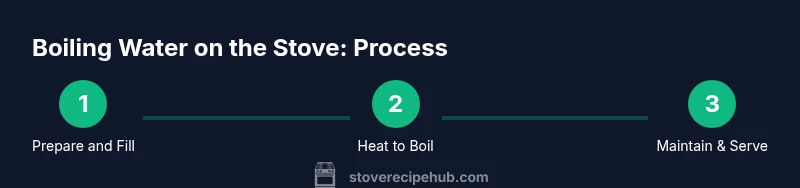
Preparing water for boiling begins with selecting the right vessel and ensuring safety gear is ready. Place the pot on the burner and add cold water to the desired level. Turn the burner to high and wait for the water to begin to form small bubbles; then watch for a rolling boil with large, continuous bubbles. Keep hands away from the steam and use oven mitts when handling the pot. This process, repeated with variations in volume, forms the core of efficient stove-top boiling.
Common Mistakes That Slow Boiling
One common mistake is lifting the lid too early, which releases heat and slows the boil. Filling the pot with too much water also fights against efficient boiling by increasing the energy needed to reach a rolling boil. Salt added before the boil doesn’t dramatically speed up the process and can alter flavor; most cooks wait until water is boiling for salted recipes. Finally, using a pot with a warped bottom or a burner that’s too small for the pot reduces heat transfer.
Timing and Wait Times: How Long to Boil Water
Expect variability in wait times based on stove type, water volume, and pot size. A larger volume or a smaller burner will take longer to reach a rolling boil. Once the boil begins, you can adjust heat to maintain a steady boil for cooking, then turn off the heat when you’re ready to proceed with your recipe. The key is to observe the water and adapt rather than rely on fixed numbers.
Safety and Maintenance While Boiling Water
Boiling water involves hot surfaces, steam, and the potential for overflows. Keep flammables away from the stove and use heat-resistant cookware. Use a timer to prevent overboiling and to avoid wasting energy. After boiling, allow the pot to cool on a safe burner before moving it. Regularly inspect burners and pots for damage and clean up spills promptly to prevent buildup that could affect heat transfer.
Practical Scenarios: Boiling Water for Cooking and Beyond
Boiling water serves many kitchen tasks: cooking pasta, blanching vegetables, making tea, or sanitizing utensils. In each case, boil time and temperature can influence texture and flavor. For pasta, a vigorous rolling boil helps keep noodles separated; for vegetables, you may want a shorter, vigorous boil to preserve nutrients. Adjust heat and pot choice depending on the food you plan to prepare.
Tips for Speeding Boil Without Risk
Pro tips: use a tight-fitting lid to trap heat, start with hot tap water if your plumbing and water quality allow it, and choose a pot with a flat, thick bottom for even heat distribution. Keep a measuring cup handy to gauge water volume and ensure you don’t overfill. Always handle the pot with oven mitts and keep children and pets away from the stovetop.
Authority Sources
To ground these practices in reliable guidance, consult external sources such as FDA safety guidelines and university extension resources for cooking and heat transfer. These references provide general safety considerations and cooking fundamentals to support home cooks in building safe, efficient boiling habits.
Tools & Materials
- Pot with lid (at least 1 liter capacity)(Choose a pot with a flat base for even heat; a wide, shallow pot reduces boiling time.)
- Stove (gas or electric)(Ensure burners are clean and stable to prevent tipping.)
- Water (cold or room temperature)(Use clean water; for best taste, filter if your tap water is heavily hard or chlorinated.)
- Timer or clock(Helpful for tracking boil times and avoiding overboil.)
- Oven mitts or heat-resistant gloves(Protect hands when handling hot pots and lids.)
- Measuring cup (optional)(Useful for precise water quantities.)
- Stirring spoon (long-handled)(Can prevent boil-overs if you’re cooking with added ingredients.)
Steps
Estimated time: 8-15 minutes
- 1
Place the pot on the burner and add water
Set a pot on a stable burner and fill it with the desired amount of water. Using room temperature water ensures even heating. Do not overfill; leave space for expansion as the water heats.
Tip: Use a pot with a thick base to distribute heat evenly. - 2
Turn heat to high to begin heating
Turn the burner to its highest setting to start the heating process. High heat maximizes heat transfer, helping water reach a rolling boil sooner.
Tip: Watch the pot closely and be ready to adjust once boiling begins. - 3
Wait for first bubbles to form
Keep the lid off or on depending on whether you want faster boiling. Small bubbles rising indicate the water is heating toward a boil, not yet there.
Tip: Don’t rush to boiling; let the water approach a rolling state for best texture in cooking. - 4
Achieve a rolling boil and adjust heat
When the water reaches a rolling boil with large bubbles, reduce heat to maintain a steady boil without overflows.
Tip: If you’re cooking pasta, keep the lid off to see bubbles clearly and prevent sticking. - 5
Maintain or pause boiling as needed
For recipes, maintain a consistent boil; for tea or delicate ingredients, a gentler boil or simmer may be appropriate.
Tip: Use a timer to avoid overboiling and ensure consistent results. - 6
Turn off heat and handle safely
Once boiling or cooking is complete, turn off the burner and carefully move the pot if transferring liquids.
Tip: Always use oven mitts and keep away from the steam.
Common Questions
What stove heat is best to boil water?
Use high heat to initiate boiling, then reduce to maintain a steady boil once large bubbles form. This balances speed with control and minimizes scalding risk.
Use high heat to start, then lower to keep a steady boil. That keeps things fast and safe.
Does boiling time differ between gas and electric stoves?
Yes. Gas stoves typically respond faster and may reach a rolling boil sooner, while electric stoves can take longer to heat up and settle into a boil. The overall method remains the same.
Gas stoves usually heat faster, but both types boil water with the same basic method.
Should I use a lid when boiling water?
Yes. A lid traps heat and reduces evaporation, speeding up the boil and conserving energy. Remove the lid if you need to monitor for overflow.
Yes, using a lid speeds up boiling and saves energy, but lift it if you need to watch the boil.
Is it okay to boil water in a nonstick pot?
Boiling water in a nonstick pot is generally safe; ensure the pot is in good condition and used within its heat tolerance to avoid warping or coating damage.
Yes, but use within the pot’s heat limits and inspect for damage.
How can I tell when water has reached a boil?
A rolling boil shows large bubbles breaking the surface continuously. Gentle bubbling is not yet a full boil.
Look for a rolling, steady boil with large bubbles.
Should I add salt before or after boiling?
Salt can slightly raise the boiling point and may slow the boil; add salt after water has boiled if your recipe requires it.
Add salt after the water boils if your recipe calls for it.
Watch Video
Top Takeaways
- Start with high heat to reach a boil quickly.
- Choose the right pot size and cover to speed up boiling.
- Monitor and adjust heat to maintain a steady boil.
- Prioritize safety with lids, mitts, and mindful handling.
- Gas vs electric stoves differ in response time but boiling principles are the same.