Stove vs Electric Kettle: A Practical Water-Boiling Comparison for Home Cooks
A detailed, analytical comparison of stove boiling versus electric kettle use, covering speed, energy efficiency, capacity, safety, cost, and practical kitchen workflow for home cooks.


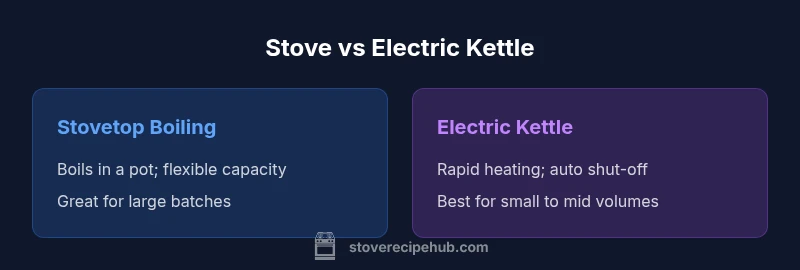
When you need hot water fast for tea, coffee, or cooking, an electric kettle usually wins on speed and convenience, especially for small to medium volumes. A stovetop setup, on the other hand, offers more versatility for larger batches, simmering, and integrating water heating into broader cooking tasks. In the stove vs electric kettle comparison, choose the kettle for speed and automation, and the stove for flexibility and larger quantities.
Defining the contenders
In any stove vs electric kettle comparison, it helps to start with clear definitions. A stove refers to heating water in a pot or kettle placed on a gas or electric burner, often allowing you to boil, simmer, or add ingredients directly into the pot. An electric kettle is a compact appliance with a built-in heating element, designed to bring water to a boil quickly and automatically shut off when the target temperature is reached. For home cooks, the distinction matters not just in speed but in how the water heating step fits into the overall cooking workflow. According to Stove Recipe Hub, recognizing these core mechanics helps manage expectations during busy weeknights and more deliberate weekend meals. Stovetops afford broad pot compatibility and the ability to simmer after boiling, while electric kettles optimize rapid heat delivery and automation for smaller volumes. In everyday kitchens, stove vs electric kettle choices hinge on water volume, desired accuracy, and what comes after the boil.
Speed and efficiency: boiling time differences
Boiling time is the most obvious difference in a stove vs electric kettle comparison. Electric kettles house a compact, purpose-built heating element that heats water rapidly and typically shuts off automatically when the water reaches a boil. This design minimizes wasted heat and reduces the chance of overboiling. A stovetop method depends on a pot, burner, pot material, and the stove’s heat output. Large volumes or thick pots on a high-BTU burner can still boil quickly, but small batches often take longer, especially if the pot is not well insulated or the burner cycles on and off. The Stove Recipe Hub team notes that the perceived speed gap grows with smaller volumes, where a kettle’s efficiency and insulation shine. For large volumes or simmering after boiling, the stovetop can be more practical because you can manage the heat and maintain a gentle boil without transferring water to another vessel.
Energy use and cost implications
Energy efficiency in this comparison depends on how much water you heat and how you heat it. An electric kettle tends to be more energy-efficient for small to mid-sized quantities because the heat is concentrated and well insulated, reducing losses. On the stove, energy use depends on burner type (gas vs electric), pot material, and how aggressively you boil. If you consistently boil 1–2 liters of water, a kettle generally minimizes wasted energy. If you frequently boil large quantities for pasta or stock, a stove can be more cost-effective in practice because you’re using cookware you already own and don’t have to power a separate appliance for every batch. Stove Recipe Hub analysis shows that energy efficiency advantages for kettles are most pronounced with small volumes, while the stove’s efficiency improves as batch size grows and you optimize pot size and heat control.
Practical cooking scenarios: tea, coffee, pasta, and beyond
Your real-world needs often determine the stove vs electric kettle choice. For tea, coffee, and quick reheating, an electric kettle offers speed and convenience. For cooking tasks that require water to be integrated into the process—like boiling pasta, blanching vegetables, or making stock—the stovetop shines. A kettle is excellent for hot water on demand, but it isn’t designed for direct cooking tasks beyond hot water. When you plan a weekend project or batch cooking, the stovetop’s flexibility allows you to heat water to a precise boil, adjust agitation, or add ingredients mid-boil. The best approach is to reserve the kettle for rapid, routine water heating and keep the stovetop for larger batches and cooking workflows that benefit from direct heat management.
Capacity, volume, and batch flexibility
Capacity shapes the practical use of each option. Electric kettles typically range from about 0.8 to 1.8 liters, with most models landing around 1 liter as a practical everyday size. That size is ideal for cups of tea, coffee, or hot water for recipes. Stovetop boiling uses whatever pot you have on hand, which means you can boil significantly more water if needed, provided your burner and pot size permit it. The trade-off is that larger volumes on the stove require more time and energy, and you must manage the pot to prevent boil-overs. If you routinely need 2–3 liters or more, the stovetop route becomes considerably more convenient, especially when you’re preparing multiple components in a single pot than when using a kettle for each batch.
Safety, maintenance, and long-term care
Safety considerations diverge between the two approaches. Electric kettles offer automatic shut-off, boil-dry protection, and usually a cordless design that reduces handling risks. They also require regular descaling in hard-water regions to maintain performance. The stovetop method introduces open flame or hot burner exposure and potential boil-overs if you lose track of time or fail to manage heat. Maintenance involves cleaning kettle interiors and removing mineral buildup as well as keeping pot and burner free from residue. In a mixed kitchen, routine descaling and careful heat management help keep both options safe and reliable over the long term.
Flavor, heat control, and culinary implications
Water heated on a stovetop is often closer to room temperature when you start simmering or cooking, which can influence timing and texture in certain recipes. On the other hand, electric kettles deliver consistent, rapid boils that are ideal for making tea or coffee, where timing and precision impact flavor. If you plan to infuse herbs during boiling or need to control the boil for delicate blanching, the stovetop’s broad heat control allows you to modulate gentleness or intensity. In contrast, kettles excel when the sole goal is getting hot water ready quickly and reliably.
Durability and long-term ownership
Durability depends on build quality and maintenance habits. A high-quality electric kettle can last several years with proper care and regular descaling, while a well-made stovetop setup can endure decades if kept in good condition. The kettle’s heating element and switch mechanism are common wear points, while the stove’s burner heads, grates, and pots also require periodic maintenance. If your kitchen tends to see frequent use of hot water for beverages and quick meals, investing in a reliable kettle pays off in convenience. If your recipe repertoire includes frequent stock making, large-pot boiling, or seasonally large cooking sessions, maintaining a robust stovetop setup pays dividends over time.
Environmental and resource considerations
From an environmental perspective, the kettle’s efficiency for small quantities reduces energy waste, translating to a smaller carbon footprint for typical daily uses. The stove’s environmental impact depends on burner type and how often you boil large volumes. Gas stoves may have different emissions profiles than electric coil or induction burners, especially when used to heat large quantities. In practice, selecting the method that matches your typical volume and cooking pattern helps minimize waste. For many households, a hybrid approach—electric kettle for everyday small boils and stove for bulk cooking—strikes a balance between efficiency and flexibility.
Quick decision guide: when to pick each
- Use an electric kettle if you frequently heat small quantities (1 cup to 1 liter) and value speed and automation. - Choose the stovetop if you regularly boil larger volumes, simmer, or integrate water heating into broader cooking tasks. - Consider your kitchen layout: countertop space for a kettle and stovetop access to large pots. - If you prepare coffee or tea consistently, a kettle is a wise investment; for pasta, stock, or multi-pot meals, the stove wins on versatility. - In spaces with induction stoves, ensure your kettle is compatible or use the appropriate pots on the induction surface. The final decision should reflect your everyday volumes, cooking style, and space constraints.
Optimizing a kitchen workflow: combined strategies
Even a small kitchen can benefit from a mixed approach. Keep an electric kettle handy for rapid hot water tasks such as tea, coffee, and rehydrating dried ingredients. Reserve the stovetop for batches that require more water, longer simmering, or integration with other cooking steps. You can also optimize by boiling water in a larger kettle on the stove for a recipe that uses several liters, then transferring it to smaller vessels for immediate use. Regularly maintain both devices to extend their life: descale the kettle, clean pot and burner grates, and monitor heat control to prevent boil-overs. With a little planning, stove vs electric kettle becomes a complementary decision rather than a constant trade-off.
Authority sources
- Energy.gov – Water heating and efficiency tips: https://www.energy.gov/energysaver/home-appliances/water-heaters
- EPA.gov – Green Homes and energy efficiency: https://www.epa.gov/greenhomes/what-you-need-know
- NIST.gov – Standards and best practices for consumer appliances: https://www.nist.gov
Comparison
| Feature | Stovetop Boiling (Pot on Range) | Electric Kettle |
|---|---|---|
| Speed to Boil | Moderate (depends on pot size and burner) | Very fast (typical) |
| Temperature Control | Limited control; boils then off | Precise presets; some models offer temp settings |
| Energy Efficiency | Depends on burner and pot; potential heat loss | High efficiency for small volumes due to insulation |
| Capacity | Flexible with various pot sizes; ideal for larger batches | Fixed capacity (commonly 0.8–1.8 L) |
| Safety Features | Manual oversight; boil-overs risk | Auto shut-off; boil-dry protection; safer handling |
| Maintenance | Descale pot and burner; clean exterior | Descale interior; rinse and wipe exterior |
| Best For | Cooking tasks and large batches; direct heat control | Quick hot water for beverages; compact spaces |
Upsides
- Electric kettle delivers rapid boiling for small to moderate volumes
- Auto shut-off and boil-dry protection enhance safety and convenience
- Kettle minimizes standby energy loss for quick tasks
- Stovetop uses cookware you already own, enabling large-volume heating
- Flexible integration with cooking workflows on the range
Downsides
- Kettles have limited capacity and require more counter space
- Stovetop boiling involves heat loss and requires supervision to avoid boil-overs
- Descaling may be needed for kettles in hard-water areas
- Kettles can be pricier upfront if you already own a stove for free heat
Electric kettles win for speed and convenience; stoves win for versatility and large batches
Choose a kettle for fast, hands-off boiling of small amounts. Use the stovetop when you need flexibility, larger quantities, or when water is part of a cooking process.
Common Questions
Which heats water faster on average?
In most homes, an electric kettle heats water faster than boiling on a stove due to the kettle’s compact, dedicated heating element and insulation. The exact time varies with volume and pot material on the stove.
Electric kettles usually win on speed, especially for small amounts of water. For larger batches, the stove can catch up depending on pot size and heat source.
Is an electric kettle safer than boiling on the stove?
Electric kettles typically offer auto shut-off and boil-dry protection, reducing spill risk. A stove lacks automatic shut-off, so you must monitor heat to prevent boil-overs and scorching.
Yes, kettles are generally safer for unattended boiling thanks to automatic shut-off.
Boil large water amounts in a kettle?
Kettles are best for smaller to medium volumes. For large batches, the stovetop remains the more practical option because kettles have fixed capacity and may require multiple cycles.
Kettles handle small amounts well; for big batches, use the stove.
Can I boil pasta water in an electric kettle?
Boiling pasta water in a kettle is not ideal because kettles are designed for water boiling, not cooking bulk foods. It’s better to boil pasta on the stove where you control the simmer and add ingredients as needed.
Kettles aren’t the best for pasta; the stove is better for cooking with water.
Induction stove compatibility with kettles?
Most electric kettles work on induction if they’re labeled as compatible. If your kettle isn’t induction-ready, use a plain pot on the induction surface for boiling water.
Check your kettle’s label—induction compatibility varies.
What about energy costs overall?
Energy costs depend on volume and how you use the water. Kettles tend to be more energy-efficient for small amounts, while the stove can be more economical for large quantities when you already own the cookware.
Kettles save energy for small boils; the stove saves energy when heating large amounts with existing cookware.
Top Takeaways
- Electric kettles are fastest for small water amounts
- Stovetops offer better versatility for cooking tasks
- Consider volume to determine the better option
- Auto shut-off reduces kettle mishaps; boil-over risk remains on the stove
- A mixed setup often provides the best workflow