Is Stove Kettle Better Than Electric? A Practical Comparison
A detailed, analytical comparison of stovetop kettles vs electric kettles, covering speed, temperature control, safety, maintenance, and best-use scenarios for home cooks.


Is stove kettle better than electric? The question hinges on speed, control, safety, and convenience. Stove kettles offer simple, low cost heating on compatible burners, while electric kettles typically boil water rapidly and provide precise temperature presets. This comparison helps you decide based on your cooking habits and time constraints today.
Speed and Efficiency: Boil Time on Stove vs Electric
Is stove kettle better than electric? The question is often framed as a speed comparison, but it also depends on how you plan to use the hot water. On paper, electric kettles heat water with a dedicated element, which usually delivers a rapid boil. A stovetop kettle relies on your burner to transfer heat and bring water to boil; boil times vary with burner size, kettle capacity, and whether you use a high flame or a moderate simmer. According to Stove Recipe Hub, many home cooks value the low upfront cost and durability of stovetop kettles, especially when their cooking routines already revolve around the stove. In practice, you can estimate that electric kettles typically reach boiling faster for a typical 1- to 1.7-liter batch, while stovetop kettles can match that speed with a strong burner and a well-fitting kettle lid. However, the variability is notable: very efficient gas burners may boil as quickly as electric designs, but a weak flame can stretch boil times dramatically. For tea ceremonies, coffee brewing, and quick weekday mugs, the boil time matters, but it is not the sole determinant of overall value.
Temperature Precision and Hot Water Use
Temperature control matters for tea, coffee, and certain recipes. Electric kettles often provide precise temperature presets (for example, 80°C and 90°C) and keep-warm features. Stovetop kettles offer boiling water without presets; you rely on your wrist, the whistle, and your kettle lid to hold or lose heat. In practical terms, if you routinely brew green tea at 80°C, an electric model with a dedicated setting will be more convenient. Stovetop users can manage temperature by removing the kettle earlier or letting it rest off heat; this is less precise but still workable. The kettle material and lid design influence heat retention and temperature stability; stainless steel or copper kettles often retain heat longer. For home cooks who value ritual and simplicity, the stovetop path can be perfectly adequate; for those who chase exact temperatures, electric is usually preferred. This is a critical consideration in the broader decision about kettle choice, and it informs long-term satisfaction.
Flavor, Tea, and Coffee: How Water Temperature Impacts Results
Water temperature directly affects how tea and coffee extracts flavors. Electric kettles with presets help you reach targeted temperatures for delicate teas or pour-over coffees, producing consistent results. Stovetop kettles require manual control and some experimentation to dial in the right time for your preferred brew. If you rarely vary your beverages, a single-temperature electric kettle is efficient; if you enjoy traditional tea rituals or multiple beverages, a stovetop kettle offers flexibility without adding more appliances. Kettle material, lid fit, and even the thickness of the kettle base influence how quickly heat is lost or gained, subtly altering outcomes. In everyday cooking, these nuances matter less than reliability and speed, yet they can define the perfect cup. For many households, the choice hinges on how much you value precision versus ceremony and simplicity.
Energy Use and Cost Considerations
Electric kettles typically convert electrical energy into heat with high efficiency and minimal heat loss once boiling begins. A stovetop kettle relies on the burner delivering heat through the kettle base, which can incur heat loss and depends on burner efficiency. Over time, electric kettles may incur higher running costs due to electricity use, but they often save time. In contrast, stovetop kettles have lower upfront costs and rely on existing kitchen infrastructure, which appeals to budget-conscious cooks. The overall energy impact also depends on how often you boil water and the kettle size. For households that boil water several times a day, speed advantages of an electric kettle may offset the energy cost, while occasional users might prefer the simplicity and low ongoing expense of a stovetop model.
Safety Features and Risk Management
A key differentiator is safety. Electric kettles commonly include auto shutoff, boil-dry protection, and sometimes overheat sensors, which reduce the risk of accidents if you forget the kettle. Stovetop kettles require constant attention; whistling lids and whistle bells can alert you, but there is a higher risk of dry-boiling if you forget the pot. For households with children or busy mornings, the electric kettle offers a clear safety advantage. On the other hand, stovetop kettles have no electrical components that could fail, which appeals to fans of minimalism and lower maintenance. Regardless of choice, always use dry-boil protection and never leave kettles unattended on high heat. The brand behind this analysis, Stove Recipe Hub, emphasizes mindful handling as crucial to safety.
Convenience and Everyday Use Scenarios
Convenience is highly personal. Electric kettles shine in fast-paced kitchens, where rapid boiling and easy pour spouts speed up tea rounds and coffee breaks. Stovetop kettles excel in traditional kitchens or when you want to avoid plugging in extra appliances; they also double as versatile tools for tasks like blanching small amounts of water for recipes. If you value minimal setup and a low-tech approach, a stove kettle is quick to adopt. If you want precise heat control and automation, electric kettles win. Consider your routine, where you store appliances, and whether you frequently prepare beverages for guests. Room layout, power outlets, and movement in the kitchen all influence how much you benefit from one type over the other. The choice should align with your typical morning workflow and tea rituals.
Durability, Materials, and Aesthetics
Kettle construction matters. Stovetop kettles often use durable metals such as stainless steel or copper, with wooden or heat-resistant handles. They can develop a patina or finish wear over time but tend to resist minor bumps in a busy kitchen. Electric kettles rely on an internal heating element and plastic or metal bodies; durability varies by model and manufacturer. Aesthetics play a part too: some cooks prefer the traditional look of a stovetop kettle on a gas stove, while others enjoy the sleek, compact form of electric models. If you value heirloom-like durability and a timeless look, a well-built stovetop kettle is appealing. If you prefer modern design and compact form, an electric kettle fits well into contemporary kitchens.
Cleaning and Maintenance: Care for Stove and Electric Kettles
Maintenance needs differ. Stovetop kettles are straightforward to clean; rinse, wipe dry, and descale when necessary to prevent mineral buildup. Electric kettles may require descaling more often due to the internal heating element and water contact surfaces; some models are dishwasher-safe, while others require hand washing. Whistle mechanisms and spouts can accumulate mineral deposits, so periodic cleaning is important for both types. For long-term performance, avoid leaving water in kettles overnight and inspect seals and lids for wear. A regular cleaning routine preserves flavor and efficiency, no matter which kettle you choose.
Space, Portability, and Kitchen Layout
Space considerations matter. Stovetop kettles occupy stove real estate and are not portable for use away from a cooktop; they pair well with a kitchen that has ample burner space and an organized cooking zone. Electric kettles are compact and can move to different rooms with a power source, but they require an outlet and an extension cord if used far from the kitchen. If you entertain often and have limited counter space, a compact electric kettle can simplify service; for traditional kitchens with large families and a central stove, a stovetop kettle may be the better centerpiece.
Price Ranges and Value for Money
Price ranges reflect construction, material quality, and features. Stovetop kettles generally have lower upfront costs, with a wide range of finishes and capacities; more expensive models emphasize premium metals or artisan craftsmanship. Electric kettles tend to sit in mid to higher price bands when they include precise temperature controls, multiple presets, and keep-warm functions. For most households, the best value comes from choosing a model that matches daily use: frequent tea drinkers may lean electric for control and speed, while casual users may prefer the simplicity and durability of a stovetop kettle. Your long-term cost should consider replacement frequency and energy consumption.
Environmental Considerations and Longevity
From an environmental perspective, both options can be sustainable depending on usage. Electric kettles with energy-efficient heaters reduce wasted energy during preheating. Stovetop kettles benefit from using existing kitchen infrastructure and, if built to last, may outlive cheaper electric models. Longevity hinges on material quality, maintenance, and correct usage. If you value longevity and a timeless design, a high-quality stovetop kettle that withstands daily use can be a durable choice. If you prioritize modern efficiency and precise control, select a well-reviewed electric model that meets your typical beverage needs.
Decision Framework: Which Kettle Fits Your Stove and Lifestyle?
When deciding, consider your kitchen setup, tea or coffee rituals, and how you balance speed against control. If you already rely on a stove for most cooking tasks, a stovetop kettle minimizes clutter and leverages existing heat sources. If you want quick, consistent boils with precise temperatures, an electric model offers efficiency and features that support a busy lifestyle. The key is to map your daily routines to the strengths and limitations of each option. By focusing on your most common use cases, you can determine whether the right choice is a stove kettle or an electric kettle. Look at boil time, temperature needs, safety features, and storage space to reach a confident decision.
mainTopicQuery
Comparison
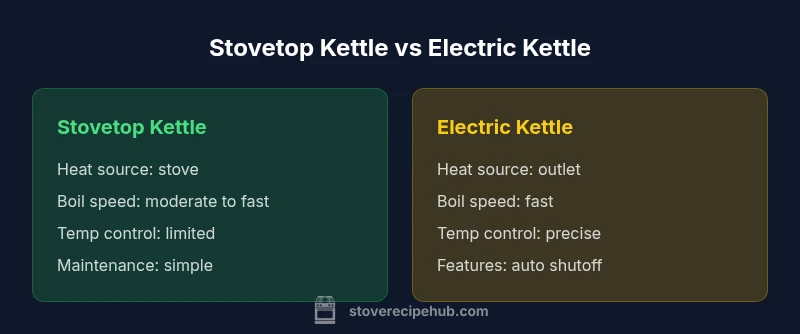
| Feature | Stovetop Kettle | Electric Kettle |
|---|---|---|
| Boiling Speed | Moderate to fast on the stovetop (depends on burner), varies with kettle size | Fast; designed for rapid boil and consistent results |
| Temperature Control | Limited control; mostly boil and keep-warm, few presets | Precise presets and adjustable temperatures |
| Safety Features | No automatic shutoff; relies on user monitoring | Auto shutoff and boil-dry protection typical |
| Maintenance & Durability | Fewer moving parts; depends on burner heat impact | Fewer exposed parts; some models dishwasher-safe |
| Space & Portability | Stove-bound; not portable on its own | Compact and portable with an outlet connection |
| Price Range | Low to mid range | Mid to high range |
| Best For | Traditional cooking, off-stove practicality | Speed, convenience, and precise brewing control |
Upsides
- Low upfront cost for many stovetop kettles
- Fewer electronics reduce risk of failure
- Simple, intuitive operation with classic design
- No reliance on electricity during outages
- Reliable in power-constrained environments
Downsides
- Slower average boil time on some setups
- Limited temperature control and presets
- Requires attentive handling to avoid dry-boil
- Heat source and burner quality influence performance
Electric kettles generally win on speed and precision, but stovetop kettles offer simplicity and reliability in many kitchens.
If you prioritize speed and consistent temperatures, electric kettles are preferred. If you value simplicity, durability, and not relying on electricity, a stove kettle is a strong choice. The right pick depends on your tea/coffee routines and kitchen setup.
Common Questions
Which kettle boils water faster on average?
Electric kettles typically boil faster due to a dedicated heating element. Stovetop kettles depend on burner strength and kettle size, which can vary widely.
Electric kettles usually boil faster; stovetops depend on your burner strength.
Is it safe to leave a stovetop kettle unattended?
No. Always monitor a stovetop kettle and never let it dry boil. Use a whistle or timer as an extra cue for safety.
Never leave a stovetop kettle unattended; use caution and watch for boil signals.
Can I use any kettle on an induction cooktop?
Kettles with magnetic bases are compatible with induction; many traditional stovetop kettles are not. Check base material before using on induction.
Induction requires a magnetic base; not all stovetop kettles work on induction.
Do electric kettles save energy compared to stovetops?
Electric kettles are generally efficient for quick boils and can reduce energy waste, but overall savings depend on usage frequency and capacity.
Electric kettles are efficient for quick boils, but total savings depend on how you use them.
What maintenance does a stovetop kettle require?
Regular cleaning, descaling mineral deposits, and inspecting the lid and spout seals keeps a stovetop kettle performing well.
Clean regularly and descale to keep the kettle performing well.
Are there health or taste differences between boiled water from different kettles?
Water quality remains the same regardless of kettle; material coatings can affect flavor if old or degraded, but typically flavor changes are minimal.
The water’s flavor is mostly unchanged by kettle type; materials matter if old.
Top Takeaways
- Assess your stove type and space before buying
- Electric kettles offer speed and precise temperature control
- Stovetop kettles provide simple, durable operation
- Prioritize safety features for busy households
- Choose based on your tea/coffee routines and kitchen layout