Gas vs Electric Stoves: Which Is Better for Your Kitchen?
Compare gas and electric stoves to decide which is better for your cooking style, energy costs, and kitchen layout. This in-depth guide explores heat control, maintenance, safety, and practical tips.


When choosing which stove is better gas or electric, the best option depends on your cooking style, energy costs, and kitchen setup. Gas stoves offer rapid heat, high-heat bursts, and precise flame control, ideal for searing and wok cooking. Electric stoves provide steady, even heat and easier cleanup, better for simmering and modern kitchens. Read on for a deeper, balanced comparison.
The Core Differences Between Gas and Electric Stoves
Choosing between gas and electric on the stove top is a decision that affects daily cooking, energy usage, and kitchen layout. For the question which stove is better gas or electric, the answer depends on how you cook, your tolerance for maintenance, and your utility costs. According to Stove Recipe Hub, gas stoves offer rapid heat, high heat bursts, and precise flame control, while electric stoves provide steady heat, smoother surfaces, and easier cleanup. Understanding these core differences helps you align the choice with your favorite recipes and your home environment. A gas stove uses natural gas or propane to generate an adjustable flame under the pan, whereas an electric stove heats a coil or a smooth glass-ceramic surface by electric resistance. The difference in heat delivery changes everything from searing steaks to simmering delicate sauces. For home cooks who value responsiveness and searing capability, gas remains attractive; for those prioritizing cleanup, consistent simmering, and a sleek kitchen look, electric can win. In this article, we break down the practical implications of each option, with real-world scenarios, maintenance tips, and decision frameworks to answer the question which stove is better gas or electric across common cooking tasks.
Heat, Control, and Responsiveness
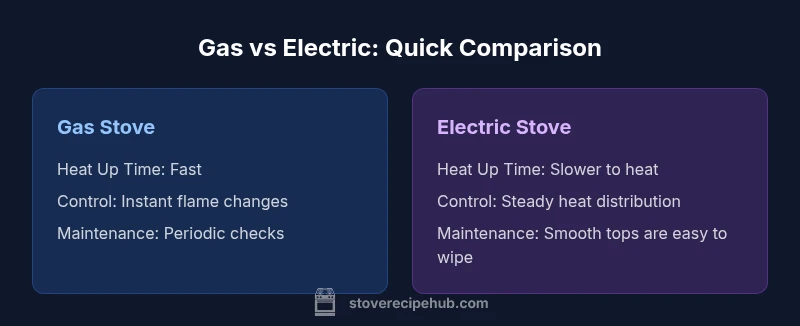
Heat delivery is the heart of stove performance. Gas burners respond to changes in flame height in real time, letting you dial into a hard sear or a delicate simmer with almost instant feedback. This immediacy makes gas particularly well-suited to techniques that demand high heat or quick temperature adjustments, such as stir-frying, wok cooking, and finishing a pan sauce with a boss of heat. Electric stoves, whether coil or smooth-top, heat more slowly and respond more gradually to adjustments. The heating element transfers energy through metal and glass, and while electric surfaces can be very stable once hot, they do not offer the same micro-adjustment speed as gas. Home cooks who regularly sear steaks or deglaze quickly may prefer gas for its blunt, precise control; those who prioritize predictable simmer and minimal cross-burn can lean electric. The choice also interacts with cookware: heavy cast iron and stainless steel respond differently to gas’s quick bursts than to electric coils, which can take longer to recover after a heavy load. In cooking terms, gas equals speed and agility; electric equals steadiness and simplicity.
Energy Efficiency and Operating Costs
From the perspective of energy efficiency and ongoing costs, the decision between gas and electric is not purely about stove performance; it also hinges on your utility prices, kitchen insulation, and how you use the stove. Gas stoves burn natural gas or propane, which tends to be cheaper per BTU in many regions, but the overall energy efficiency can vary because heat may be lost to the surrounding air, especially in poorly vented kitchens. Electric stoves convert electricity into heat with very little wasted energy in the cooking chamber, and modern models with responsive controls can reduce idle energy use. However, electricity prices and the efficiency of your home’s wiring and breakers influence operating costs. In practice, if you frequently boil large pots or use high heat, gas can feel cheaper to operate in areas with low gas prices, while electric tends to be more economical in regions with low electricity costs and advanced ceramic glass tops that retain heat. This section translates those general trends into practical calculations: consider your local energy rates, the relative efficiency of your appliances, and your typical cooking sessions. Ventilation plays a big role; a poorly vented gas range can waste heat and reduce overall efficiency.
Cooking Styles and Recipe Implications
Your go-to recipes shape how you value gas versus electric. If your cooking style centers on fast, high-heat methods, a gas stove often shines. Searing a steak, flash-braising a short rib, or stir-frying a vegetable medley benefits from the immediate heat and adjustable flame. The crisp edge you get from a hot pan and a quick lift in temperature is easier to master with gas. Conversely, electric stoves excel when you need steady, even heat and less flare. Patience with sauces, tempering chocolate, or maintaining a delicate simmer becomes more straightforward when the heat is consistent and the surface on top of the burner distributes heat evenly. For deglazing and color development, gas may provide a more dramatic restaurant-like sear; for predictable melts and gentle reductions, electric can deliver reliable results with less hands-on attention. The choice also interacts with cookware and technique: a wok benefits most from a powerful flare with gas, while simmering in a heavy-bottomed pot can be equally effective on electric with careful temperature control. In short, gas favors speed and drama; electric favors steadiness and ease.
Maintenance, Cleaning, and Longevity
Maintenance realities influence long-term satisfaction more than most cooks realize. Gas stoves have multiple moving parts: burner caps, valves, and igniters; a capable cleaning routine keeps the flame even and the heat consistent. Spills around the burners are common, and gas ranges often require periodic professional service to check for gas leaks, clogged jets, and proper venting. Electric stoves, depending on the model, present two main forms: coil elements surrounded by crumb-collecting surfaces or smooth glass-ceramic tops. Coils are relatively durable and simple to replace, but they can be uneven and prone to wear. Glass tops are elegant but require careful cleaning and protective cookware to avoid scratches and cracks. Induction, as a subset of electric stoves, adds efficiency and safety but comes with higher cost and cookware compatibility considerations; this is a common misconception that should be addressed in a thorough comparison. With regular maintenance and proper cleaning routines, both gas and electric can deliver long lifespans. Stove Recipe Hub recommends scheduling periodic inspections, cleaning after heavy cooking, and using compatible cookware to extend the life of whichever stove you choose.
Installation, Safety, and Practical Considerations
Choosing between gas and electric also requires looking at your home’s infrastructure. Gas stoves require a dedicated gas line, proper ventilation, and often a dedicated electrical connection for ignition systems. If you live in an apartment or a home with limited ventilation, gas ranges need careful planning to avoid heat and gas buildup. Electric stoves require a sturdy electrical circuit; depending on the electric system, you may need a dedicated 240-volt circuit and a higher breaker rating to support ceramic glass tops and fast heating elements. Safety considerations include ensuring there are no gas leaks, using range hoods with appropriate ventilation, and testing alarms for carbon monoxide. On the practical side, gas stoves typically install with more challenging repositioning if you remodel, while electric stoves can be swapped more easily. If your kitchen budget is constrained, consider the total cost of installation and potential upgrades. The Stove Recipe Hub team notes that thinking about future remodels and energy costs ahead of time prevents buyer’s remorse when deciding between gas and electric.
Choosing Based on Your Kitchen and Budget
A decision framework helps readers move from theory to action. Start by listing your primary cooking tasks (high-heat searing, quick boiling, delicate simmering) and how often you clean up after meals. If your cooking volume is high and you regularly demand fast heat, a gas stove is often the best fit. If you prefer a clean, minimal cleanup routine and a modern aesthetic, electric may be the smarter choice, especially in homes with modern electrical panels and lower gas availability. Next, factor in local energy prices and potential installation costs. Gas lines can be a barrier in older homes or apartments, while electric upgrades may require permission from your utility or building management. Also consider your cookware—electric stoves with smooth glass require flat-bottom pans for optimal contact, whereas gas stoves accommodate a wider range of pots and woks. A practical approach is to borrow or rent a demonstration stove to test in your kitchen, or talk to a local appliance retailer about a model that matches your usage pattern. In the end, the best stove is the one that aligns with your cooking style, your kitchen’s layout, and your energy budget.
Common Myths and Misconceptions
Several myths persist about gas and electric stoves. One common misconception is that gas always heats faster; while it heats quickly, the overall cooking time depends on pot size, cookware, and ventilation. Another myth holds that electric stoves are always safer; in reality, both systems carry risks—gas leaks, carbon monoxide exposure, and electrical faults. Some cooks assume electric tops stay cooler than gas; actual surface temperatures can vary by model and cooking style, especially with induction or ceramic glass tops. A third misconception is that induction is the default electric option; induction is a separate technology that uses magnetic fields and only works with compatible cookware, offering fast, precise heat. Lastly, many people believe that cleaning a gas range is harder; while gas ranges require careful cleaning around burners, electric smooth-top ranges can be more prone to scratching or cracking if careless with cookware. Stove Recipe Hub emphasizes fact-based testing and personal trial; the best decision comes from testing under your real cooking conditions than from relying on myths alone.
Practical Tips for Getting the Most from Your Stove
To maximize performance, start by ensuring proper ventilation and using cookware that fits the burner size. For gas, keep burner caps clean and flame blue; a yellow or orange flame indicates incomplete combustion and requires service. For electric, choose cookware with a flat, heavy bottom for even heat distribution; use lids to speed up boiling and reduce energy usage. Optimize heat use by preheating only when necessary and using lids when simmering to prevent heat loss. Routine maintenance includes cleaning burners and igniters, checking cords and outlets (for electric stoves), and scheduling periodic professional checkups. If you’re upgrading, consider a staged approach: keep your gas line in place while you test an electric range in a temporary setup; then switch once you’re confident in your cooking pattern. Finally, if you need a blended solution, some households install a gas cooktop with an electric oven to leverage the strengths of both approaches. By focusing on heat control, cookware compatibility, and safe installation, you get the most from whichever stove you choose.
Comparison
| Feature | Gas Stove | Electric Stove |
|---|---|---|
| Heat Up Time | Faster to reach high temperatures | Slower to heat, but steady once hot |
| Heat Control | Instant flame adjustment; precise control at all temps | Smooth, gradual heat changes; even cooking |
| Energy Efficiency | Fuel-based; efficiency varies with venting | Higher intrinsic efficiency; depends on electricity price |
| Maintenance & Durability | Fewer delicate components; periodic burner maintenance | Smoother tops; potential coil wear or ceramic top damage |
| Cleaning & Upkeep | Grease around burners; easier to wipe | Smooth tops require careful cleaning to avoid scratches |
| Safety Considerations | Gas leaks risk; ventilation required | Lower risk of gas leaks; electrical faults less common |
| Installation & Cost | Often cheaper to install; gas line required in many cases | No gas line; electrical upgrade may be needed |
| Best For | High-heat searing, fast boiling, wok cooking | Steady simmering, easy cleanup, modern kitchen look |
Upsides
- Gas stoves offer fast, responsive heat and high-heat capability for searing
- Electric stoves provide easy cleanup and a sleek, modern look
- Gas can be more affordable upfront in areas with cheap natural gas or propane
- Electric tops avoid open flames and reduce ventilation demands
- Both types benefit from proper cookware and routine maintenance
Downsides
- Gas carries leak and ventilation safety concerns and requires proper installation
- Gas heat can be wasteful in poorly ventilated kitchens and may impact energy bills
- Electric coils can be slower to respond and may wear unevenly over time
- Glass-ceramic tops risk scratches or cracks if not cared for properly
Gas for high-heat performance; electric for clean, steady heat and easier maintenance
Choose gas if you need rapid heat and precise flame control for searing and wok cooking. Choose electric if you value simple cleanup, stable simmer, and a modern kitchen aesthetic. Your decision should reflect cooking style, space, and energy costs.
Common Questions
Is gas better for high-heat cooking and searing?
In most cases, yes. Gas offers immediate heat and flame control, which helps achieve a strong sear and fast searing of proteins. It also allows rapid adjustments during cooking. However, results still depend on cookware quality and technique.
Gas is typically favored for high-heat searing due to its instant flame control, though technique matters as well.
Are electric stoves more energy-efficient than gas stoves?
Electric stoves generally convert electricity into heat with high efficiency, and modern tops minimize heat loss. Gas can be cheaper per unit of heat in some regions, but heat is often lost to the surrounding air. Local energy prices largely determine true operating costs.
Electric tops tend to be efficient overall, but your local energy prices influence the real cost balance.
What about cleaning and maintenance?
Gas ranges require regular burner and igniter cleaning and periodic service to check for leaks. Electric ranges, especially smooth tops, need careful cleaning to avoid scratches, cracks, or staining. Routine upkeep keeps performance steady for years.
Gas needs burner care; electric smooth tops require careful cleaning to stay pristine.
Is gas safer for homes with kids?
Safety depends on proper installation, ventilation, and vigilant use. Gas leaks pose risk if not installed correctly, while electric ranges have their own safety considerations like hot surfaces and electrical faults. Use vent hoods and carbon monoxide detectors regardless of stove type.
Gas and electric can be safe with proper installation and ongoing precautions.
Can I install either stove in an older home?
Both options can be installed in older homes, but gas lines may require upgrades and permits, while electric upgrades may demand wiring checks. Always consult licensed professionals to assess code requirements and feasibility before purchase.
Yes, but check gas lines or electrical upgrades with a pro before buying.
Should I consider induction if I choose electric?
Induction is a subset of electric stoves that uses magnetic fields for very rapid, precise heating and requires compatible cookware. It offers safety and efficiency benefits but can be more expensive and may require new pots and pans.
Induction is a special electric option offering fast heat, but you may need new cookware.
Top Takeaways
- Match stove type to your cooking style and kitchen setup
- Gas excels at high-heat, quick adjustments; electric excels at steady heat
- Factor ventilation, electrical capacity, and installation costs into your plan
- Use compatible cookware to maximize performance on either stove
- Regular maintenance extends stove lifespan