Electric stove vs gas stove: An objective comparison
Compare electric stove vs gas stove across heat control, safety, maintenance, and costs to decide which stove type best fits your kitchen and cooking style.


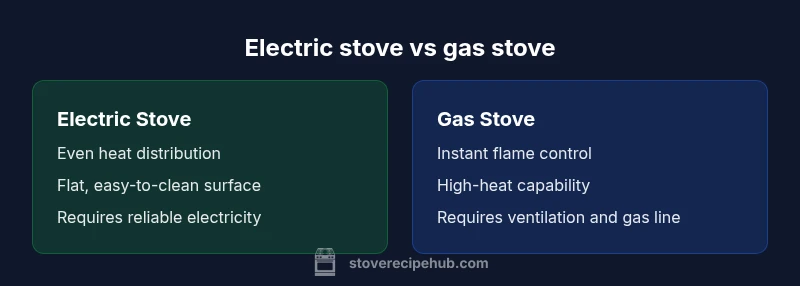
Electric stove vs gas stove presents a clear trade-off. Gas stoves deliver instant flame, precise heat control, and visible heat feedback, while electric stoves offer smoother, more even heat and easier cleanup. For most home cooks, gas is preferred for simmering and responsiveness; electric is favored for straightforward operation and maintenance.
Heat Source Fundamentals
Electric stoves rely on electric coils or radiant elements beneath a glass-ceramic surface to transfer heat to cookware, while gas stoves generate a flame under the pan by burning natural gas or propane. This fundamental difference shapes thermodynamics, heat distribution, and practical usage. The Stove Recipe Hub team emphasizes that understanding how heat is produced helps you anticipate performance, maintenance, and how well the stove integrates with your kitchen layout. Electric ranges often suit modern kitchens with standardized electrical connections and simple cleanup, whereas gas ranges are favored by cooks who want immediate flame feedback and high-heat capability. The decision should hinge on your existing home infrastructure, typical cooking tasks, and how you prioritize control versus convenience.
Heat Control and Responsiveness
Heat control lies at the heart of the electric vs gas stove comparison. Gas stoves offer rapid flame adjustments and immediate changes in heat, which translates to snappy cooking responses during searing, boiling, and simmering. Electric stoves, by contrast, provide steadier, more even heat once they reach the desired setting, but changing temperatures can take longer. This difference matters for recipes that require quick sear-to-simmer transitions or careful reduction. For many home cooks, the best match depends on whether you value fast responsiveness (gas) or predictable, quiet heat (electric). In practice, a well-calibrated electric surface can still produce excellent results in long, slow simmering tasks, while gas excels in high-heat tasks and rapid adjustments.
Safety Considerations and Ventilation
Safety is a major concern in any kitchen setup, and the choice between electric stove vs gas stove has distinct implications. Gas stoves introduce combustion byproducts and require proper ventilation, gas lines, and often a working carbon monoxide detector. Electric stoves remove combustion risks from the cooking area, but still demand electrical safety measures, proper grounding, and protection against moisture. Regardless of type, keep flammable materials away from the cooking surface, maintain hood ventilation, and schedule periodic checks of connections and cords. The right safety plan—working detectors, proper venting, and routine maintenance—helps ensure a safer cooking environment for you and your family.
Cooking Performance and Pan Compatibility
Your cookware choices and cooking style influence how electric vs gas stoves perform in the real world. Gas stoves typically pair well with heavy-bottom pans and high-heat cooking, making them preferred by recipes that begin with a powerful sear. Electric stoves work smoothly with a wide range of pots and pans, and glass-ceramic tops provide a flat, wipe-clean surface that many find appealing for everyday cooking. Induction-only cookware compatibility is a factor if you consider converting to an induction-capable electric option in the future. In general, expect gas to deliver superior control at high temperatures and electric to offer simpler cleanup and reliable, steady heating at a consistent level.
Energy Efficiency, Costs, and Running Expenses
When weighing energy use and operating costs, it’s important to focus on how you cook rather than just the appliance label. Electric stoves can be more predictable in heat delivery and can have compelling efficiency profiles when used with modern, well-insulated cooking vessels. Gas stoves consume fuel directly with combustion and can vary in efficiency depending on burner design, pan size, and cooking technique. Consider long-term running costs alongside installation and maintenance expenses. Stove Recipe Hub analysis suggests that your actual costs hinge on usage patterns, local energy prices, and how quickly you heat or cool cookware.
Installation, Upfront Costs, and Kitchen Space
Installing a stove involves electrical or gas plumbing considerations and, in the case of gas, venting and line work. Electric stoves are generally easier to install in renovations that already have appropriate outlets and circuit capacity, but certain electrical upgrades may be required for higher-powered models. Gas stoves require a safe gas line connection, venting, and often a professional installation. Space, clearances, and cabinet layout all impact the feasibility and total cost of either option. Planning with a qualified installer helps ensure compliance with codes and reduces surprises later on.
Cleaning, Maintenance, and Longevity
Cleaning is a practical differentiator between electric and gas stoves. Electric glass-ceramic surfaces provide a smooth, wipe-clean finish that many homeowners appreciate, though spills can be more tricky around coils. Gas stoves require more routine maintenance, including burner cleaning and occasional vent hood upkeep, but the surface itself can still be relatively straightforward to wipe down. Longevity depends on build quality, usage, and maintenance practices. Regular inspection of burners, igniters, and electrical connections can extend lifespan for either type.
Real-World Cooking Scenarios: When to Choose Each
If your cooking style emphasizes precision, fast adjustments, and high-heat searing, gas stoves tend to be favored by many serious home cooks. For those who prioritize cleanup ease, uniform heat distribution, and a tidy kitchen aesthetic, electric stoves are often the better fit. In small apartments or spaces with limited ventilation, electric stoves may present fewer safety concerns, while in ventilation-rich kitchens, gas stoves can unlock a performance edge for certain techniques. Each kitchen has unique constraints, so a balanced evaluation of your routines, space, and energy setup is essential.
Common Myths and Misconceptions
A common myth is that gas stoves always cook faster than electric stoves; reality depends on burner size, cookware, and technique. Another misconception is that electric stoves are inherently unsafe for families with children; in practice, both types can be made safe with proper installation, child-proof controls, and good ventilation. A third misconception is that induction is the only modern electric option; while induction is highly efficient, it represents a different technology, and traditional electric coils or radiant elements remain common in many homes. Understanding these nuances helps prevent poor decisions based on hype.
Practical Buying Guide: 10 Questions to Answer
Before purchasing, list your priorities: heat control vs cleaning, ventilation setup, current wiring or gas line availability, typical pots and pans, and how often you cook at high temperatures. Consider the importance of resale value, warranty coverage, and service networks in your area. Evaluate model characteristics that affect long-term use, such as surface durability, igniter reliability, and the stability of cooking performance across a range of temps. A thoughtful checklist reduces buyer’s remorse and aligns the choice with your lifestyle.
The Road Ahead: Alternatives and Trends
Looking beyond traditional electric and gas, many kitchens explore induction cooking as a high-efficiency alternative that works with ferrous cookware and offers superb heat control. Some homes are now combining gas and electric zones to balance performance with convenience. While induction remains a specialized route, it illustrates how stove technology continues to evolve to meet energy efficiency, safety, and user experience goals. Consumers should stay informed about options that fit their kitchen footprint and cooking needs.
Final Buying Considerations: A Quick Decision Framework
To decide between electric stove vs gas stove, align your choice with your cooking priorities, space, and comfort with necessary installations. If you value ease of cleaning and steady heat, electric is appealing; if you crave rapid heat changes and precise control, gas stands out. Always assess ventilation, electrical or gas-code requirements, and whether future upgrades (like induction) could alter your long-term plan. A clear framework helps you make a durable selection.
Comparison
| Feature | Electric stove | Gas stove |
|---|---|---|
| Heat Source | Electric coils or radiant surface under glass-ceramic | Gas burner with open flame |
| Heat Responsiveness | Moderate to slower adjustments; steady heating | Rapid adjustments with visible flame feedback |
| Simmering Capability | Steady but can require tweaks for very low simmer | Excellent, precise simmer control |
| Cleaning & Maintenance | Smooth surface; coils may be harder to clean | Burner grates and surfaces require routine cleaning |
| Safety & Ventilation | No combustion byproducts at the surface; electrical safety concerns | Combustion byproducts; requires venting and detectors |
| Pan Compatibility | Works with common pots; induction-ready cookware not required unless specified | Works with most cookware; flame tolerates varied bottoms |
| Energy Efficiency | Depends on model and usage; can be efficient with good cookware | Efficient heating when used with appropriate cookware and burners |
| Installation & Costs | Often simpler electrical hookup; potential circuit upgrades | Gas line installation and venting; professional setup |
| Reliability in Outages | Relies on electricity; may be unusable without power | Ignition may rely on electricity; some models still usable with matches |
| Best For | Cleanliness, stable heat, modern kitchens | High-heat searing, rapid temperature changes, traditional cooking |
Upsides
- Clear trade-offs help buyers match priorities
- Wide range of models and price points for both types
- Modern stoves offer improved safety features and reliability
- Electric surfaces are easy to clean and maintain
Downsides
- No one-size-fits-all winner; depends on home and style
- Gas safety requires ventilation, detectors, and proper installation
- Electric stoves can feel less responsive for intense high-heat tasks
Gas stoves excel in heat control; electric stoves excel in cleanup and consistency
Choose gas if you value rapid heat changes and precise simmering. Choose electric if you prioritize easy maintenance and a tidy kitchen. Consider installation constraints and ventilation when deciding.
Common Questions
Is an electric stove safer than a gas stove for homes with children?
Both electric and gas stoves can be safe with proper setup. Electric stoves lack open flames, reducing flare risk, while gas stoves require robust ventilation and detectors. Choose based on how you implement safety features, not just the fuel type.
Both options can be safe with proper setup—electric stoves avoid flames, gas stoves need good ventilation and detectors.
Can I cook on a gas stove if the power goes out?
Gas stoves with a manual ignition option can still be used during some power outages, but many newer models rely on electric igniters or electronics. Check your specific model’s ignition method and have a safe lighting method available.
Some gas stoves can be lit with a match if the power is out, but check your model's ignition system first.
Is induction part of the electric stove category?
Induction is a key electric technology that uses magnetic fields to heat compatible cookware directly. It is a subset of electric stoves and requires ferrous pots and pans. It’s typically more energy-efficient and very responsive.
Induction is a special electric option that heats cookware directly with magnets; you’ll need compatible pots.
Which is cheaper to install, electric or gas?
Electric stoves usually involve electrical wiring considerations, which can be simpler in many homes. Gas stoves require a gas line and venting, which can add cost and complexity. The total depends on existing infrastructure and local codes.
Electric is often simpler to install; gas needs gas lines and venting, which can add cost.
Do electric stoves work with all cookware?
Electric stoves work with most standard cookware, but glass-ceramic surfaces benefit from flat-bottom pots for even contact. Induction-only models require ferrous cookware, so verify what your stove supports.
Most pots work on electric stoves, but induction needs magnetic pots.
What should I consider if I have a small kitchen?
In small kitchens, consider ventilation quality, power outlets, and space layout. Electric stoves may simplify installation in tight spaces, while gas requires careful routing of lines and vents. Both require a plan aligned with safety and usability in compact layouts.
Ventilation and space matter most; electric can be easier to fit, but check outlets and safety.
What about energy efficiency and running costs?
Running costs depend on usage patterns and local energy prices. Electric stoves can be efficient with proper cookware and insulation, while gas efficiency varies with burner design and cooking technique. Compare models with the right features for your typical meals.
Costs depend on usage; both types can be efficient with good cookware and technique.
Top Takeaways
- Assess your cooking style to pick between electric and gas
- Gas offers superior control and responsiveness for high-heat tasks
- Electric provides easier cleaning and steady heat
- Plan for ventilation, wiring, or gas line needs
- Keep future options (like induction) in mind during planning