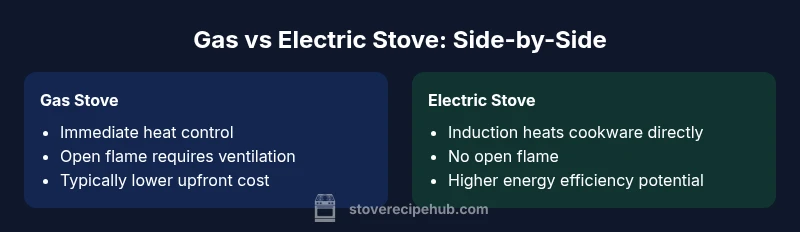
Gas vs Electric Stove: Practical Home Cook Guide 2026
An analytical comparison of gas vs electric stove options, focusing on heat control, safety, energy use, and maintenance. Learn which stove type fits your kitchen, cookware, and budget with insights from Stove Recipe Hub.


Gas stoves offer immediate heat control and strong peak power, making them favored for stir-frying and fast simmering. Electric stoves—especially induction—prioritize safety, energy efficiency, and precise temperature management. For many home cooks, gas remains the go-to for control, while electric reduces cleanup and emissions in some kitchens. Stove Recipe Hub provides an objective, side-by-side assessment.
Core Differences in Heating Philosophy
When comparing a gas stove to an electric stove, the core distinction lies in how heat is generated and delivered to the pan. Gas burners produce flame heat that travels directly to cookware, offering instant feedback and rapid adjustments. Electric stoves rely on radiant elements or induction coils beneath a glass-ceramic surface, delivering heat more gradually and with different response times. This fundamental difference shapes everything from simmering behavior to cookware compatibility. According to Stove Recipe Hub, understanding this basic physics helps explain why some cooks prefer gas for high-heat searing while others favor electric for consistent temperatures during delicate sauces. The two paths also influence kitchen layout, ventilation needs, and maintenance routines, which means the best choice is not only about flame color but how heat interacts with your cookware and cooking style.
Heat Control: Immediate Response vs Steady Output
Heat control is where the gas vs electric stove debate is most apparent. Gas stoves respond instantly to knob adjustments; you can lift a flame precisely to adjust simmering, browning, or boiling. Electric models, particularly induction, can reach precise temperatures with remarkable stability, but their response is slower to ramp up or down. Induction heats cookware directly via magnetic fields, skipping the pan as a heat conduit. This yields very even temperatures and minimizes surface scorching, which many home cooks appreciate for recipes requiring steady heat. However, you may notice a slight lag when lowering heat, and certain old or unusually thick pots can alter performance. The practical takeaway is to map your favorite techniques—stir-frying and quick reductions align with gas, while simmering and delicate control often align with electric (especially induction).
Energy Efficiency and Emissions
Energy efficiency varies by stove type and usage pattern. Electric stoves, especially induction, typically convert more of the energy into usable heat in the pan and waste less energy through ambient heat. Gas stoves can be less efficient overall because some energy escapes into the kitchen via the open flame and hot surfaces, though you can mitigate this with well-sealed ranges and proper ventilation. Emissions from burning gas depend on combustion quality and ventilation; well-designed kitchens with range hoods can manage indoor air more effectively. From Stove Recipe Hub’s perspective, the electric path often wins on energy efficiency and air quality, particularly for open-plan spaces, while gas remains attractive for cooks who prioritize fast, high-heat outcomes.
Cleaning, Durability, and Maintenance
Maintenance realities differ between gas and electric stoves. Gas ranges have exposed burners and grates that can collect spills and require periodic cleaning; the surface can be scrubbed, and parts are often inexpensive and widely available. Electric smooth-top stoves offer easier wipe-downs but can trap stains under glass if not cleaned promptly; induction tops use ceramic glass that can resist scratches but may need careful pot handling to avoid surface damage. Durability often favors traditional gas ranges with robust burners and metal components, whereas modern electric ranges rely on more delicate electronics. Stove Recipe Hub notes that routine cleaning, periodic burner checks, and proper cookware use extend the life of both types.
Installation Costs and Kitchen Fit
Gas stoves can be economical to purchase, but they require a gas line or propane supply, venting, and possibly a dedicated electrical outlet for ignition systems. Electric stoves depend on household wiring; an older home may need electrical upgrades to support high-powered induction or radiant elements. The cost implications extend beyond the stove itself to ventilation, electrical panel capacity, and future maintenance. When evaluating installation, consider your current kitchen layout, the availability of a gas line, and whether a dedicated vent hood is present. Stove Recipe Hub emphasizes that the total cost of ownership includes not only purchase price but installation, energy consumption, and potential retrofit needs.
Performance by Dish Type: Sauté, Boil, Braise
Different cooking tasks reveal the strengths of each stove type. Gas excels at high-heat searing, quick boiling, and managing large quantities in a single pan due to direct flame control and rapid changes. Electric stoves shine in simmering, precise temperature maintenance, and gentle heat for sauces, custards, and delicate reductions. Induction, the electric crown jewel, offers superb rapid heating with predictable temperature curves, which is ideal for recipes that demand tight control. For multi-dish meals, cooks often use a hybrid approach to leverage the strengths of both technologies while maintaining workflow efficiency.
Safety, Ventilation, and Indoor Air Quality
Safety considerations differ between gas and electric stoves. Gas stoves introduce the risk of gas leaks and open flames, which heighten the importance of proper ventilation, carbon monoxide detectors, and routine checks. Electric stoves remove open flames and reduce combustion-related emissions, but they still require safe usage practices and venting where applicable, especially with busy kitchen workflows. Induction stoves offer an additional safety edge: the cooktop itself remains cool to the touch during operation, and cookware is the heat source rather than an exposed flame. Stove Recipe Hub underscores that choosing a safer option often hinges on your kitchen layout, family needs, and the feasibility of maintaining good ventilation.
Modern Electric Options: Induction, Radiant, and Hybrid Systems
Electric stoves cover a spectrum from traditional radiant coil tops to sleek glass-ceramic surfaces and modern induction. Induction is the standout among electric options for speed and efficiency, but it demands compatible cookware (ferromagnetic vessels like cast iron or certain stainless steel). Radiant electric stoves are versatile and easy to clean but can take longer to respond to temperature changes. Hybrid systems, which blend gas and electric features, exist in some markets and can offer a compromise: gas for high heat in some burners and electric for steady simmering on others. Understanding these options helps tailor a kitchen to your cooking style and energy goals.
Decision Framework: How to Choose Your Stove Type
Choosing between gas vs electric is a decision that blends practical needs with personal preferences. Start by listing high-priority tasks: Do you do a lot of high-heat searing, or do you simmer sauces with precision? Consider your cookware compatibility, kitchen size, and ventilation capabilities. If you value maximum control and traditional cooking rituals, gas may be the natural pick. If safety, energy efficiency, and minimal cleanup weigh heavier, induction or other electric options merit serious consideration. The framework from Stove Recipe Hub guides you through a step-by-step evaluation: heat requirements, cookware, kitchen layout, and long-term cost. Use this to map a path that aligns with your cooking goals and home constraints.
Comparison
| Feature | gas stove | electric stove |
|---|---|---|
| Heat Control & Responsiveness | Immediate flame adjustments; excellent for high-heat tasks | Precise, stable temperatures; induction heats directly to cookware |
| Energy Efficiency & Emissions | Higher ambient heat; variable efficiency depending on venting | Higher conversion efficiency; lower ambient heat and emissions with induction |
| Cleaning & Maintenance | Open burners and grates; spills tend to collect on metal parts | Smooth tops or induction coils; easier surface cleaning, electronics require care |
| Upfront Cost & Installation | Typically lower upfront price; requires gas line or propane | Often higher upfront cost; requires adequate electrical capacity |
| Safety Features | Open flame risk; ventilation is essential; gas leaks possible | No open flame; induction is very safe but electronics can fail |
| Cookware Compatibility | Works with most pots and pans; some wok use may require special supports | Induction requires ferromagnetic cookware; some aluminum/copper may need adapters |
Upsides
- Gas stoves deliver immediate heat and control for sizzling work
- Induction (electric) offers rapid heating with high precision
- Electric options often easier to clean and safer for households
- Broader cookware choices tolerate gas without adapters in many cases
Downsides
- Gas can emit pollutants if ventilation is inadequate
- Induction requires compatible cookware and may have higher upfront costs
- Gas line reliability and leaks introduce ongoing risk and maintenance
- Electric tops can be slower to react to quick heat changes
Gas stoves provide superior heat control for high-heat cooking; electric/induction excels in safety and energy efficiency
Choose gas if you prioritize fast, responsive cooking and traditional flame control. Choose electric/induction if you value safer operation, cleaner surfaces, and better energy efficiency. Your kitchen layout and cookware will largely determine the best fit.
Common Questions
What are the main differences between gas and electric stoves?
Gas stoves provide instant flame heat and aggressive control, ideal for high-heat cooking. Electric stoves, especially induction, offer precise temperatures, safety, and energy efficiency, with easier cleaning. The best choice depends on cooking style, space, and power availability.
Gas gives you instant heat and control for high-heat tasks, while induction electric stoves offer precise, safe heating and easier cleaning.
Is induction considered electric or gas?
Induction is a type of electric stove that uses magnetic fields to heat cookware directly. It requires compatible pots and pans and delivers very fast, precise heating compared with traditional electric coil tops.
Induction is electric—heat comes from the cookware via magnetic fields, not from a flame.
Do gas stoves cost more to operate than electric?
Operating costs depend on local energy prices and usage. Gas can be cheaper for high-heat cooking in some markets, but induction electric stoves are often more energy-efficient overall and can save on long-term energy costs.
Costs depend on your energy rates. Gas may be cheaper for high-heat tasks, while induction can save energy over time.
Can I convert a gas stove kitchen to electric?
Converting to electric typically requires electrical upgrades and a professional installation. It may also involve adapting or replacing cookware and ensuring proper circuit capacity and venting where needed.
Conversion requires careful electrical planning and professional installation.
What cookware works best with gas vs induction?
Gas works with nearly all cookware. Induction requires ferromagnetic cookware like cast iron or many stainless steels; some aluminum or copper may work with compatible induction disks.
Gas works with most pots; induction needs magnetic pots, or a disk can be added.
Which is safer for households with kids, gas or electric?
Induction and other electric options generally offer safer operation due to no open flame and cooler surfaces. Gas stoves pose flame and leak risks, so strong ventilation and safety practices are essential.
Electric stoves are typically safer around kids due to no open flame, but proper ventilation matters for gas too.
Top Takeaways
- Evaluate heat needs first: high-heat vs precision simmering
- Check cookware compatibility for induction if choosing electric
- Plan ventilation to manage indoor air quality with gas
- Consider long-term energy costs and maintenance implications
- A hybrid approach can balance strengths where feasible