What stove setting to boil water: A practical guide
A comprehensive guide to boiling water on the stove, covering pot choice, heat levels, lid use, safety tips, and troubleshooting for all stove types.


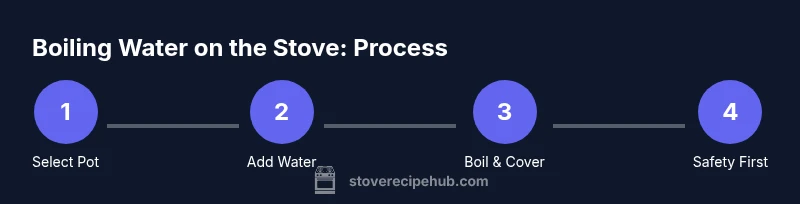
To boil water on a stove, choose a pot that fits your amount, fill with cold water, and turn the burner to medium-high. Heat until you see steam and bubbles, then cover to speed up. When a rolling boil is reached, reduce heat to maintain or remove the lid to prevent splashes, and turn off when finished.
Understanding the question: what stove setting to boil water
For home cooks, the simple act of boiling water on a stove is often taken for granted. But getting reliable results depends on several variables: pot size, water quantity, stove type, and whether you want speed or energy efficiency. If you are wondering what stove setting to boil water, the answer isn't a single number. It depends on your goals, your equipment, and your patience. According to Stove Recipe Hub, the best approach is to start with a practical middle ground and adjust based on observation, not assumption. A common starting point is medium-high on most home burners for a standard 1-2 quart pot.
The exact heat level you choose will influence how quickly water climbs toward a boil and how much energy you use. A slightly larger pot can take longer to reach a rolling boil, but it reduces the risk of boiling over if you add pasta or other ingredients. Conversely, a small pot heats up fast but might require careful attention to keep from boiling dry or overflowing. By understanding these dynamics, you can tailor your approach to both your recipe and your kitchen setup. This is especially useful when you’re teaching someone else or cooking with kids, since the same stove setting can behave differently across kitchens and cookware. The Stove Recipe Hub team recommends practicing with a plain water test to learn your own stove’s behavior.
Pot choice and water quantity
Choosing the right pot and water quantity is the first step toward consistent boils. A heavy-bottom pot distributes heat more evenly, reduces hot spots, and minimizes scorching on the bottom when you’re boiling water for pasta, tea, or sterilizing jars. If you’re boiling only a cup or two, a small 1- to 2-quart pot is more efficient. For larger batches, or when you want a faster boil, select a 4- to 6-quart vessel with a tight-fitting lid. The water amount matters equally: filling to just below the rim reduces the chance of boil-overs and minimizes evaporation losses.
Stove Recipe Hub analysis shows that lids, when used correctly, can dramatically speed up boiling by retaining heat that would otherwise escape. This is particularly helpful on electric coils or smooth-top stoves where heat transfer is less aggressive than on gas burners. If you’re cooking with a gas stove, a slightly larger flame can still reach a boil quickly, but you risk scorching if you’re not careful. The key is to balance pot size, water quantity, and lid use to match your stove’s characteristics. In short, a practical rule is: use a pot that fits the water, not the other way around, and keep the lid nearby to trap heat when you need it.
Step-by-step technique to bring water to a boil
Boiling water is a straightforward task, but consistent results come from a repeatable method. Start with cold water; hot tap water can carry minerals that affect taste and heating performance. Place the pot on the burner and set the knob to a moderately high setting. As the water heats, watch for small bubbles along the edges and rising steam, indicating energy is transferring efficiently. If you have a lid, place it to trap heat; this can significantly cut boil time on most stoves. When larger bubbles break the surface, you’re approaching a boil; at that point, you can either maintain a vigorous boiling or reduce heat to a steady simmer depending on your recipe. Avoid opening the lid too often, which lets heat escape and slows progress. Use a timer if you need precise timing for recipes like blanching vegetables or making tea. Finally, when the water reaches the desired temperature, carefully remove the pot from the heat or turn the burner down to keep it ready for the next step. This structured approach helps you reproduce the same boil in different kitchens.
Lid usage and heat management
Lid use is a simple way to control heat and speed up boiling. A tight-fitting lid traps steam and increases heat transfer to the liquid. Use it for a faster approach, then remove the lid to monitor the boil and prevent overflows. If you prefer a gentler boil—for example, when cooking delicate vegetables or pasta—crack the lid open a small amount to release excess steam while maintaining a steady boil. On gas stoves, a lid can significantly cut boil times because gas flame keeps heating the water consistently; on electric stoves, the lid helps compensate for slower heat transfer. Another practical tip is to preheat the pot briefly with a dry run; this ensures the bottom heats evenly and reduces the chance of scorching. Finally, be mindful of your kitchen’s altitude, because higher elevations require a longer time to reach boiling due to lower atmospheric pressure. Adjust your expectations accordingly and keep safety in mind.
Safety and efficiency considerations
Boiling water on the stove involves heat and steam, which can cause burns. Always use heat-resistant gloves when handling hot pots, and keep children and pets away from the cooking area while the water is on the burner. Use a pot with a tight-fitting lid to lower the risk of boil-overs and to conserve energy. Do not leave pots unattended on high heat; a vigorous boil may escalate into a spill or kitchen flare if contents splash onto the burner. When you’re done, turn off the heat before attempting to pour, and move the kettle or pot away from your body to avoid steam burns. If you’re using an induction or electric stove, check the manufacturer’s guidance on maximum boil times and pot compatibility, since materials and designs vary. Efficient boiling also means planning: boil only as much water as you need and reuse it when possible to reduce waste.
Troubleshooting and alternatives
If your water isn’t boiling as quickly as you expect, consider a few tests. Confirm the burner is clean and unobstructed and that you’re using a pot that conducts heat well. If your kitchen experiences frequent power issues or you depend on a microwave or electric kettle, these are reasonable alternatives for speed and energy management. For example, an electric kettle can boil water faster and more efficiently in many cases, particularly for small quantities. If you’re cooking with a recipe that requires a precise boil, you can start with the pot covered and then uncover once you see the first vigorous bubbles. Remember that altitude and water quality can affect boiling times and bubble behavior, so adjust your expectations accordingly.
Adapting to stove types and practical tips
Gas stoves generally heat water quickly due to direct flame contact, but they can fluctuate with flame height. Electric coil stoves heat more gradually; induction stoves boil water fastest but require compatible pots. Regardless of stove type, the key to consistent boiling is sizing the pot to the water volume and using a lid when speed matters. A practical habit is to perform a quick 1-2 minute boil test when you’re in a new kitchen, noting how long it takes your typical pot to reach a rolling boil. Use this as a baseline to adjust heat settings in the future. Finally, maintain your cookware: keep pot bottoms flat, avoid warping, and clean residues that could create hot spots. By paying attention to the hardware and using the right technique, you’ll master boiling water on any stove.
Final quick-start checklist
- Choose a pot with a heavy bottom and fill water to a safe level.
- Start on medium-high heat; use a lid to speed boiling.
- Watch for steam and bubbles; adjust heat to maintain the boil you need.
- Use oven mitts when handling the pot and pour away from your body.
- When finished, turn off the heat and cover the pot to keep heat contained if you’re saving heat for later tasks.
Tools & Materials
- Heavy-bottomed pot or saucepan(Prefer 1-2 quart for small batches, 4-6 quart for larger amounts)
- Water(Cold tap water is fine)
- Lid for pot(A tight-fitting lid speeds boiling)
- Oven mitts or heat-resistant gloves(For safe handling of hot pot)
- Timer or clock(Helpful to track waiting times)
Steps
Estimated time: 5-15 minutes
- 1
Select and prepare the pot
Choose a pot that fits the amount of water you plan to boil. Rinse if needed and place on the stove. Fill with cold water up to a safe level before heating.
Tip: Choosing a pot with a heavier bottom helps heat distribution and reduces hot spots - 2
Turn on medium-high heat
Turn the burner to medium-high and wait for the water to start showing steam at the edges and small bubbles forming. This avoids shocking the water by starting too hot.
Tip: Starting at medium-high saves time without overshooting heat - 3
Cover to speed up boiling
Place a lid on the pot to trap heat and bring the water to a boil faster. Check occasionally for boil level to avoid overflow.
Tip: A snug lid is essential; ajar lids slow boiling and cause condensation - 4
Reach a rolling boil and adjust
When you see a vigorous, rolling boil, you can either maintain with the lid on and reduced heat or remove the lid for a gentler boil, depending on your recipe.
Tip: If you need a gentler boil, crack the lid slightly - 5
Finish and handle safely
Turn off the heat and carefully lift the pot using oven mitts. Pour or use as soon as you can safely maneuver the pot.
Tip: Steam is hot—direct your pour away from you
Common Questions
What stove setting should I use to boil water?
Most home stoves reach a boil on medium-high heat. Start there and adjust based on pot size and stove type.
Start at medium-high and tweak as needed based on your pot and stove.
How long does it take to boil water?
Boiling time varies with water volume, pot size, and stove type. Smaller amounts boil faster than large batches.
It depends on how much you’re boiling and your stove, but smaller batches boil quickly.
Should I cover the pot while boiling?
Covering the pot speeds up boiling by trapping heat, but you may want to uncover for a vigorous boil or to monitor.
Yes—cover to speed things up, uncover to monitor or prevent overflows.
What pot size is best for boiling water?
Choose a pot that fits the water volume with extra headroom to prevent overflow and allow space for bubbles.
Pick a pot that fits your water quantity with some room to spare.
Why does water boil faster on gas vs electric stoves?
Gas heats quickly due to direct flame and control, while electric heats more slowly; induction is typically the fastest if compatible.
Gas is usually faster to boil, electric is slower, induction is fastest with compatible pots.
Watch Video
Top Takeaways
- Choose the right pot size for your water volume.
- Use a lid to speed boiling and save energy.
- Adjust heat after reaching a boil to control intensity.
- Handle hot pots with oven mitts for safety.
- Adapt techniques to your stove type for best results.