What to Do If the Stove Was Left On All Night: A Practical Guide
Learn step-by-step safety actions after discovering a stove left on overnight, plus prevention tips, checklists, and expert guidance from Stove Recipe Hub.


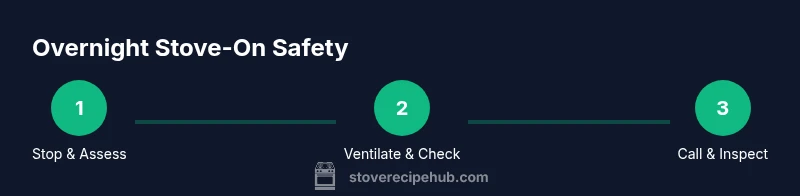
By following these steps, you can safely respond after discovering a stove left on overnight and reduce risk of fire or gas exposure. First, ensure everyone is safe, ventilate if needed, and turn off the stove from the control knob or breaker. Then assess for heat, smoke, or gas smells, and call for help if alarms sound.
Understanding the Risks of Leaving a Stove On Overnight
Leaving a stove on overnight creates multiple hazards even if you don’t see flames. Heat can damage nearby surfaces, ignite flammable items, or cause cooking oils to overheat and smoke. For gas stoves, a lingering fuel odor can lead to carbon monoxide buildup in poorly ventilated spaces. According to Stove Recipe Hub, a long-running heat source in a closed kitchen increases risk of hidden hazards. The safest approach is to treat the situation as a potential emergency until you’ve verified there are no hazards. If anyone experiences dizziness, headaches, or a gas smell, move to fresh air and call for help. While you assess, avoid turning on lights or electrical devices that could spark. By understanding these risks, you can act calmly and protect your household.
Immediate Safety Actions You Should Take Right Now
- Stop what you are doing, and if it is safe, turn off the stove at the control knobs. If you suspect a gas leak, shut off the gas supply from the main valve if you can do so safely or switch off the circuit breaker for electric stoves.
- Open doors and windows to increase ventilation and reduce heat, smoke, and odor buildup. Use a fan to help move air out of the kitchen.
- Check for signs of danger: strong gas smells, visible smoke, or heat at surfaces you touched. If you detect a gas smell or hear a hissing sound, evacuate immediately and call emergency services.
- Verify that smoke detectors and CO detectors are working; if alarms triggered, leave the home and call authorities if symptoms appear.
- Do not re-enter until authorities declare the area safe. If you must re-enter, bring a flashlight and proceed with caution.
- After this event, contact a licensed professional to inspect gas lines, electrical wiring, and the stove itself to prevent a recurrence.
Ventilation and Gas Considerations
Ventilation is essential to disperse heat, smoke, and any potential gas fumes. Open multiple windows if safe, place fans to push air to outside, and avoid recirculating air with the kitchen exhaust hood if it only recirculates air. If you have a carbon monoxide detector, ensure it is functioning and positioned according to the manufacturer’s guidelines. If you smell gas or hear a hiss, evacuate immediately and call emergency services. In homes with gas stoves, a gas company technician may need to check the supply line and shut-off valve.
Assessing for Heat Damage and Contamination
Overnight heat can warp cabinet linings, warp countertop edges, and degrade insulation around wiring. Look for discoloration or melted plastics near the stove, softened countertops, or scorch marks on backsplashes. Food oils can aerosolize when overheated, so ventilate thoroughly and wipe surfaces with a mild degreaser once it is safe. Smoke can also leave a residue that affects air quality; use a damp microfiber cloth to clean nonporous surfaces after heat exposure and ensure the area dries completely before reuse. If you experience headaches or dizziness after exposure, seek medical advice.
How to Inspect Your Stove and Surroundings After the Event
Begin with a visual inspection of burners, coils, and igniters for any signs of damage or corrosion. If you have an electric stove, check the control panel and wiring for scorch marks. For gas stoves, ensure the gas line shut-off valve is accessible and not leaking. Test that the knobs return to the OFF position firmly and verify the stovetop surface is cool to the touch before touching any components. Inspect nearby items such as wooden cutting boards, paper towels, or oven mitts that may have been heated accidentally.
When to Contact Professionals
Call a licensed gas technician if you detect a gas odor, hear a hissing sound, or suspect a leak. Electric stoves that fail to shut off, create sparking, or show smoking components require a qualified electrician. If detectors alarm or you feel unwell (dizziness, nausea, headaches), leave the area and seek medical attention. A professional assessment should include gas line integrity, electrical safety, and a full appliance inspection to prevent a recurrence. If you’re unsure, it is safer to contact emergency services for guidance.
Preventive Measures to Avoid Future Incidents
Set timers or smart plugs that can shut the stove off after a set period, especially when cooking late or overnight. Consider installing a remotely controllable shut-off valve for gas lines, coupled with a CO detector in or near the kitchen. Maintain clear spaces around the stove—keep flammable items at least three feet away—and regularly service burners, coils, and igniters. Create a simple kitchen safety routine: check that all knobs point to OFF when not in use, test detectors monthly, and keep a written emergency plan visible in the kitchen. The Stove Recipe Hub team emphasizes configuring safety devices and practicing drills so your family is prepared without panic during a real incident.
A Quick Post-Incident Safety Checklist
- Ensure heat source is fully off and area is ventilated
- Check CO and smoke detectors; replace batteries if needed
- Look for signs of heat damage and clean affected surfaces
- If gas smell or alarms persist, evacuate and call emergency services
- Schedule professional inspection of stove, gas lines, and electrical wiring
- Update your home safety plan and practice a drill with household members
Common Myths About Overnight Stove-On Incidents
Myth: If there are no flames, there is no danger. Reality: Heat can cause fires, gas buildup, and CO exposure even without flames. Myth: It’s safe to re-enter once it smells normal again. Reality: Gas, heat, and fumes can linger; professional checks are necessary. Myth: Detectors always detect early. Reality: Detectors have placement limits and may not cover every area; regular testing matters. Myth: A quick wipe-down is enough after an incident. Reality: Deeper checks are needed for wiring, gas lines, and appliance components. Remember that well-informed precautions save lives.
Tools & Materials
- Flashlight or headlamp(to inspect dim corners without relying on ceiling lights)
- Working carbon monoxide detector(place near kitchen to detect CO buildup)
- Working smoke alarm(test before returning to kitchen)
- Ventilation supplies (windows, fans)(maximize air exchange to clear heat/smoke)
- Fire extinguisher (ABC-rated)(keep accessible; for small, contained fires)
- Phone or emergency contacts(have numbers ready for gas emergency)
- Gloves and heat-resistant surface cover(handle hot components if needed)
Steps
Estimated time: 25-45 minutes
- 1
Stop and secure the heat source
First, ensure safety by turning off the stove at the control knobs. If you suspect a gas leak, shut off the gas supply from the main valve if you can do so safely, or switch off the circuit breaker for electric stoves. This minimizes further heat and hazard as you assess the scene.
Tip: If you smell gas or hear a hissing sound, evacuate immediately before attempting any shutoff. - 2
Ventilate the area
Open doors and windows to improve airflow and reduce heat and any fumes. Use fans to push air out of the kitchen, but avoid creating a wind that fans the wrong way and stirs up dust or contaminants.
Tip: Ventilation is more effective when warm air can escape the building; keep indoor doors open for cross-ventilation. - 3
Check for hazards
Look for heat damage, melted plastics, scorch marks, or lingering odors. If there is any sign of a gas leak or persistent smoke, leave the building and call emergency services. Do not touch electrical components if they feel warm or show signs of damage.
Tip: Use a flashlight to avoid missing subtle scorch marks in hidden corners. - 4
Test safety devices
Verify that CO and smoke detectors are functioning. If alarms were triggered, replace batteries and reset per the manufacturer’s instructions. Ensure all detectors are still within their service life and properly positioned.
Tip: If detectors fail to respond or are expired, replace them before reusing the kitchen. - 5
Seek professional inspection
Contact a licensed gas technician or electrician to inspect gas lines, valves, and wiring. Arrange a full stove inspection before cooking in that area again to prevent a recurrence.
Tip: Do not resume use until a qualified professional signs off on safety. - 6
Return to normal safely
Only re-enter the kitchen after a professional clearance. When returning, keep a mobile safety plan and ensure detectors are active and functional. Debrief with household members about what happened and update your safety checklist.
Tip: Consider training all household members on basic kitchen safety and emergency steps.
Common Questions
What should I do first if I realize the stove has been left on overnight?
Prioritize safety: turn off the heat source if safe, ventilate the area, check for gas smells or smoke, and call for help if alarms sound. Evacuate if gas is detected.
First, turn off the stove if you can safely, ventilate, and check for gas or smoke. If you smell gas, evacuate and call emergency services.
Can leaving a stove on overnight cause a fire even without flames?
Yes. Prolonged heat can ignite nearby materials, damage surfaces, or cause oil to overheat and smoke. Gas leaks can introduce fire and CO hazards even without visible flames.
Heat can ignite nearby items and cause gas or CO hazards even without visible flames.
Should I always call emergency services if I smell gas?
Yes. A gas smell is a sign of a potential leak and should be treated as an emergency. Evacuate and call your gas supplier or emergency services immediately.
If you smell gas, evacuate and call emergency services or your gas provider right away.
Is it safe to re-enter the kitchen after ventilation?
Re-entry should only occur after a professional confirms it’s safe. Do not resume use if detectors are silent or there are lingering odors.
Only go back in after a professional clearance and when no odors linger.
What preventive measures reduce the chance of this happening again?
Set timers or smart switches, install working CO/smoke detectors, keep flammables away, and perform regular maintenance on your stove and gas lines.
Use timers, detectors, and routine maintenance to prevent repeats.
Do I need to replace stove components after such an incident?
Not always, but a professional should inspect igniters, coils, gas lines, and electrical wiring. Replace any damaged parts as recommended.
A pro should inspect the stove; replace damaged parts if advised.
Watch Video
Top Takeaways
- Act quickly to shut off heat sources and ventilate
- Ventilation reduces smoke and CO buildup
- Gas leaks require immediate evacuation and emergency help
- Professional inspection is essential after such events
- Prevent with timers, detectors, and maintenance