What If Oven Is Left On? Urgent Troubleshooting Guide
Urgent, practical guide to handle a left-on oven safely. Step-by-step safety checks, diagnostic flow, and prevention tips from Stove Recipe Hub.


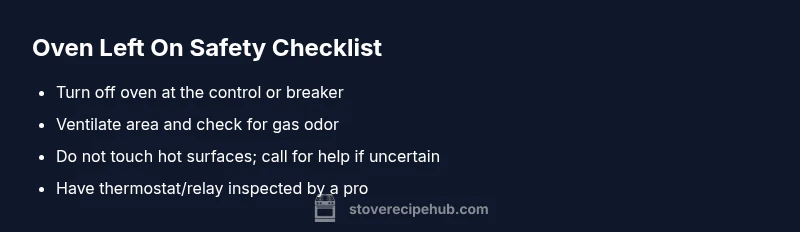
Immediate action: If you suspect the oven is left on, turn it off at the control knob if safe, or switch off the circuit breaker. Open doors or windows to vent heat and fumes. Do not leave the area until the oven is confirmed off and the area is safe. If you smell gas, evacuate and call emergency services.
What happens if the oven is left on? risk overview
When the oven is left on, the most immediate hazards are overheating, fire risk, and the potential buildup of flammable fumes or gas in the environment. According to Stove Recipe Hub, a left-on oven is a common household safety incident that often results from distraction during busy meal prep or a misread of the timer. The risk varies by oven type (electric vs. gas) and by whether the oven door is closed properly. In many cases, the danger is not instantaneous but escalates with time, especially if the area is poorly ventilated. This section explains why you should treat any suspected left-on oven as an urgent safety issue and outlines how to respond quickly and calmly. By understanding the risks and the signs to watch for, you can minimize damage and keep your kitchen safe while you investigate the cause later.
Immediate safety steps to take right now
If you suspect the oven is left on, your first priority is safety. Start by assessing whether you can safely reach the control to turn it off. If you can do so without exposing yourself to heat or flames, turn the knob to the OFF position. If the panel is hot, or you cannot reach the control safely, switch off the circuit breaker for the oven or unplug the unit if accessible. Open doors and windows to vent heat and any fumes. Do not attempt to remove racks or inspect the oven while it’s hot. If you sense a gas odor or you’re unsure, evacuate the area and call emergency services immediately. These steps reduce the risk of fire and limit the buildup of potentially dangerous gases.
Diagnostic flow: symptom-to-solution map
The diagnostic flow helps you quickly map a symptom (oven left on) to likely causes and practical fixes. Start with the simplest checks (is the oven actually off, is there a visible flame or strong odor, is the control panel responding?) and move toward more involved checks only if the simple steps don’t solve the issue. Document what you observe (temperature feel, sounds, odor) to share with a technician. Remember: safety first—if anything feels uncertain, step away and seek professional help. This approach is aligned with Stove Recipe Hub’s guidance on stove safety and prevention, and it keeps you focused on verifiable observations rather than assumptions.
Step-by-step fixes for the most common causes
- Most common cause: user forgot to turn the oven off. If it’s safe, turn the oven off at the control knob, then unplug or switch off the circuit breaker for extra assurance. 2) Control panel unresponsive or misreading: power off at the circuit breaker, wait 30 seconds, and restore power. If the panel still doesn’t respond, contact a licensed technician. 3) Thermostat or relay sticking: this requires a professional inspection; do not attempt internal repairs yourself. 4) Door latch or sensor malfunction: a faulty door latch can keep the oven sensor engaged; a technician can diagnose and replace faulty parts. 5) Gas odor or gas smell: evacuate immediately and call emergency services; do not operate switches or appliances. 6) Post-incident verification: after any repair, test the oven with a controlled, short bake cycle while monitoring for heat, smells, or abnormal noises.
If this doesn’t stop the issue, or if you feel unsafe at any point, contact a licensed technician or your gas utility for an inspection. Prevention is easier than repair: keep ovens clean, schedule routine maintenance, and educate household members on proper use.
Prevention tips and maintenance to avoid future left-on incidents
Prevention starts with routine maintenance and clear safety habits. Regularly inspect door gaskets, hinges, and control panels for signs of wear. Clean the oven interior to prevent residue buildup that can cause overheating or erratic thermostat readings. Establish a simple daily ritual: before you walk away from the kitchen, ask yourself, “Did I turn the oven off?” Place a visual cue near the timer or the oven itself to remind you. If you’re cooking with children or multitasking, consider setting a timer that audibly confirms power-down when the oven turns off. Upgrade to models with child lock or safety shutoffs if safety is a priority. Stove Recipe Hub’s analysis indicates that consistent maintenance and clear household routines significantly reduce left-on incidents.
Common mistakes and what to avoid
- Assuming you are immune to human error: always verify the oven is off after cooking.
- Relying on memory instead of a deliberate check: use a quick visual or physical check of the knob position.
- Delaying maintenance: ignore suspicious smells or inconsistent heating, and call a professional when in doubt.
- Overlooking ventilation: ensure proper kitchen airflow during and after cooking to avoid accumulating heat or gas odors. By avoiding these mistakes, you reduce the likelihood of a left-on oven turning into a fire or gas emergency.
Steps
Estimated time: 25-60 minutes
- 1
Verify power is off
First, confirm the oven is off by turning the knob to OFF. If you cannot reach the knob safely, switch off the circuit breaker or unplug the oven if accessible. This step prevents ongoing heat and reduces the risk of a fire.
Tip: If the control panel glows after turning off, assume a failure and switch off the breaker. - 2
Ventilate and assess
Open windows and doors to vent heat and any potential fumes. Check for any unusual smells, such as gas, burning plastic, or hot metal. Do not reopen the oven door repeatedly to test if it’s safe—it can feed heat back into the room.
Tip: Keep burners and flames away from the oven area while ventilating. - 3
Check for obvious signs
Look for visible flames, smoke, or a popping noise. If you see flames, do not try to douse them with water; instead, leave the area and call emergency services. If there’s no flame but a strong heat or odor, proceed to safe inspection.
Tip: Only touch the oven with insulated gloves if necessary and safe. - 4
Test the controls safely
With power restored or still cut, attempt a brief power-on test to observe whether the oven responds normally. If the panel behaves erratically or sticks on a setting, power it off again and contact a professional.
Tip: Document any error codes or abnormal sounds for the technician. - 5
Call a professional if unresolved
If the oven still seems hot or unresponsive after the basic steps, do not risk a garage or kitchen fire. Schedule a service visit or contact the manufacturer’s support line for guidance.
Tip: Ask about a safety shutoff feature and thermostat replacement options. - 6
Verify safety post-repair
After any repair, run a controlled test bake for a short duration while monitoring heat, smells, and any unusual sounds. Confirm the oven turns off normally and the area remains safe.
Tip: Keep a log of service dates and any model-specific caveats.
Diagnosis: Oven left on with potential heat or gas risk
Possible Causes
- highForgot to turn off oven after cooking
- mediumControl panel malfunction causing continuous heat
- lowThermostat/relay sticking or sensor fault
- lowDoor latch sensor malfunction preventing shutoff
- lowGas odor indicating leak or breathing hazard
Fixes
- easyTurn off oven at the control knob if safe, or switch off circuit breaker to cut power
- easyIf panel is unresponsive, cut power at the breaker and consult a licensed technician
- mediumHave thermostat/relay inspected and replaced by a qualified technician
- mediumHave door latch / sensor tested and replaced if faulty
- easyIf there is a gas odor, evacuate and call emergency services immediately
Common Questions
What should I do first if I think the oven was left on?
First, try to safely confirm whether the oven is still on. If safe, turn it off at the control; otherwise switch off the circuit breaker. Then ventilate the area and check for gas odors. If any danger is suspected, evacuate and call emergency services.
First, safely confirm the oven is off. If you can do so, turn it off; if not, switch off power and ventilate. If you smell gas, leave now and call emergency services.
Is it safe to leave the oven on for a short time if it’s used for warming?
No. Even short periods of left-on operation pose fire risk and energy waste. Always verify the oven is off after use and avoid using it as a heater.
No—never leave the oven on even briefly. Verify off after use and don't use it to warm the kitchen.
What are signs of a thermostat problem in an oven?
Signs include the oven staying hot beyond expected times, erratic temperature readings, or the oven not responding to control changes. A professional should inspect thermostat and relay components if these occur.
Look for the oven staying hot longer than expected or temperature readings that don’t match what you set.
When should I call a professional?
Call a professional if the oven won’t turn off, if there’s a persistent odor of gas, or if you notice unusual heat or electrical smells. Do not attempt internal repairs on gas ovens yourself.
Call a professional if you can’t turn it off or smell gas. Do not DIY gas repairs.
Can a left-on oven cause a fire even without a flame?
Yes. Overheating components, insulation damage, or electrical issues can ignite materials nearby even without visible flames. Treat any left-on oven as an urgent safety situation.
Oven components can overheat and cause a fire even without flames, so treat it urgently.
How can I prevent this from happening again?
Adopt a safety routine: verify off after cooking, use a timer with confirmation, keep the area ventilated, and schedule periodic maintenance checks on the oven and controls.
Create a simple post-cook check, use a timer, and maintain the oven regularly to prevent repeats.
Watch Video
Top Takeaways
- Turn the oven off and ventilate immediately
- Assess safety before inspecting or touching
- Use power shutoff if control panel fails
- Call a professional for thermostat/relay or gas concerns
- Prevent future incidents with routine maintenance and reminders