What to Do When a Gas Stove Is Left On
Learn fast, practical steps to handle a gas stove left on, reduce risk, and prevent future incidents with Stove Recipe Hub's expert guide.


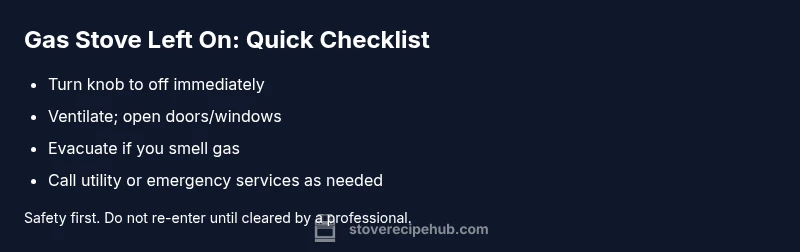
If you discover a gas stove left on, act quickly and calmly: turn the burner knob to off, open doors or windows to ventilate, and move away from the area if you smell gas. Do not ignite or switch electronics. If the odor persists or you’re unsure, evacuate and call your gas utility or emergency services immediately.
Understanding the Immediate Risks
When a gas stove left on, the most immediate dangers are gas accumulation, potential ignition, and harmful air buildup in the kitchen. The phrase when gas stove left on captures a situation that demands calm, immediate action. According to Stove Recipe Hub, the first priority is to stop more gas from flowing and to ventilate the space. Gas can spread quickly, especially in kitchens with poor ventilation, and odors may fade even while gas is still present. This is why you should not assume that silence means safety. The human nose might fail to detect a lingering leak, and small leaks can escalate if heat, sparks, or flames are introduced. In addition to the fire risk, prolonged exposure to natural gas can cause headaches, dizziness, and other symptoms. By understanding the risks and acting promptly, you reduce the chance of a dangerous incident.
Immediate Safety Actions (Within the First Minutes)
The first minutes after realizing the stove is left on are critical. If you can do so safely, turn the burner knob to off and, if you know where the main shut-off valve is, turn it off. Do not touch electrical switches, lights, or phones unnecessarily—avoid creating sparks. Open doors and windows to increase ventilation and help disperse any accumulated gas. Evacuate the immediate area if you smell gas strongly or hear a hiss. Call your gas utility or emergency services from a safe location. Do not re-enter until professionals confirm it is safe. If you must stay, keep children and pets away from the kitchen until the area is declared safe.
Step-by-Step Quick Checks You Can Do Safely
Start with the simplest checks: confirm the knob is fully turned to off; ensure the area is well-ventilated; avoid creating any sparks or flames. If you can reach the area safely, verify that the gas shut-off valve (if accessible) is closed and the control knobs show no residual heat. Look for signs of a leak around the stove and under the range hood. Remember: do not attempt any professional-grade repairs yourself; leaks require trained technicians. If the odor intensifies or you still sense gas after basic checks, evacuate and call the utility.
How to Calmly Confirm There Is No Gas Leak Before Re-Entering
Before re-entering the kitchen, confirm no active gas leak remains. Use a gas detector if you have one, or contact your gas utility to schedule a test. Ensure adequate ventilation remains in place for several minutes after any detected odor or alarm. If in doubt, wait for professional clearance and avoid re-entry until a technician confirms the system is leak-free. Remember that safety overrides convenience in these moments, and Stove Recipe Hub emphasizes conservative precautions.
Prevention and Best Practices for Future Incidents
To reduce the risk of a repeat occurrence, adopt practical safety habits. Install a kitchen gas detector near the stove for early warning, and keep a clear path to your shut-off valve. Regularly inspect hoses, connectors, and knobs for wear, and never leave the stove unattended while it’s on. Create a simple safety checklist that everyone in the home can follow: turn knobs fully off after cooking, ventilate when cooking for extended periods, and know where to find the gas shut-off valve. Practicing these habits makes the kitchen safer and reduces panic during emergencies.
Steps
Estimated time: 15-30 minutes
- 1
Assess safety and prepare
Ensure you’re in a safe location. Remove children and pets from the area. Gather your phone to call for help if needed. Do not re-enter until you are confident the area is safe.
Tip: Keep a dedicated safety plan visible in the kitchen. - 2
Shut off the gas supply
If you can reach the knob safely, turn it to the off position. If you know where the main shut-off valve is, consider turning it off only if you can do so safely and without entering a hazardous area.
Tip: Never use tools that could strike the valve with force. - 3
Ventilate the space
Open exterior doors and windows to disperse any accumulated gas. Use fans directed toward the outside to expedite ventilation, but avoid wiring or switches that could spark.
Tip: Place a fan facing outward near a window to push air outside. - 4
Check for active leaks safely
Do not attempt to weld or repair leaks. If you can observe damp soap bubbles or hear hissing, treat as an active leak and evacuate until professionals arrive.
Tip: Do not use lighters, matches, or electronic devices near the area. - 5
Call for professional help
Contact your gas utility or emergency services if you smell gas, cannot stop the flow, or the odor persists after initial actions.
Tip: Explain the situation clearly: - 6
Return only after clearance
Do not re-enter until a qualified technician confirms there is no leak and the area is safe.
Tip: Document the incident for a home safety log.
Diagnosis: Gas burner left on or suspected leak after leaving unattended
Possible Causes
- highKnob not fully turned off
- highGas buildup due to poor ventilation
- mediumValve or hose damage causing leak
- lowElectrical spark near open flame
Fixes
- easyTurn off the burner by turning knob to off
- easyOpen windows/doors and ventilate; avoid creating sparks
- easyIf a leak is suspected or odor persists, evacuate and contact your gas utility or emergency services
- easyDo not re-enter until professionals confirm it is safe
Common Questions
What should I do first if I realize I left the gas stove on?
Stay calm, turn the knob to off, open doors for ventilation, and evacuate if you smell gas. Call your gas utility or emergency services if the odor persists or you can't stop the flow.
Turn the knob to off, ventilate, and call for help if the gas odor is strong or the leak can't be stopped.
Is it safe to re-enter the kitchen after turning the stove off?
Only after the gas has dispersed and a professional confirms there is no leak. Do not re-enter if you still detect gas or hear hissing.
Wait for clearance from your gas utility before re-entering.
When should I call emergency services?
If you smell gas strongly, hear a hiss, or suspect an active leak that you cannot control, evacuate and contact emergency services.
If in doubt, call your gas utility or emergency services right away.
Can I use the stove again after I think it's safe?
Only after a professional confirms the system is leak-free and the area is ventilated. Do not resume use until cleared.
Don't use it until a professional says it's safe.
What maintenance helps prevent future left-on incidents?
Regular safety checks, a kitchen gas detector, and clear procedures for turning off gas help prevent future incidents.
Regular checks and detectors prevent future problems.
Are gas detectors essential in every kitchen?
Gas detectors provide early warning and can significantly reduce risk in high-use kitchens.
Yes, a kitchen gas detector is a smart safety addition.
Watch Video
Top Takeaways
- Turn off the gas and ventilate immediately.
- Evacuate if you smell gas or cannot stop the flow.
- Call the utility or emergency services when in doubt.
- Prevent future incidents with detectors and safety checks.