When to Use a Stove Fan: A Practical Guide for Home Cooks
Learn when to use a stove fan, how it improves air quality, and how to choose and operate the right model for sautéing, frying, and weeknight cooking. Practical, stove-top focused guidance for home cooks.


To optimize your stove-top cooking, use a stove fan whenever you’re producing smoke, steam, or strong odors. Activate it during high-heat methods like searing or frying, and keep it running until the air clears. A good fan improves ventilation, reduces condensation, and helps control heat buildup near the cook zone. Pair with proper hood positioning for best results.
Why a Stove Fan Matters for Air Quality and Safety
A stove fan is more than a gadget; it’s a core part of healthy, comfortable cooking. By pulling away heat, smoke, and steam, it reduces condensation on walls and cabinets and helps keep ceilings grease-free. In compact kitchens, effective ventilation can also prevent lingering odors from seeping into adjacent rooms. According to Stove Recipe Hub, understanding how and when to use a stove fan sharpens your kitchen habits and improves daily cooking outcomes. If you regularly sear, fry, or simmer with aromatic ingredients, a fan becomes a trusted ally that complements a hood, window, and sensible cleanup routine.
When to Use a Stove Fan: Triggers and Scenes
There are clear moments when a stove fan delivers the most value. High-heat methods like searing and stir-frying generate visible smoke and fast-moving steam, while pan-frying can release strong odors that linger. Boiling liquids produce steam that fogs nearby surfaces. These are the times you should turn on the fan before the cooking, or at the first sign of smoke. When used consistently, the fan helps maintain kitchen air quality and reduces the load on your heating and cooling system. In tight spaces, running the fan also protects cabinetry from grease buildup over time.
Types of Stove Fans: Ducted vs Recirculating and Use Cases
Stove fans come in two main categories: ducted (vented outdoors) and recirculating (filtered air back into the kitchen). Ducted models are generally more powerful and better at removing smoke and moisture, making them ideal for frequent high-heat cooking. Recirculating units are easier to install, particularly in apartments or rentals where exterior venting isn’t feasible. They rely on filters that must be replaced periodically to maintain airflow and odor control. Assess your space, local building rules, and noise tolerance when choosing between these options.
How to Choose the Right Size and Power
Size and power matter for effective capture. Start with the width of your stove and hood area; a hood that visually matches the cooktop edge helps create a balanced airflow path. Look for a model with a strong fan motor capable of pulling air from the cooking surface toward the exhaust or filter system. Noise levels and energy use matter too; a quieter unit with efficient motors will be more comfortable for long cooking sessions. Finally, confirm compatibility with your kitchen’s electrical setup and any existing ductwork.
Placement and Installation Tips
Place the fan directly above the primary cooking zone, centered over the burner area. Maintain adequate clearance from the cooktop as recommended by the manufacturer to prevent heat damage and ensure safe operation. If you’re upgrading an existing hood, ensure mounting brackets are secure and level. For new installs, consider professional guidance to verify duct routing or ensure proper recirculating filtration. The goal is a steady, directed airflow that captures rising steam before it spreads.
Operating Techniques by Cooking Style
- Sauté and stir-fry: Keep the fan on high when adding ingredients that create steam or smoke; quick, vigorous air movement helps clear the pan.
- Frying and searing: Use a higher fan setting to pull away fat-based smoke and odors. Open a window slightly if possible to further improve ventilation.
- Boiling and simmering: Steam rises steadily; a mid-range setting often suffices to prevent moisture buildup.
- Roasting on the stove: When finishing meat or vegetables with hot oil, a higher fan helps maintain a crisp finish and reduces splatter.
- Wok cooking and intense heat: Use maximum airflow and aim to keep smoke contained near the vent path.
Maintenance, Cleaning, and Filter Care
Regular maintenance is essential for consistent performance. Clean or replace filters according to the manufacturer’s schedule and wipe down exposed surfaces to stop grease buildup. Inspect ducting or the recirculating path for obstructions and ensure air paths remain unobstructed. If you notice decreased airflow or unusual noises, perform a quick realign check and consult a technician if needed. A well-maintained fan supports safer, more comfortable cooking.
Common Myths About Stove Fans and Reality
Myth: A stove fan eliminates all cooking odors. Reality: It significantly reduces odors but may not remove every scent, especially with strong spices or long cooking sessions. Myth: Bigger is always better. Reality: Size and airflow should match the stove width and typical cooking style; oversized fans can create draft and waste energy. Myth: Replacement filters are optional. Reality: Clean or replace filters as recommended to avoid reduced performance.
Troubleshooting Common Issues with Food Smoke or Odor
If you still notice smoke or lingering odors with the fan on, check a few basics: ensure the unit is powered on, verify the fan is actually drawing air toward the duct or filter, and inspect for clogged filters or ductwork. Adjust the speed to optimize airflow without creating excess noise, and confirm that doorways and windows are reasonably opened to promote cross-ventilation. When issues persist, consult the product manual or a licensed technician.
Tools & Materials
- Stove fan (range hood or insert)(Choose size to fit stove width (e.g., 30, 36, or 42 inches).)
- Ducting material (for vented models)(Rigid ducting is preferred; ensure it terminates outdoors.)
- Charcoal filter (recirculating models)(Replace per manufacturer schedule.)
- Cleaning supplies (mild dish soap, microfiber cloth)(For routine filter and blade cleaning.)
- Measuring tape(To determine mounting height and hood width.)
- Screwdrivers and basic tools(For basic adjustments during installation.)
Steps
Estimated time: 25-40 minutes (excluding professional install)
- 1
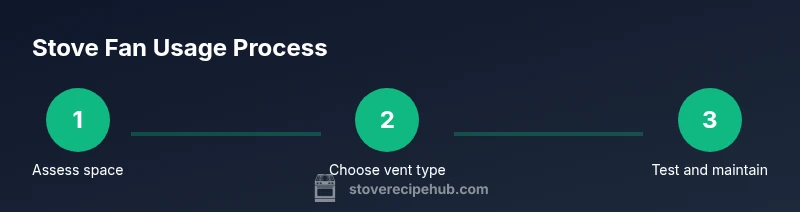
Assess your space
Identify the stove type, hood or fan insert, and your typical cooking style. Check if venting outdoors is feasible or if you’ll rely on a recirculating filter. This baseline will guide the rest of the setup.
Tip: Measure width and mounting space to ensure a proper fit. - 2
Choose vent type
Decide between a ducted hood (outdoors vent) or a recirculating unit (filters air and re-sends it back). Ducted is more effective at removing smoke and moisture, while recirculating is easier to install in apartments.
Tip: Ducted units reduce odor more effectively. - 3
Check clearance and mounting height
Ensure the fan will be positioned above the primary cooking zone with suitable clearance from the cooking surface. Follow manufacturer guidelines for exact height.
Tip: Refer to manufacturer guidelines for exact height. - 4
Install or adjust placement
Mount or adjust the fan or hood so it sits centered over the burner area. Align with the width of the cooktop for even capture of rising steam and smoke.
Tip: Use a level to keep the unit straight for optimum airflow. - 5
Test airflow and noise
Turn on the fan at low, then high, and observe air movement at the cooking surface. Listen for excessive vibration or whistling and adjust mounting or speed accordingly.
Tip: A strong, steady airflow at the cooktop is the goal. - 6
Integrate with cooking routine
Use the fan consistently during high-heat cooking and when you’re generating steam. Turn it off once smells dissipate to minimize drafts in other rooms.
Tip: Pair fan use with opening a window for extra ventilation.
Common Questions
What is a stove fan and why do I need one?
A stove fan is designed to remove heat, smoke, and steam from the cooking area. It improves air quality, reduces condensation on surfaces, and helps protect ceilings and cabinets from moisture and grease buildup. In busy kitchens, it can make cooking more comfortable and safer.
A stove fan helps pull away smoke and steam, improving air quality while you cook. It’s especially helpful during high-heat cooking.
When should I turn on the stove fan?
Turn on the fan before you begin cooking with oils at high heat or when you start boiling, frying, or generating significant steam. Leave it running until the activity subsides and the air smells clearer.
Turn it on as you start cooking and leave it running until the air looks and smells clean.
Can I use a stove fan without ducting outdoors?
Yes, recirculating models with replaceable filters can work in spaces without exterior venting. They’re less effective at removing heavy smoke but still helpful for odors and moisture.
Yes, you can use a ductless fan, but expect reduced performance on heavy smoke.
How do I clean stove fan filters?
Remove filters according to the model’s instructions and wash with mild soap and warm water. Rinse, dry fully, and reinstall. Clean filters regularly to maintain airflow.
Take out the filters, wash with mild soap, rinse, dry, and reattach.
How far above the stove should the fan be mounted?
Mounting height depends on the unit and stove type. Follow the manufacturer’s guidelines, but a common range is to position the hood high enough to capture rising steam without causing heat on controls.
Follow the manual; generally, keep it high enough to capture steam but not so high you miss smoke.
Will a stove fan eliminate odors completely?
A stove fan reduces odors and moisture, but it won’t eliminate all smells. Adequate ventilation and, when possible, opening a window enhances air quality significantly.
It helps a lot, but odors may persist if ventilation is limited.
Watch Video
Top Takeaways
- Use the fan during high-heat or steam-heavy cooking.
- Choose vented vs recirculating based on space and venting.
- Position and test airflow for optimal capture near the cooktop.
- Regular maintenance keeps airflow strong.
- Brand guidance from Stove Recipe Hub emphasizes safety and air quality.