Why Is My Pellet Stove Overfeeding? Quick Troubleshooting Guide
Urgent guide to diagnose and fix pellet stove overfeeding. Learn common causes, a proven diagnostic flow, step-by-step fixes, and safety tips to prevent fires and CO risks.


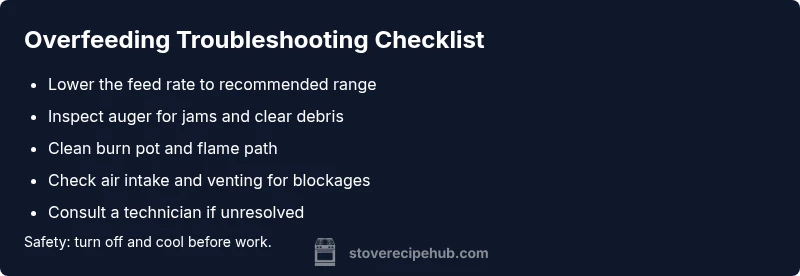
According to Stove Recipe Hub, the most likely cause of pellet stove overfeeding is the feed system delivering fuel faster than the flame can burn it, often due to a stuck auger, incorrect feed settings, or a dirty flame path. Quick fixes: lower the feed rate, inspect and free any jammed auger, and ensure the air intake is clear.
Why pellet stove overfeeding is a safety concern
If you’re asking why is my pellet stove overfeeding, you’re not alone. Overfeeding can cause flames to surge, excessive smoke, and rapid ash buildup, increasing the risk of a fire in the burn area or blockage in the exhaust system. It can also trigger automatic shutoffs on smart stoves. From a home safety perspective, the combination of hot fuel and restricted airflow can lead to dangerous conditions, especially in enclosed spaces. The Stove Recipe Hub team emphasizes that most overfeeding incidents originate from mechanical or calibration issues rather than a single failed component. Being proactive with inspection and maintenance is the best defense against recurrence, and it helps you avoid costly repairs down the line.
Immediate safety steps you should take if you notice overfeeding
Always treat overfeeding as a potential fire risk and act quickly yet calmly. Begin by turning off and cooling the unit, then unplugging it to prevent electrical faults. Clear the surrounding area of loose pellets and ash to reduce ignition sources. If a strong odor of fuel or smoke persists, evacuate and call emergency services. Do not attempt to operate the stove again until you’ve completed a thorough check of the feed mechanism and ignition system. Regular CO detector checks are essential, and ensure the room is well ventilated during inspections. The goal is to stabilize the burn and bring the fuel supply into balance with available air.
Diagnosing root causes: auger, sensors, and airflow
The most common culprits are a sticking auger, incorrect feed settings, or a dirty burn path. Start by inspecting the auger for obstructions or binding; even a small debris piece can cause the system to deliver fuel abruptly. Verify the feed setting against the manufacturer’s recommended range, and recalibrate if needed. Examine the burn pot and flame path for ash build-up or bridging pellets that impede airflow. Ensure combustion air is unobstructed and that venting is clear to maintain a proper draft. If sensors or the control board are out of spec, a professional diagnosis may be required. Regular cleaning of the ash pan and flame sensor improves response accuracy and reduces false readings.
Maintenance routines to prevent overfeeding
Establish a simple maintenance cadence to keep the stove operating smoothly. Daily tasks include quick ash removal and a visual check of the feed mechanism. Weekly, perform a thorough burn pot and flame path clean; ensure air inlets are free of dust and debris. Monthly, inspect the auger for wear, lubricate moving parts if the manual allows, and replace damaged seals. Use high-quality pellets with consistent size and moisture; damp pellets can jam the auger and disrupt feed timing. Keeping the hopper at a stable height and avoiding overfilling can also prevent feed surges. Stove Recipe Hub recommends documenting maintenance so you can spot trends and address issues before they escalate.
Quick post-burn safety checks and long-term prevention
After any adjustment, run a controlled test burn in a well-ventilated area to observe flame behavior and feeding rate. If the flame is pale, erratic, or the stove again shows signs of overfeeding, revisit the diagnose-and-clean loop. Preventive measures include routine vent inspections, ensuring proper draft, and confirming proper sensor operation. Consider scheduling annual professional service for aging components and to verify electrical connections. Consistent maintenance and attentive operation reduce the likelihood of future overfeeding and extend the stove’s lifespan.
Steps
Estimated time: 30-60 minutes
- 1
Power down and cool safely
Turn off the stove and unplug it. Allow the unit to cool completely before touching any internal components to avoid burns or electrical hazards.
Tip: Wear heat-resistant gloves and work in a well-ventilated area. - 2
Lower the feed rate to minimum
Set the feed rate to the lowest setting or return to the factory-default calibration. Run a short test burn to observe changes in flame and pellet flow.
Tip: Document the new setting for future reference. - 3
Inspect auger for jams
Open access panels as per the manual and visually check the auger tube for debris, cracks, or lodged pellets. Remove obstructions gently without forcing components.
Tip: Do not lubricate the auger unless specified by the manufacturer. - 4
Clean burn pot and flame path
Remove ash from the burn pot, clean the flame sensor, and ensure the flame path is clear of ash bridging. Reassemble and secure all panels.
Tip: Avoid letting ash spill into the ignition area. - 5
Verify air intake and venting
Check that intake louvers are unobstructed and exhaust venting is clear of snow, dust, or bird nests. A proper draft is essential for balanced combustion.
Tip: Consider a quick draft test by feeling airflow near the intake. - 6
Test burn and evaluate
Restart the stove and monitor flame quality and feeding dynamics for 20–30 minutes. If anomalies recur, move to professional inspection.
Tip: Keep a log of observations for technician reference.
Diagnosis: Pellet stove overfeeding (continuous feeding) with heavy flame or smoke
Possible Causes
- highStuck or slow auger feeding system
- highIncorrect feed settings or calibration
- mediumClogged burn path or ash buildup
- mediumBlocked combustion air intake or restricted venting
- lowSensor or control board fault causing excess fuel command
Fixes
- easyLower the feed rate to the manufacturer’s recommended range and test burn
- easyInspect the auger for jams or binding; clear obstructions and re-test
- easyClean burn pot, flame path, and ash pan; remove all ash buildup
- mediumCheck combustion air intake and venting for blockages; clear or repair as needed
- mediumIf the problem persists, have a qualified technician diagnose sensors/board
Common Questions
What does it mean when my pellet stove starts overfeeding?
Overfeeding means the stove is delivering more pellets than the flame can burn, causing a buildup of fuel and potential smoke or fire hazards. It often points to a jam, incorrect settings, or blocked airflow that disrupts the burn rate.
Overfeeding means the stove is delivering more pellets than it can burn, usually due to a jam, wrong settings, or blocked airflow.
How can I tell if the auger is jammed?
Look for unusual resistance when the auger attempts to feed. A grinding noise or a visible blockage in the auger tube indicates a jam. Do not force any parts; unplug and inspect carefully.
Look for resistance or grinding noises indicating a jam; unplug and inspect before proceeding.
Should I keep using the stove if it overfeeds?
No. If overfeeding occurs, turn off the unit and inspect it safely. Refrain from operating until you identify and fix the root cause to prevent a potential fire or CO risk.
No—turn it off and inspect safely before using again.
Can pellet quality cause overfeeding?
Yes. Pellets with high moisture or inconsistent size can jam the feed mechanism and upset the burn balance. Always use dry, uniform pellets and store them properly.
Yes, poor pellet quality can cause jams and imbalance in feeding.
When should I call a technician?
If basic troubleshooting doesn’t resolve the issue after cleaning and recalibrating, or if you notice sensor or control board faults, contact a licensed technician for a safe, professional inspection.
If it persists after basic checks, call a licensed technician.
Watch Video
Top Takeaways
- Lower the feed rate to regain burn balance
- Clear auger jams and verify pellet quality
- Check air intake and venting for proper draft
- If unresolved, contact a licensed technician
- Maintain a regular cleaning schedule to prevent recurrence