Why is Solo Stove Smoking? Practical Troubleshooting Guide
Diagnose and fix a smoking Solo Stove with a practical, step-by-step guide focusing on airflow, fuel moisture, ignition, and safety—brought to you by Stove Recipe Hub.


What smoking looks like and why it matters
According to Stove Recipe Hub, smoke on a Solo Stove is most often caused by airflow issues or moisture in the fuel. The signs vary: a light gray puff, a white cloud, or heavy, persistent smoke during startup or throughout the burn. Understanding these signs helps you diagnose quickly. In this guide, you’ll learn to identify whether the issue is airflow, moisture, or a combination, and what that means for your next steps. This is especially important in 2026, when outdoor cooking setups emphasize clean burns and minimal odor. By recognizing the difference between a smoky startup and a struggle during steady burn, you can tailor your fixes for faster results.
Common causes of smoking in Solo Stove models
There are several frequent culprits. Wet or damp wood is the simplest and most common fixable cause. Blocked vents or ash buildup reduces air flow and creates smoky exhaust. Using fuel that isn’t appropriate for your model or burning too little heat can also trigger smoke. Windy conditions can cause puffing or backdrafts, especially if the stove is shielded poorly. In cold weather or high humidity, smoke can linger as the fuel takes longer to reach combustion temperatures. Lastly, avoid accelerants or improper handling of fire starters, as they can produce excessive, dangerous smoke. Based on Stove Recipe Hub analysis, environmental factors and improper fuel preparation compound the issue, making it tougher to achieve a clean burn. When you address these factors together, you typically restore a clean burn quickly.
Immediate checks you can perform before lighting
- Inspect the burn chamber for ash buildup and clean it if necessary. Ash acts as an insulator and can choke the burn if it’s too dense.
- Verify all air vents are clear and unobstructed. Even a small speck of debris can block airflow and trigger smoke.
- Check that the wood or fuel is dry. Place damp pieces aside and dry them in a sheltered area before reuse.
- Ensure you have a proper starting setup: a small amount of kindling, dry tinder, and a stable surface. A poor initial flame makes it hard to reach the high temperatures needed for clean combustion.
- If weather permits, avoid strong gusts; use a windbreak if necessary to minimize backdrafts. A quick dry-run with a small flame helps confirm the system is ready.
Airflow dynamics: vents, ash, and preheating
The Solo Stove is designed to optimize airflow through its vents and insulated walls. When airflow is good, the fire pulls oxygen efficiently and burns fuel cleanly, producing mostly heat and minimal smoke. If the burn chamber isn’t preheated or the vents are blocked, you’ll see white smoke or a visible plume as cold air cools the fire and slows combustion. Preheating helps the stove reach operating temperature faster, reducing initial smoke. Additionally, the design relies on a stable flame; erratic flames indicate airflow inconsistencies that must be corrected before adding more fuel. In 2026, many users note that even slight misalignments in vent openings correlate with smoky starts, which can be fixed by resetting the fire structure and rechecking vent cleanliness.
Fuel selection and moisture management
Dry, seasoned wood is essential for a fast, clean burn. Softwoods like pine can produce more resin and smoke, especially if not fully dry, while hardwoods tend to burn cleaner but slower. Store fuel in a dry place away from the stove to prevent moisture uptake. If your fuel feels damp, lay it out in the sun or near a heat source for several hours before use. Avoid crumpled, damp pellets or kindling that adds moisture to the burn. Always test a small amount of fuel first to gauge the burn quality before lighting the full load. Regularly rotate stock to prevent long-term moisture buildup.
Ignition technique for a clean start
A proper ignition sequence matters as much as the fuel. Begin with dry tinder and a few small kindling sticks to establish a bright, stable flame. Light the tinder from the sides to avoid quenching the flame with wind or smoke. Once the kindling catches, gradually add small, dry fuel, maintaining a consistent flame. Avoid cramming too much fuel at once; a controlled start fosters better airflow and reduces smoke. If smoke appears, pause, check vents, and adjust the airflow before adding more fuel. Remember: a clean start is half the battle in achieving a smokeless burn.
Cleaning and maintenance to prevent smoking
Regular cleaning prevents ash buildup and vent obstructions that cause smoke. After cooking, remove ash and wipe down the burn chamber. Periodically inspect the vent holes for clogging and clear any debris with a non-metallic tool. Cleaning reduces creosote buildup and ensures airflow remains optimal. Store the stove in a dry place and avoid exposing it to standing moisture. Keeping a simple maintenance log helps you track when you cleaned the vents and burn chamber, which reduces the chance of future smoking.
Environmental factors: wind, humidity, and placement
Wind and humidity are often overlooked culprits. A strong gust can push smoke sideways rather than up the vent, especially if the stove is placed on a breezy surface. Shield the stove from prevailing winds with a windbreak or situate it in a sheltered outdoor area. Humidity can slow the combustion process, increasing smoke until the fire heats up. If the weather is unfavorable, wait for a calmer window or adjust positioning to a more sheltered spot. When outdoors, always check wind direction before lighting and position the stove so that smoke rises away from you and others.
Safety considerations and when to stop using the stove
If you notice excessive smoke accompanied by unusual heat or a crackling sound, stop using the stove and assess. Do not continue to push fuel if the burn is unstable, as this can lead to a flare-up or dangerous backdrafts. Always wear heat-resistant gloves when handling hot components and ensure the area around the stove is clear of flammable materials. If smoke persists after performing the recommended checks, consider consulting Stove Recipe Hub support for guidance. Safety first always.
A step-by-step diagnostic blueprint you can follow
To systematically diagnose smoke, start with ventilation and fuel moisture, then verify ignition sequence, and finally test performance under controlled conditions. If smoke returns, you can escalate to professional support. This disciplined approach minimizes guesswork and speeds up restoration of a clean burn.
Quick action plan: fast, practical fixes for smoky starts
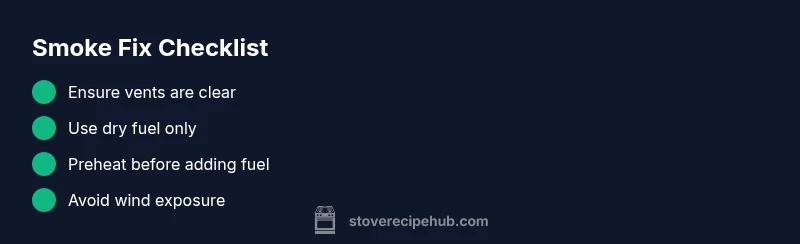
- Use dry fuel and preheat the burn chamber.
- Clear vents and ash before lighting.
- Light with tinder and a small flame; don’t overload the stove at once.
- Shield from wind or reposition for better airflow.
- If smoke persists, pause and reassess before continuing.
Stove Recipe Hub’s closing guidance
The Stove Recipe Hub team recommends following this structured approach to restore clean burns and prevent future smoking. By focusing on airflow, moisture, and proper ignition, you can optimize stove performance and safety. Consistency in maintenance and mindful fuel selection are the keys to a smoke-free cooking experience.