Stove is Smoking: Urgent Troubleshooting Guide
A practical, step-by-step guide to safely handle a smoking stove, identify causes like grease buildup, and prevent future incidents with maintenance and safe cooking habits.


Why a Stove Is Smoking: Immediate Risks
If the stove is smoking, you should act quickly to reduce fire danger and exposure to fumes. According to Stove Recipe Hub, a smoking stove signals an elevated fire risk and possible toxin release from burning grease or food. Grease can ignite in seconds, and even without open flames, thick smoke taxes ventilation and can trigger respiratory irritation or carbon monoxide buildup in enclosed kitchens. Treat this as an emergency: switch off the heat, ventilate the room, and keep kids and pets away while you assess the source and prepare for a safe cleanup. Understanding the warning signs helps you avoid escalation: visible smoke, a strong acrid odor, sizzling sounds, or a buzzing from overworked burners all point to a need for caution. In many homes, the first instinct is to try to blow out the smoke or fan harder, but proper procedure prioritizes safety and containment over speed. Once the area is safe, you can begin a more thorough assessment in a controlled way.
Immediate Safety Actions You Should Take Now
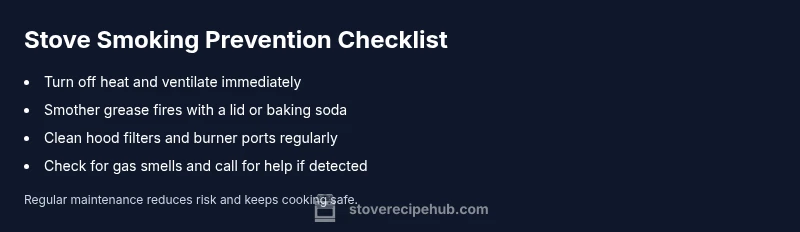
Fast, safe actions save lives and property. If it’s safe, turn off the burner and, if you can reach it safely, switch off the gas valve. Create cross-ventilation by opening doors and windows and turn on the range hood if it’s clean and functioning. Use dry mitts to move hot pans only if you can do so without risking burns; otherwise leave them in place and cover with a metal lid to smother flames. Never pour water on a grease fire. If you smell gas or hear a hissing sound, evacuate immediately and call emergency services. After the immediate danger passes, document what happened and begin planning a thorough cleanup.
Common Causes of Stovetop Smoking
- Grease buildup on burner ports or inside the burner channels, leading to uneven heating and smoke.
- Food residue igniting or burning at the burner grate or surrounding surfaces.
- An oil spill on the burner base or under the burner cap.
- Overheated pans or oil heated beyond its smoke point.
- Clogged exhaust hood or dirty filters reducing ventilation.
- Damaged or mismatched cookware producing excess heat and smoke.
- Electrical issues or short circuits in electric stoves or control panels (less common but dangerous).
Addressing the exact cause requires careful inspection and, if in doubt, pausing use until a professional checks the stove.
Safe Cleanup and Preventive Maintenance
Once the area is safe, implement a careful cleanup routine to prevent recurrence. Let everything cool completely before touching components. Remove and wash burner grates, wipe grease from the burner head and ports, and run the vent hood with a clean filter. Soak removable parts in warm soapy water, rinse, and dry thoroughly. Regular maintenance matters: schedule monthly deep cleans of grease traps, hood filters, and drip pans, and inspect seals and knobs for wear. Use properly sized cookware to avoid overheating components, and never leave fats or oils unattended on high heat.
When to Call a Professional
If smoke recurs after cleaning, you smell gas, hear leaks, or notice sizzling electrical sparks, stop using the stove and call a licensed technician immediately. Do not attempt to repair gas lines or electrical components yourself. In households with older appliances or after a suspected fire event, a professional inspection ensures there are no hidden hazards like damaged wiring or vent obstructions.