Stove Not Working: Urgent Troubleshooting Guide for Home Cooks
Learn urgent, step-by-step troubleshooting for a stove that won't light or power up. Identify common causes, safe fixes, and when to call a pro. This guide helps you diagnose power, gas, ignition issues quickly and safely.


Stove not working? Start with safety and quick checks: ensure the outlet or breaker is active, gas valve is open for gas stoves, and the burner and ignition port are clean. If these steps don’t restore function, call a qualified technician. This guide walks you through safety, diagnosis, and practical fixes in clear steps.
Safety First: Immediate checks when your stove is not working
In any stove outage, safety comes before diagnosis. If you smell gas, hear hissing, or notice a strong gas odor, evacuate immediately and call emergency services. Do not operate electrical switches, light flames, or use the stove until you’ve confirmed there is no gas leak. If the kitchen seems safe, switch off the circuit breaker for the stove at the panel, then verify there is power elsewhere in the home. Use a working lamp or phone flashlight to inspect the outlet, and ensure the area around the stove is clear of combustibles. This approach reduces risk and gives you a solid starting point for troubleshooting.
Common causes of a stove not working, by system
Issues fall into a few broad categories, and recognizing the system involved speeds up a fix. Electrical problems often show as a non-responsive display or no spark; a tripped circuit breaker can kill power to the entire appliance. Gas stoves may fail to light if the gas valve is not open, the regulator is blocked, or there is an intermittent gas supply. Ignition problems can come from dirty ports, a clogged burner, or a misaligned cap. Safety features can also block operation if a child lock or anti-tip switch is engaged. Finally, external factors like damaged cords, loose connections, or a simple blown fuse can stop a stove from working. By thinking in terms of systems, you narrow down the likely root cause quickly, especially if you keep a quick checklist handy.
Basic troubleshooting you can perform safely (no disassembly required)
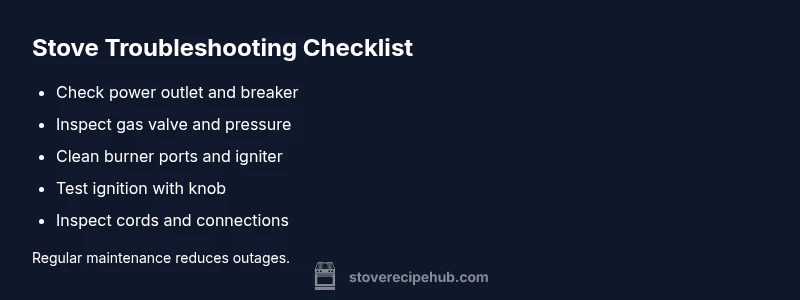
Start with the simplest checks and move to more involved ones only if the basics pass. First, confirm there is power by plugging a lamp into the outlet near the stove; if it doesn’t light, reset the circuit breaker and re-test. For gas stoves, verify the gas valve is fully open and that you don’t smell gas. Remove the burner cap and inspect the ports for debris; clean with a soft brush and dry cloth, then reassemble. Listen for the ignition click when turning the knob; if you don’t hear a click, the igniter or control module may need service. Finally, ensure the range hood vent is clear and the area around the stove is free of obstructions. If any step reveals a serious issue, stop and seek professional help.
Distinguishing electric vs gas stove problems and how to approach each
Electric stoves typically fail due to power or control electronics. If the display is dark or the burner won’t heat, start by testing the outlet and breaker and then verify the cord and terminal block connections. Gas stoves often light using an ignition spark; if there is no spark or a click, the igniter or electrode may be dirty or failed. In some cases, a blocked gas line or a stubborn regulator can cause a no-ignition condition even when gas is available. Use a spare appliance (like a lamp) to test power separately, and treat gas smells as a safety emergency. When in doubt, separate the electrical and gas aspects and address one at a time to prevent cross-problems.
When to proceed with a more detailed fix or call a professional
If you identify an electrical fault such as a burnt connector, scorched insulation, or an error code that you cannot clear, it’s safer to call a licensed technician. Gas-related issues, including leaks, regulator faults, or persistent gas odor, require a professional gas technician or the utility company. Attempting major repairs on yourself can void warranties and create safety hazards. In many cases, technicians can perform a quick diagnostic and provide a cost estimate before replacing any parts. Remember: if you are not confident, don’t push through a repair. Safety first always.
Maintenance to prevent future outages and keep your stove reliable
Regular preventive maintenance saves you from being stuck with a non-working stove. Clean burners and ignition ports monthly, wipe down knobs and surfaces to avoid sticking hardware, and inspect the power cord and outlet for signs of wear. Schedule a yearly professional inspection if your stove has electric components or gas connections. Use a stainless-steel brush to clear stubborn debris from burner heads, and ensure your range hood is clean and functioning to prevent moisture buildup. Practicing these habits reduces downtime and keeps your stove ready for weeknight meals.
When to call a pro and what to expect
If basic troubleshooting doesn’t restore function, a licensed technician will inspect electrical wiring, control boards, gas connections, and ignition systems. Expect a quick diagnostic, identification of the failing component, and an upfront estimate. Ask about warranty coverage on parts and labor, and find out whether the issue affects safety features or ventilation. Having your stove’s model number and symptoms ready will speed up the visit. In most cases, the technician can complete the repair in a single visit or schedule a follow-up if parts are on backorder.
Steps
Estimated time: 45-90 minutes
- 1
Verify power supply to the stove
Begin by confirming the outlet near the stove is live. Plug in a small appliance or use a tester to ensure power reaches the socket. If the outlet is dead, reset the circuit breaker and re-test. Do not bypass safety devices.
Tip: If other outlets in the kitchen are also dead, the issue is likely a main breaker or panel problem. - 2
Check gas supply and valve position
For gas stoves, make sure the gas shutoff valve is fully open and there is no gas odor. If you smell gas, evacuate and call the gas company immediately.
Tip: Gas odors require immediate safety action; never test by lighting a flame. - 3
Inspect ignition and electrode
Turn the knob to ignite and listen for the ignition click. If you hear nothing, the igniter or electrode may be dirty or damaged. Do not prod into the burner with metal objects.
Tip: A simple cleaning with a soft brush can restore ignition in many cases. - 4
Clean burner ports and burner cap
Remove burner caps and inspect the ports for debris. Clean gently with a soft brush or cloth and ensure the ports are open. Reassemble and test each burner.
Tip: Dry thoroughly to avoid moisture affecting ignition. - 5
Check electrical connections
Inspect the range cord, plug, and terminal block for looseness or damage. If you’re uncomfortable, stop and call a professional. Avoid touching exposed wiring.
Tip: Only attempt electrical checks if you’re confident and the appliance is unplugged. - 6
Test and verify operation
Power the stove and test each burner in sequence. If a single burner fails, focus on its specific components. If none operate, the issue may be broader electronics or gas system.
Tip: Document symptoms and any codes seen on the display for the technician.
Diagnosis: Stove won't light or power on
Possible Causes
- highPower supply issue (outlet, cord, or breaker)
- mediumGas supply interruption or valve closed (gas stove)
- mediumIgnition system or burner blockages
- lowControl board or electronics failure
Fixes
- easyReset circuit breaker and test power with a known device
- easyOpen gas valve to ensure supply and verify there is no gas odor before testing ignition (gas stove only)
- easyClean ignition ports and burner head to remove debris that blocks sparking
- hardReplace ignition module or control board if voltage or signal is insufficient; contact a professional
Common Questions
Why won't my stove ignite even when I turn the knob?
A dirty igniter, clogged burner ports, or an electrical fault can prevent ignition. Clean the igniter and ports, then test. If it still won't light, seek professional help.
Ignition problems are often caused by dirt or wiring; clean the igniter and ports, and consult a pro if it still fails.
Is it safe to troubleshoot a gas stove myself?
You can perform basic checks like power and valve position, but do not repair gas lines or regulators yourself. If you smell gas or suspect a leak, leave the area and call the professionals.
Do basic checks, but avoid gas line work; call a pro if you suspect a leak.
What should I do if I smell gas?
Evacuate immediately and call the gas company or emergency services from a safe location. Do not switch lights or use electrical switches.
If you smell gas, leave now and call for help from a safe spot.
How often should I clean the burners to prevent clogs?
Clean burners monthly and after heavy use; remove caps and ports carefully to clear debris.
Clean burners monthly to prevent clogs and misfires.
When should I replace the igniter or control board?
If the igniter clicks inconsistently or never, or the control board shows persistent error codes, replacement is often needed.
If the igniter is unreliable or there are persistent errors, replacement is usually required.
Watch Video
Top Takeaways
- Prioritize safety before diagnosing.
- Check power, gas, then ignition in that order.
- Use the step-by-step guide rather than forcing parts.
- Call a pro for gas leaks or complex electrical hazards.