Why Is My Stove Not Lighting? Troubleshooting Guide
Facing a stove that won't light? This urgent, step-by-step guide from Stove Recipe Hub helps you diagnose ignition problems on gas and electric stoves, with practical safety checks and maintenance tips to fix common issues fast.


Most stove lighting problems come from a dirty igniter, clogged burner ports, or a gas/power supply issue. Start with power or gas flow checks, then clean the igniter and burner areas. If it still won’t light, follow the diagnostic flow and proceed to the step-by-step fixes.
Why Ignition Fails on a Stove
When your stove won't light, the problem can feel urgent, but the root causes are often straightforward. Why is my stove not lighting? In many homes, the culprit is dirt on the ignition electrode, blocked burner ports, or a disruption in power or gas supply. According to Stove Recipe Hub, the fixes are usually simple and safe when approached in the right order. Begin with the easiest checks and avoid unnecessary service calls. By understanding the common failure modes, you can recover a malfunctioning stove quickly, whether you have a gas or electric model. This section lays out the typical culprits and a practical plan you can follow in your kitchen, with reader-friendly guidance and real-world tips from the Stove Recipe Hub team.
Gas vs Electric: Common Failure Modes
Gas stoves rely on a spark to ignite gas at the burner. If the burner won’t light despite gas flow, the ignition electrode may be dirty or misaligned, or the burner ports could be blocked. Electric stoves use heating elements or coils; if the element is damaged or the control switch fails, the burner may heat slowly or not at all. In both cases, dirt, corrosion, loose wiring, and debris are frequent culprits. A quick check is to observe whether a spark (gas) or a click (electric) is happening when you turn the knob, then proceed with targeted cleaning or testing. This section helps you distinguish between the two types and set expectations for the fixes ahead.
Quick Safety Checks You Can Perform Now
Safety first: turn off the stove, unplug an electric model, and avoid open flames if you’re unsure. Confirm the gas supply valve is fully open on gas units, and check the circuit breaker or GFCI on electric stoves. Remove the grate and burner cap to inspect for obvious debris or residue. Use a dry brush or compressed air to dislodge crumbs from the igniter and burner ports—do not use water or liquids near ignition components. Reassemble and test briefly. If you notice signs of gas leakage, corrosion, or damaged wiring, stop and call a professional immediately. These checks are designed to be safe, quick, and effective for a broad range of models.
Understanding the Ignition System (Gas) and Heating Element (Electric)
Gas ignition relies on a precise spark at the electrode to ignite gas at the burner. If the electrode is dirty, misaligned, or the wiring is loose, the spark may not result in ignition. Clogged burner ports trap gas and prevent flame. Electric stoves depend on a heating element; if the coil or control switch fails, the burner may glow without ignition. In both cases, the symptom is similar but the root cause differs. This section helps you differentiate by inspecting the spark, checking for gas or power supply, and recognizing when a replacement is required.
Routine Maintenance to Prevent Ignition Problems
Create a simple maintenance habit that keeps ignition paths clear: wipe away crumbs after cooking, periodically remove and clean the burner caps, and inspect ignition components for signs of wear. Avoid harsh cleaners near ignition sensors; never splash water onto live electronics. Schedule an annual professional check for gas ovens to verify connections, valves, and safety devices. Regular cleaning reduces the likelihood of debris causing misfires and extends the life of ignition parts.
When to Call a Professional and What They Will Do
If you smell gas, hear hissing, or cannot safely shut off a gas line, leave the area and call emergency services. A professional should assess gas leaks, shutoff valves, and the integrity of connections. For electric models, a faulty control module or damaged heating element typically requires replacement by a licensed technician. In many cases, a pro can perform a safe diagnostic test, check wiring continuity, and confirm ignition sensor health without risking safety. Regular maintenance and prompt professional attention prevent small issues from becoming costly repairs.
Diagnostic Flow Snapshot (Narrative)
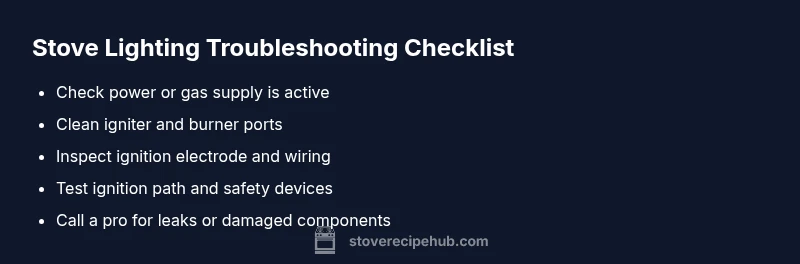
This flow mirrors the diagnostic flow matrix used in Stove Recipe Hub analyses. Start with simple checks: confirm power or gas supply, inspect the igniter and burner ports, and listen for ignition cues. If the issue persists, isolate the likely cause into one of four paths: power/gas supply, igniter/burner ports, ignition module, or heating element. For each path, follow the recommended fixes in order of ease, and escalate to professional service if basic steps fail or safety concerns arise. The goal is a safe, efficient resolution that minimizes downtime and preserves kitchen safety.
Steps
Estimated time: 30-60 minutes
- 1
Check power and gas supply
Confirm the appliance is plugged in (electric). If gas, verify the gas valve is fully open and there is gas flow to the line. Listen for any hissing sounds that could indicate a leak but do not ignore a strong gas odor.
Tip: Always start with the simplest checks—power and valve position—before diving deeper. - 2
Clean ignition components
Remove the grate and burner cap; gently brush the igniter electrode and surrounding areas to remove dust and food debris. Use compressed air to clear any stubborn particles from the burner ports.
Tip: Use a dry brush; liquids can cause corrosion or electrical issues. - 3
Inspect igniter and wiring
Look for loose wires, cracks in the ceramic insulator, or a visibly damaged electrode. If you see damage, do not attempt repairs—arrange professional replacement.
Tip: A loose connection can prevent a spark from forming even if you can see one. - 4
Test ignition path
With caution, turn the knob to the ignition position and observe if a spark is produced or if gas flows when the knob is turned. For electric stoves, listen for a click and observe the coil heat after wiring checks.
Tip: Never hold metal objects near live electrical components. - 5
Reassemble and re-test
Position the burner cap and grate correctly, reseat the burner, and test multiple times. If ignition remains inconsistent, proceed to professional service.
Tip: Document symptoms and any patterns to share with the technician. - 6
Call a professional
If basic steps fail or you detect gas leaks, contact a licensed technician immediately. They can perform a comprehensive diagnostic safely and verify all safety devices are functioning.
Tip: Don’t bypass safety devices or operate a faulty appliance.
Diagnosis: Stove won't light
Possible Causes
- highPower or gas supply interrupted
- highDirty igniter or clogged burner ports
- mediumFaulty ignition module or electrode
- lowThermocouple issue (gas ovens)
Fixes
- easyVerify outlet/gas valve is on and supply is active; reset circuit breaker if needed.
- easyClean the igniter and burner ports with a dry brush or compressed air; reassemble and test.
- mediumInspect the ignition module/electrode for wear or damage and replace if necessary (professional).
- hardReplace thermocouple if signs of wear or failure are present (professional).
Common Questions
Why won’t my gas stove light even though the knob is turned on?
Common causes include a dirty igniter, clogged burner ports, or a gas supply issue. Start with cleaning the igniter and ports, then confirm the gas valve is open. If it still won’t ignite, proceed with the diagnostic flow.
A dirty igniter or clogged burner ports are the most frequent culprits. Start with cleaning, then check the gas valve and electrical supply.
My stove is electric and won’t heat. What should I check?
Check the power supply and circuit breaker, then inspect the heating element for visible damage. If the element or control board is faulty, a professional replacement may be required.
First, verify power and breaker. If the element looks damaged or won’t heat after power is restored, call a pro.
Is it safe to light a stove with a lighter if it won’t ignite?
Do not rely on a lighter to ignite a stove. This can be dangerous and may cause gas buildup. Always follow safe testing methods or call a professional.
No—lighting with a lighter is risky and not recommended. Seek professional help if ignition remains stubborn.
How often should I clean the igniter?
Clean the igniter and surrounding areas whenever you notice cooking residues or after heavy spillovers. Regular upkeep reduces the chance of ignition failure and improves reliability.
Clean the igniter regularly, especially after heavy cooking or spills.
When is professional help required?
Call a professional if you smell gas, hear gas leaks, observe sparking without ignition, or if warning lights indicate a safety issue. A pro can safely diagnose leaks, faulty wiring, or failed control components.
If you smell gas or the burner won’t ignite after basic checks, contact a licensed technician.
Can ignition issues be resolved without replacing parts?
Many ignition problems stem from dirt and debris that can be cleaned. If cleaning and basic checks don’t restore ignition, parts may be worn and require replacement by a pro.
Sometimes a simple clean fixes it, but worn parts usually need replacement by a pro.
Watch Video
Top Takeaways
- Identify the root cause: power/gas, igniter, or heating element.
- Perform safe, simple checks before complex diagnostics.
- Regular cleaning reduces ignition failures.
- Call a pro for gas leaks or damaged components.