When Your Stove Doesn’t Light: Troubleshooting Guide
An urgent, practical troubleshooting guide to diagnose and fix stove ignition problems on the stove-top. Learn safety checks, common causes, and practical fixes from Stove Recipe Hub.


Most stove-light failures come from power, gas supply, or a dirty burner. Start with simple checks: confirm power at the outlet and a live breaker, then ensure the gas valve is fully open, and wipe spills from the burner head. If it still won’t light, follow the step-by-step flow below.
Immediate Safety and First Steps
Safety comes first when your stove doesn’t light. If you smell gas, hear hissing, or see a burner glow red, evacuate and call emergency services. Do not re-light the burner until it has been inspected by a professional. For non-emergency situations, unplug electric stoves or switch off the circuit breaker and shut the gas valve if you can do so safely. Then, ventilate the area for several minutes before attempting any checks. According to Stove Recipe Hub, starting with safety checks helps prevent accidents and reduces the risk of gas buildup or electrical shock. If you’re comfortable, gather basic tools (flashlight, clean cloth, small brush) and proceed to the non-intrusive checks described in the next sections.
Quick Diagnostics: Signals to Look For
Look for visible signs that guide the diagnosis. A sparking ignition that never lights, a burner that shows a weak flame when gas is on, or a clicking sound that stops abruptly can indicate different issues. For gas stoves, a sluggish or absent ignition typically means either a gas flow problem or an ignition pathway obstruction. For electric stoves, a tripped circuit or a blown fuse is a common culprit. Note any odor or unusual heat; these details help pinpoint safe next steps. According to Stove Recipe Hub, documenting symptoms helps you or a technician target the root cause quickly.
Common Causes in Detail
There are a few frequent culprits behind a stove that won’t light. First, power or electrical supply issues—outlets, cords, or circuit breakers—are common. Second, gas supply interruptions or a closed gas valve can prevent ignition. Third, dirty burners, clogged ports, or a misaligned burner cap can stop ignition even when gas is present. Finally, a faulty ignition electrode, sensor, or worn ignition module can render ignition ineffective. Understanding these causes can help you triage safely without unnecessary disassembly. Stove Recipe Hub emphasizes starting with the simplest, safest checks first before moving to deeper diagnostics.
Diagnostic Flow Overview
This section outlines a practical flow to compare symptoms with likely causes and recommended fixes. Begin with the easiest checks and progress to more involved diagnostics if the issue remains unresolved. If you smell gas at any point, stop and call for professional assistance immediately. This flow is designed to minimize risk while maximizing the chances of a quick fix.
Step-by-Step Fixes for the Most Likely Issue
This section walks you through concrete actions, from quick resets to targeted cleanings. Start with the lowest-friction fixes and escalate only as needed. After each step, test the stove to see if ignition is restored. If a step reveals a safety concern, stop and seek professional help. The following steps align with the most common failure patterns observed by Stove Recipe Hub.
Safety, Warnings, and Pro Tips
Safety warnings are essential in stove troubleshooting. Never use open flames to test a gas line. Avoid poking at gas ports with metal objects. Wear eye protection if you’re cleaning burners and ensure good ventilation. If you smell gas, leave the area and call emergency services. Always unplug electric stoves or switch off the breaker before performing any service on electrical components.
Prevention and Maintenance to Avoid Future Lights
Regular maintenance reduces the odds of future ignition problems. Clean burner heads after spills, reseat burner caps correctly, and replace worn ignition components as recommended by the manufacturer. Keep the area around the stove free of clutter and moisture, and periodically check for gas leaks with a soapy water solution on connections (never a flame). Consistent maintenance will keep your stove lighting reliably and extend its lifespan.
Steps
Estimated time: 45-60 minutes
- 1
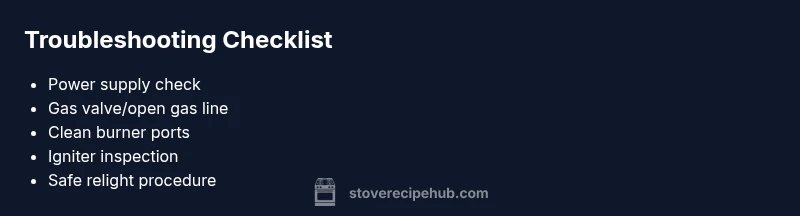
Check power supply
Ensure the stove is plugged in or the outlet is providing power. If the circuit breaker tripped, reset it and test the outlet with a small device. For electric ignition, power reliability is critical, so confirm there is continuous electrical service.
Tip: If you have more than one outlet on the same circuit, use a different outlet to confirm it’s not a circuit-wide issue. - 2
Verify gas supply (for gas stoves)
Confirm the gas valve is fully open and there is gas flow. If you have a gas shut-off valve, make sure it’s in the open position. If you smell gas, do not proceed—leave the area and contact your gas provider or 911 as appropriate.
Tip: Do not attempt to light the stove if you smell gas; safety first. - 3
Inspect the burner and ports
Remove the burner head and inscribed ring if applicable, then inspect ports for clogs or spills. Clean with a soft brush and a dry cloth. Reassemble correctly and ensure the burner cap sits evenly.
Tip: A crooked burner cap can prevent ignition even when gas is flowing. - 4
Test the igniter/electrode
For electric ignition, observe sparking at the electrode when you turn the knob. If there’s no spark, or if the spark is weak, the electrode may be dirty or worn and needs cleaning or replacement.
Tip: Avoid touching the hot burner while testing and wait a few seconds between attempts. - 5
Dry and reseat the burner
If moisture or spills are present, dry thoroughly and reseat the burner head and cap. Moisture can interfere with ignition. Re-test after a short wait.
Tip: Let the burner dry for a few minutes before attempting to ignite again. - 6
Relight safely
If the burner ignites, allow it to burn for 20-30 seconds to ensure stable flame. If it goes out, turn off and wait a minute before re-trying. Do not force ignition.
Tip: If it repeatedly fails, stop and assess for deeper issues. - 7
If unresolved, call a professional
Persistent ignition failure may indicate a worn ignition module, valve issue, or internal gas leak. A licensed technician will diagnose safely and correctly.
Tip: Do not attempt speculative repairs—gas work requires trained professionals. - 8
Document and maintain
Keep notes of what you checked and the results so future maintenance runs smoother. Create a simple maintenance schedule for annual checks.
Tip: Set reminders for routine burner cleaning and safety inspections.
Diagnosis: Stove won't light (gas stove with manual or electric ignition)
Possible Causes
- highPower or electrical supply issue (outlet, breaker, or stove cord)
- highGas supply interrupted or gas valve closed
- mediumClogged burner ports or dirty burner heads
- lowFaulty ignition electrode or ignition module
Fixes
- easyCheck that the outlet is live by plugging in a known-working appliance.
- easyReset the circuit breaker and re-try the stove. For gas stoves, ensure the gas valve is fully open.
- easyClean burner ports with a soft brush and dry any moisture before reassembling. Inspect for cracks or damage.
Common Questions
What should I check first if my stove won't light?
Start with safety: ensure there’s no gas smell, the area is ventilated, and the stove is powered off. Then verify power at the outlet and the gas valve position before moving to ignition checks.
First, check for gas smell and ventilation, then confirm power and gas supply before testing ignition.
Can a dirty burner cause ignition failure?
Yes. A clogged or dirty burner port can block gas flow or ignition. Clean the ports with a soft brush and dry thoroughly before retrying.
A dirty burner port can prevent ignition; clean it and dry it well before trying again.
Is it safe to relight after cleaning the burner?
Relighting after cleaning is usually safe if there’s no gas odor. Wait a moment after turning off, ensure dry surfaces, and reattempt ignition.
Yes, but only after drying and ensuring there’s no gas smell. If unsure, stop and call a pro.
When should I call a professional?
If the stove still won’t light after basic checks, there may be a faulty ignition module, gas valve, or leak. A licensed technician is recommended.
If it still won’t light after checks, call a professional to inspect ignition systems or gas lines.
What if I smell gas while trying to light?
Exit the area immediately, avoid flames, and call the gas provider or emergency services. Do not operate electrical switches in the area.
If you smell gas, leave now and contact authorities right away.
Watch Video
Top Takeaways
- Test power and gas supply first
- Clean and reseat burners for ignition reliability
- Don’t ignore gas smells—seek help immediately
- Maintain a simple safety checklist to prevent future failures