Gas Stove Oven Not Lighting: Practical Troubleshooting
Urgent, practical troubleshooting guide for when your gas stove oven won't light. Learn quick checks, safe fixes, and prevention tips for home cooks.


Immediate causes are typically gas supply, igniter, or control switch problems. Start with simple checks: confirm the gas valve is fully open, the oven knob is set to bake or broil, and there are no gas smells. If the igniter glows but the burner won't light, there may be an ignition or airflow issue.
Understanding the problem and why it happens
When a gas stove oven won't light, the root causes usually involve the gas supply, the ignition system, or the control valves. The phrase gas stove oven not lighting has become common in home repair forums as homeowners describe a stubborn burner that refuses to ignite even when the knob is turned. According to Stove Recipe Hub analyses, most failures are preventable with regular maintenance and proper venting. This guide is designed for home cooks who want fast, actionable steps using everyday tools. We’ll cover safety priorities, quick checks, common culprits, and a clear sequence you can follow to restore lighting quickly, without risking leaks or injuries. The goal is to get you back to cooking with confidence, not to overwhelm you with obscure diagnostics. Remember, if you ever smell gas, stop and evacuate immediately and call the gas emergency number in your area.
Safety first: immediate actions you should take
If you notice a strong gas odor or suspect a leak, you must prioritize safety. Do not switch lights on or off, light matches, or operate electrical devices near the stove. Ventilate the area if you can do so safely. If the risk feels uncertain, leave the area and contact your gas provider. In normal cases, power off the range by using the knob and unplugging if accessible, then reassess once the area is safe. Stove Recipe Hub emphasizes safety as the foundation of any stove-top troubleshooting plan. This section also explains how to recognize a malfunctioning igniter or valve before you attempt any repair.
Quick checks you can perform safely (no tools)
Begin with simple, non-destructive checks to confirm basic conditions. Ensure the gas valve is fully open and that the oven knob is in bake or broil and not off. Wipe away any burner residue and check for visible corrosion or debris on the igniter tip. If the igniter glows with a steady light and you hear a click but no flame, the issue may be ignition timing or gas flow rather than a dead igniter. Throughout, maintain a calm, methodical approach; the aim is to isolate the problem, not to guess. The phrase gas stove oven not lighting recurs in online discussions, so a systematic check is essential.
Common culprits and how to test them
There are several frequent causes: a closed gas valve, a faulty igniter, a misaligned burner cap, or clogged burner ports. Check that the burner cap sits evenly and that the ports aren’t blocked with dust or cooking oil. A weak or absent spark is a classic sign of a faulty igniter or loose wiring. Electrical components can fail silently, so note any buzzing sounds or flickering flames. Stove Recipe Hub notes that many responders resolve these issues by cleaning ports and reseating parts rather than replacing components right away.
Fixes for the most common cause: ignition failure
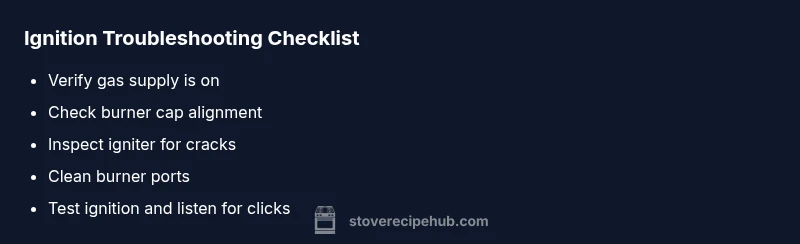
Ignition failure is the most common reason for gas stove oven not lighting. First, remove the burner cap and clean the ports with a soft brush, then scrub away any grease. Reinstall the cap firmly, return the knob to the bake/broil position, and listen for a strong click. If you don’t hear a spark within a couple seconds, the igniter or wiring may be faulty and require replacement. In many cases, a simple cleaning is enough to restore ignition. Always unplug the range if you need to work on the electrical connections—do not touch live wires.
When to suspect gas supply or ventilation problems
Occasionally, the issue isn’t the igniter but gas supply or air for combustion. Check that the supply line is connected, the main shutoff valve is fully open, and there is no obstruction in the venting path. If you’ve confirmed a clean igniter and the burner still won’t light, you may have a gas pressure issue that requires a professional. Avoid running a range with a suspect gas line; a leak can be dangerous and should be handled by qualified technicians.
Maintenance and prevention to reduce future failures
Regular maintenance reduces the frequency of ignition problems. Clean burner ports after heavy cooking, reseat the burner cap, and inspect the igniter for visible cracks or glazing. Keep the area around the stove free of debris and grease, and consider scheduling a yearly professional inspection of gas lines and the venting system. Stove Recipe Hub’s recommendations emphasize proactive care and consistent testing to prevent gas stove oven not lighting incidents. Adopting a simple, repeatable routine makes the stove safer and more reliable over time.
Safety checklist before every use
Before cooking, perform a quick safety check: ensure the area is well-ventilated, verify gas supply is on, and listen for the igniter’s click when the knob is turned to bake or broil. If the flame doesn’t ignite after several attempts, turn off the gas, wait a minute, and try again. If ignition still fails, don’t force it; switch to a safe alternative cooking method and call a professional if you suspect a gas issue. The habit of a pre-use safety check reduces the risk of gas leaks and wasteful attempts.
Steps
Estimated time: 30-45 minutes
- 1
Power off and safety check
Begin by turning off the gas at the shutoff valve and ensuring the surrounding area is clear of flammable materials. If you smell gas, evacuate immediately. Wait for any odor to dissipate before continuing.
Tip: Know the location of your main shutoff valve in case of emergency. - 2
Verify gas supply and valve position
Make sure the main gas valve is fully open and the stove knob is aimed at bake or broil. Do not force the knob; if it sticks, stop and consult the manual or a pro.
Tip: If you recently turned off gas, allow a moment for pressure to equalize. - 3
Inspect burner cap and ports
Remove the burner cap and check the ports for grease buildup or debris. Clean with a soft brush or pin to clear blockages. Reassemble the cap securely.
Tip: Avoid using metal tools that can scratch ports. - 4
Test the igniter and listen for ignition
Turn the knob to ignite and listen for a sharp clicking sound and watch for a bright blue flame when lit. If there is no ignition, the igniter or wiring may be faulty.
Tip: If you hear clicking without ignition, dry the igniter with a towel and try again. - 5
Clean and retest after reassembly
If cleaning or reseating didn’t help, recheck connections, reconnect power if applicable, and gently retest. Sometimes, a loose connection is the culprit.
Tip: Ensure the burner sits flat on the surface to allow proper gas flow. - 6
Evaluate safety and gas odor
If you notice gas odor at any point, stop and evacuate immediately. Do not attempt to relight until the source is identified by a professional.
Tip: Keep a neighbor or family member aware of the testing steps. - 7
Re-test lighting and reassemble
After successful ignition, run several test flames to confirm consistency. Clean any residue and ensure all components are dry before putting the stove back into regular use.
Tip: Document any recurring issues for the service call. - 8
When to call a pro
If ignition still fails after cleaning and checking grounds, or if there is persistent gas odor, stop troubleshooting and contact a licensed technician promptly.
Tip: Professional service is required for gas line or valve issues.
Diagnosis: Gas stove oven not lighting
Possible Causes
- highNo gas supply or gas valve closed
- highFaulty igniter (glows weakly or not at all)
- mediumMisaligned burner cap or clogged ports
- lowElectrical igniter wiring or control module fault
Fixes
- easyOpen gas valve fully and ensure knob is in bake/broil position
- easyInspect igniter for cracks or buildup, clean or replace
- easyRealign burner cap and clean ports using a soft brush
- mediumIf electrical issue suspected, disconnect power and call a pro
Common Questions
Why does my gas stove ignite but then go out?
This can happen if the flame sensor or thermocouple isn’t sensing a flame, or if gas flow is interrupted. Check the igniter and air supply, and ensure proper burner alignment before considering professional help.
If it lights briefly but goes out, check the igniter and airflow, then consider professional help if it continues.
Is it dangerous if my oven won't light?
Gas stoves can be dangerous if leaks are present. If you smell gas, evacuate immediately and call the gas company. Do not operate electrical switches near the appliance.
Gas leaks are serious—leave the area and call your gas provider right away.
Can I fix a faulty igniter myself?
Some igniters can be cleaned or replaced by a capable homeowner with the right parts and safety precautions. If you’re unsure, consult a professional to avoid electrical shock or gas leaks.
You can often clean or replace an igniter if you’re comfortable, but if in doubt, call a pro.
What should I do if I smell gas?
Do not operate switches or lights. Evacuate the area and contact the gas company or emergency services. Only re-enter after authorization from professionals.
If you smell gas, leave now and call the gas company.
How often should I maintain my gas stove?
Clean ports monthly, inspect igniter every few months, and schedule annual professional checks for gas lines and venting.
Clean ports regularly and get annual gas line checks.
Why is there no spark from the igniter?
No spark can mean worn electrodes, damaged wiring, or a faulty control module. Check connections and consult a professional if the spark doesn’t resume after cleaning.
If there’s no spark after cleaning, you likely need professional service.
Watch Video
Top Takeaways
- Identify the exact symptom and start with safety.
- Most lighting issues are igniter or gas-supply related.
- Clean ports and reseat burner caps before replacing parts.
- Call a pro for gas line or persistent ignition problems.