Gas Stove Not Working: Step-by-Step Troubleshooting
Learn fast, practical steps to diagnose and fix a gas stove that won't ignite, with safety-focused checks and professional help guidance. Practical tips for home cooks and DIY enthusiasts.


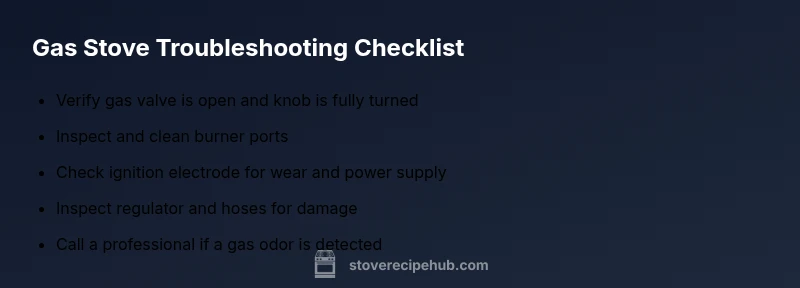
Most likely, the issue starts with the gas supply or the valve. Quick steps: 1) confirm the main gas valve and the stove knob are fully open; 2) check the igniter and spark; 3) examine burner ports for clogs and clean them with a needle; 4) if you smell gas, evacuate and call the gas utility.
Understanding the Risk: Why a gas stove malfunction demands respect
A non-working gas stove isn't just a cookware nuisance; it can signal safety hazards in your kitchen. According to Stove Recipe Hub, most problems begin with something simple you can verify quickly—a gas supply valve, a clogged burner, or a misfiring ignition. In this guide we expand on how these issues arise and how to assess them safely. You’ll learn to differentiate between routine maintenance tasks and situations that require professional help. The goal is calm diagnosis, safe action, and restoring reliable performance as soon as possible. This article emphasizes safety-first instincts and clear, practical steps you can follow in real kitchens.
Immediate Safety Checks You Must Do First
Safety is non-negotiable when a gas stove is involved. If you smell gas (a rotten-egg odor) or hear a hissing sound, do not operate any switches or electrical devices. Evacuate the room and call your gas utility or emergency services from a safe location. If the area is safe to re-enter, turn off the main gas valve if accessible and ventilate the space by opening doors and windows. These steps reduce the risk of fire or explosion and align with best practices highlighted by Stove Recipe Hub. After safety is assured, proceed with checks described in the subsequent sections.
Common Causes When a Gas Stove Won’t Light
A stove that won’t light can have several root causes. Common culprits include a closed gas valve, an empty or interrupted gas supply, clogged burner ports, a faulty ignition system, or a malfunctioning regulator. In some models, a misaligned burner cap or wet ignition can stop flames from catching. Distinguish between ignition failure (sparks but no flame) and gas delivery failure (no spark or flame). Document symptoms carefully to guide the next steps and to determine whether you can safely fix it yourself or need a professional.
Checking the Gas Supply and Gas Valve
Start with the basics: is the gas supply on? Verify that the main supply valve and the local shutoff near the stove are fully open. If you’re on a gas line that feeds multiple appliances, ensure others aren’t drawing gas in a way that starves the stove. Inspect the valve handle for tightness and listen for a faint hiss when turning the knob. If the valve won’t turn or feels stiff, stop and call a professional. A proper gas supply is the foundation of any reliable ignition and flame.
Ignition System Troubleshooting and Electrical Checks
Electronic ignition systems require power. Check that the stove is plugged in if it uses a powered ignition or control board. Reset the circuit breaker if the igniter isn’t sparking. Look for obvious signs of wear on the spark electrode and wiring. If you hear clicking but no spark, you may have a defective electrode or a lost ground. In electric-ignition models, cold wires or moisture can suppress sparks; dry everything thoroughly before retesting. If sparks are weak or intermittent, replacement parts may be needed.
Burner Cleaning and Ports Inspection
Clogged burner ports are a frequent reason for weak or uneven flames. Remove the burner cap and clean the ports with a small pin or needle to clear food debris and grease obstructions. After cleaning, reassemble and test with the smallest burner. If the flame is tattered or yellow rather than blue, there could be a gas-dilution issue or air leakage; inspect the burner base for gaps and reseat components snugly. Regular maintenance reduces clogged-port failures over time.
Replacing or Testing the Igniter and Thermocouple
A worn or dirty igniter can fail to produce a reliable spark. If cleaning doesn’t restore ignition, test or replace the igniter assembly. In gas stoves with thermocouples or safety valves, a faulty sensor can prevent gas flow. Consult your model’s service manual for proper testing procedures and part numbers. If you’re not comfortable with electrical components, this is a clear signal to seek professional help.
When to Call a Professional: Clear safety criteria
If you detect a gas odor, hear hissing without the regulator turning off, or cannot reliably restore ignition after basic checks, stop and call a licensed technician or your gas company. Gas work is hazardous and requires certified handling. If you suspect a leak or odor persists after any fix, evacuate and contact emergency services. Professional diagnostics can prevent property damage and ensure safe operation.
Prevention Tips to Avoid Future Issues
Keep burners clean and dry, perform a monthly visual inspection of hoses and connectors, and replace worn parts promptly. Use stove-safe cleaners and avoid moisture around electrical components. Record maintenance tasks and reminders for filter or regulator checks. A small, consistent maintenance routine reduces the likelihood of sudden failures and extends the life of your appliance. Remember: safety and prevention beat emergency repairs every time.
Steps
Estimated time: 60-90 minutes
- 1
Verify gas supply and main valve
Check that the gas valve is fully open and that the shutoff valve near the stove is not closed. Listen for a faint gas hiss when the valve is opened. If the valve is stuck or won’t turn, stop and call a professional.
Tip: Always perform safety checks before touching internal components. - 2
Check ignition power and circuit
Confirm the stove has power (plugged in where applicable) and that any relevant circuit breakers are ON. If the ignition doesn’t click, inspect the control board and wiring for obvious damage.
Tip: Reset the breaker and re-test after a brief wait. - 3
Inspect and clean burner ports
Remove the burner cap and clean the ports with a fine pin to clear clogs. Re-seat the burner and try lighting with the ignition again.
Tip: Do not force the ports; gentle probing prevents damage. - 4
Check ignition electrode and spark
Look for signs of wear on the spark electrode and ensure a clear arc to the burner. If no spark or a weak spark, replace the igniter or connect wire ground properly.
Tip: Keep the area dry when testing sparks. - 5
Assess the gas regulator and hoses
Inspect hoses for cracks, stiffness, or kinks. A damaged regulator can starve gas to the burner; replace if necessary.
Tip: Do not bend or twist hoses; route them away from heat. - 6
Test with a safe ignition method
If your model allows, attempt ignition using the built-in igniter after all checks. If still no flame, do not force it; proceed to professional help.
Tip: Never use match or flame near a suspected leak. - 7
Look for gas odor and leaks
If you smell gas at any point, evacuate immediately and call the gas utility. Do not switch on lights or appliances.
Tip: Ventilate only after you are in a safe area. - 8
Document and plan the next step
Note symptoms, parts checked, and dates. Decide if you can safely attempt minor repairs or if you need a technician.
Tip: Keep a maintenance log to catch recurring issues. - 9
Call a professional if unresolved
If ignition remains inconsistent or any leak is suspected, contact a licensed technician for comprehensive diagnosis and repair.
Tip: Hiring a pro provides peace of mind and ensures compliance.
Diagnosis: Gas stove won't light or flame goes out after ignition attempt
Possible Causes
- highGas supply valve off or shutoff valve closed
- highBurner ports clogged with debris or grease
- mediumIgnition system faulty or no power to ignition
- mediumDamaged gas regulator or leaky hose causing insufficient gas delivery
- lowGas leak detected or odor present
Fixes
- easyTurn on main gas valve and ensure the stove knob is fully turned to ignite
- easyClean burner ports with a thin needle and reassemble
- mediumReset breaker and verify electrical supply; test igniter for sparks
- mediumInspect regulator and hose for damage; replace if you see cracks or wear
- easyIf you smell gas or suspect a leak, shut off the main valve, evacuate, and call the gas utility or emergency services
- hardIf fixes fail, contact a licensed technician for hands-on inspection and part replacement
Common Questions
What should I do first if my gas stove won't light?
Begin with safety: ensure gas is on, the knob is fully turned, and there’s no gas odor. If safe, proceed to ignition checks and port cleaning.
First, confirm gas is on and there’s no gas smell, then check ignition and clean the burner ports.
Can I fix a clogged burner port myself?
Yes. Use a thin needle to clear ports, rinse with water, and dry completely before reassembling. If flames remain weak, seek professional help.
You can clear ports with a needle, rinse, and dry, but seek help if flames stay weak.
What if the igniter sparks but no flame?
Check gas supply and ports first. If the system still won’t light, test power and consider replacing the igniter.
Sparks without flame usually mean a gas supply or port issue; check power and replace the igniter if needed.
Is it dangerous to use a gas stove during a leak?
Yes. Evacuate immediately and call emergency services or your gas utility. Do not operate lights or switches.
If you smell gas, leave now and call for help.
When should the regulator or hose be replaced?
If the flame is inconsistent or you hear hissing, the regulator or hose may be failing. Replace with the manufacturer’s part and consult a pro.
If flames are inconsistent, a professional should check the regulator and hose.
What maintenance reduces future failures?
Keep burners clean, check hose connections, and test ignition monthly. Record maintenance tasks to catch patterns.
Clean, inspect parts, and test ignition regularly to prevent future failures.
Watch Video
Top Takeaways
- Prioritize safety before any repair attempts
- Start with gas supply and valve checks
- Clean burner ports to restore ignition
- Call a professional for leaks or unresolved issues
- Maintain a monthly cleaning routine