What to Do When Your Gas Stove Won't Light: A Practical Troubleshooting Guide
Facing a gas stove that won't light? Learn practical, step-by-step troubleshooting, essential safety checks, and maintenance tips to get your stove burning again quickly and safely.


If the gas stove won’t light, start with quick safety checks: turn knobs off, confirm gas supply is on, and ventilate the area. A quick igniter cleaning or a gentle reset fixes most non-emergency light issues. If you smell gas or cannot light after several attempts, evacuate and call emergency services immediately.
Quick safety checks before you begin
Safety first is non-negotiable when dealing with a gas stove that won’t light. If you detect a gas smell, evacuate immediately and place a safe distance between yourself and the appliance, then call your gas provider or emergency services. Do not operate electrical switches, light matches, or use a cellphone near the stove. Once you are in a safer area, return with a calm plan. According to Stove Recipe Hub, many non-emergency lighting problems start with a simple safety check: ensure the knob is fully in the off position, then re-open the gas valve and try lighting again after a quick ignition cleaning. Proper ventilation helps keep any lingering gas from accumulating. If you’ve recently moved the stove or bumped it, verify that the supply line and shutoff valve are fully connected and undamaged. This initial triage saves time and reduces risk before you dive into more involved steps.
Common causes your gas stove won't light
There are several common reasons a gas stove won’t light. The most frequent culprit is the igniter or burner electrode being dirty or misaligned, which prevents a proper spark. A second frequent cause is an interrupted gas supply, such as a closed shutoff valve, empty propane cylinder, or a kinked hose. Third, clogged burner ports or dried spills can block gas flow. Finally, a faulty thermocouple or ignition sensor can trigger a safety shutoff. Each cause has a practical fix, starting with the easiest: cleaning and checking connections, then moving to more involved steps if the simple ones don’t solve the problem. Stove Recipe Hub Analysis, 2026 notes that addressing the igniter and gas supply resolves the majority of routine lighting issues.
Step-by-step troubleshooting plan
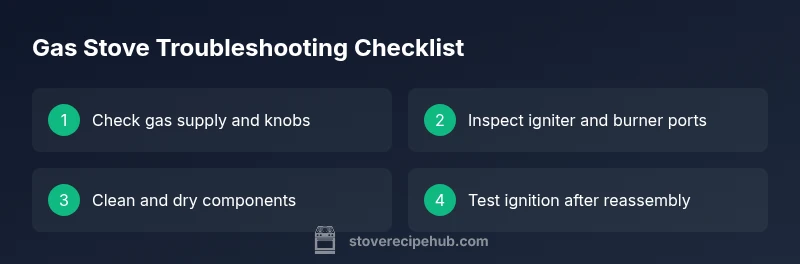
This section outlines a logical sequence to diagnose and fix the problem when your gas stove won’t light. Start with the simplest checks and progressively address more involved issues. If you encounter a gas smell at any point, stop and evacuate immediately.
Safety-first: when to call a professional
If you detect a strong gas odor, hear hissing, or the stove repeatedly fails to light after you have performed basic checks and cleaning, contact your gas provider or a licensed technician. Do not attempt to disassemble gas lines or replace safety components yourself. Professional service ensures your system remains safe and compliant with local codes.
Maintenance habits to prevent this issue
Preventative maintenance is the best defense. Regularly wipe down burners and igniters to remove food debris, moisture, and oils that can impede ignition. Check the ignition electrode alignment and ensure there is no corrosion. Periodically inspect the gas hose and connections for signs of wear. Schedule a professional inspection every 1–2 years depending on usage and manufacturer recommendations. This routine care reduces the likelihood of future lighting problems and extends the life of your stove.
Steps
Estimated time: 25-45 minutes
- 1
Check safety and gas supply
Turn all knobs to the off position. If using a tank, verify it isn’t empty and that the regulator is functioning. If you smell gas, leave immediately and call for help. Once you’re sure it’s safe, turn the knob to the ignite or light position and attempt a lighting sequence.
Tip: When in doubt, default to safety—evacuate and call the gas provider if you smell gas. - 2
Inspect the igniter and burner
Look for moisture, visible debris, or misalignment of the igniter electrode. If there’s visible grime, clean it with a dry brush or cloth and dry thoroughly before trying again. Ensure the electrode is properly positioned to produce a spark near the burner port.
Tip: A small, focused clean often saves you from more invasive work later. - 3
Clean ports and burner components
Remove the burner head and caps as per your model’s instructions. Use a soft brush or compressed air to clear obstructions. Reassemble carefully, ensuring tight, secure fittings.
Tip: Keep burner parts dry—moisture can hinder ignition and create soot buildup. - 4
Test ignition and flame
Turn the gas on and trigger the ignition. Watch for a blue flame with clean edges. If you only see a sputtering flame or no flame, stop and reassess the connections and gas supply before attempting again.
Tip: A blue flame means proper combustion; yellow or orange flames indicate malfunction or improper gas mix. - 5
Call a professional if needed
If the stove still won’t light after cleaning and checking the gas supply, or you notice a gas odor, contact a licensed technician. Avoid disassembling gas lines yourself.
Tip: Use licensed service for gas line issues to prevent unsafe conditions.
Diagnosis: Gas stove won't light despite knob being turned on and ignition spark present
Possible Causes
- highIgniter or burner electrode is dirty or misaligned
- highGas supply interruption or valve closed
- mediumBurner ports clogged with debris or spills
- lowThermocouple/ignition sensor malfunction
Fixes
- easyClean the igniter and burner ports with a soft brush; recheck electrode alignment and dry all parts completely before re-lighting
- easyVerify gas supply and valve position; ensure the cylinder is not empty (propane) or that the main shutoff is fully open
- easySoak and scrub burner caps and reconnect parts; ensure no moisture remains and that parts are correctly positioned
- mediumIf ignition sensor/thermocouple is suspected, contact a licensed technician for replacement or adjustment
- hardIf a gas leak or odor is detected, evacuate and call the gas company or emergency services immediately
Common Questions
Why does my gas stove ignite intermittently?
Intermittent ignition is most often caused by a dirty or misaligned igniter or obstructed burner ports. Cleaning and realigning parts usually resolves the issue. If the problem persists, a technician may need to inspect the ignition system.
Ignition issues are usually dirt or misalignment—clean and realign. If it continues, a pro should check the ignition system.
Can I fix a gas leak myself?
No. Do not try to fix gas leaks yourself. If you suspect a leak, evacuate the area and contact your gas provider or emergency services. Only a licensed professional should handle gas-line issues.
Don’t attempt gas-leak repairs yourself; evacuate and call for help right away.
What should I do first if the igniter clicks but won’t light?
First, ensure the gas supply is open and the burner ports are clear. Clean the igniter, dry all components, and try again. If it still fails, check for moisture or misalignment and consider professional service if needed.
Clean and dry the igniter, check gas supply, and retry. If it still won’t light, call a professional.
Is it unsafe to light the burner with a lighter?
Do not use a lighter to start the burner. This can ignite gas unpredictably. Use the built-in igniter or a controlled ignition method recommended by the manufacturer.
Avoid using a lighter; use the stove’s igniter instead.
How often should I clean my gas burner?
Clean burners monthly if used daily; more often if spills occur. Regular cleaning prevents buildup that blocks gas flow and igniter sparks.
Clean monthly, more if you spill often.
Watch Video
Top Takeaways
- Begin with safety checks before touching the stove
- Igniter cleanliness is the most common fix for lighting issues
- If you smell gas, evacuate and call for help immediately
- Regular cleaning and maintenance prevent future failures