Why Does Gas Stove Stop Working? Quick Troubleshooting Guide
Urgent, step-by-step troubleshooting for gas stoves that won't light. Diagnose gas supply, ignition, and burner issues with safe, practical fixes from Stove Recipe Hub.


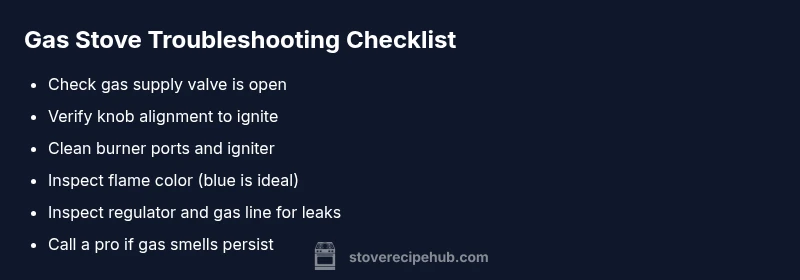
A gas stove stopping mid-use is usually due to gas supply issues, a faulty igniter, or blocked burner ports. Quick fixes: confirm gas supply and valve is open, check that the knob aligns to ignite, clean soot from burner ports, and try lighting manually with a long lighter if safe. If the issue persists, avoid DIY and call a pro.
Why does the gas stove stop working? Quick primer on the most common causes
When a gas stove suddenly stops producing a flame, the cause is rarely mysterious. Most failures fall into a few predictable categories: gas supply problems, ignition issues, or burner blockage. For home cooks, diagnosing quickly matters because a stubborn stove can derail dinner plans and safety concerns escalate if gas is involved. According to Stove Recipe Hub, the majority of mid-feast stove outages come from valve positions, dirty igniters, or clogged burner ports. In 2026 our analysis shows that starting with the easiest check—gas valve and knob alignment—saves time and reduces risk. Even if you own a premium range, a recurring problem is often the simple oversight you missed when cleaning or moving the stove for cleaning or countertop work. In this guide, you’ll find a practical, step-by-step sequence to identify the culprit and restore heat safely.
Common causes at a glance
- Gas supply valve closed or the main shutoff is off
- Knob not aligned to the ignite position or a misaligned burner cap
- Dirty or damaged igniter that won’t spark
- Clogged burner ports from soot, food debris, or spills
- Faulty gas regulator or fluctuating pressure
- Safety shutoff triggered by a flame sensor or thermocouple
- Burner cap misplacement interfering with flame distribution
Understanding these categories helps you triage quickly without risking safety. Stove Recipe Hub’s team emphasizes starting with the simplest checks before moving to more involved fixes. In 2026, home cooks report the most time-saving moves are valve verification and port cleaning, followed by a cautious ignition test.
Safety first: immediate precautions before you touch anything
Gas-related work carries risk. If you smell gas, if flames go out and you suspect a leak, or if you notice hissing near the line, leave the area immediately and call your gas provider or emergency services. Do not create sparks or operate electrical switches in a space where gas could be present. Once the area is declared safe, ventilate the space by opening doors and windows and proceed with calm, methodical checks. If you’re unsure at any point, it’s safer to pause and contact a licensed technician. The Stove Recipe Hub team stresses that safety overrides quick fixes and that professional inspection is prudent when safety is in doubt.
Diagnostic flow overview: symptom → diagnosis → solutions (high-level)
- Symptom: Flame won’t light or goes out during use
- Immediate checks: gas valve position, knob alignment, visible gas smell
- Diagnosis path: (a) ignition system failure, (b) gas supply issue, (c) burner obstruction, (d) regulator or safety shutoff fault
- Basic solutions: reseat burner, clean ports, re-test ignition, verify gas flow
- Escalation: if ignition continues to fail, or if you smell gas, stop and call a professional
This flow helps you stay organized and safe while you troubleshoot, following a logical path rather than random attempts. As you work, document what you try and the results to share with a technician if needed.
Step-by-step: Fix the simplest problems first
-
Check the gas supply and main valve. Ensure the valve is fully open and that there is a steady gas flow. If you recently turned off the gas or moved the stove, this is the most likely culprit. Tip: if you’re unsure which valve controls your appliance, consult your stove’s manual or the manufacturer’s safety guide.
-
Verify knob alignment. Make sure you’re turning the knob to the ignite position and that the knob aligns with the symbol for ignition. A misaligned knob can block the spark even if gas is present. Tip: rotate through positions slowly and listen for a click as the igniter engages.
-
Remove and clean the burner cap and ports. Take off the burner cap, inspect the ports, and use a soft brush or compressed air to remove soot and debris. Reassemble and test. Tip: never force ports or caps; gentle cleaning preserves metal integrity.
-
Inspect the igniter visually. Look for cracks or obvious damage on the igniter electrode. If dirty, wipe with a dry cloth and re-test. If you still don’t hear a spark, the igniter may need replacement. Tip: ensure the area is dry when testing sparks.
Step-by-step: Igniter and regulator checks (if needed)
-
If the spark is weak or non-existent, consider cleaning or replacing the igniter module. Some models allow for a straightforward replacement; others require a service call. Tip: keep a record of your stove model and serial number to ensure you get the right part when ordering.
-
Check the regulator and gas line for visible signs of wear or leaks. Do not use soapy water on live connectors; only perform leak checks per the manufacturer’s guidance after the gas is off. If you detect a leak or persistent pressure issue, stop and contact a licensed technician. Tip: never overtighten fittings; use proper hand-tightening.
Step-by-step: Testing after repair and safe relighting
-
Reassemble all parts and attempt a safe relight. Listen for a clean, blue flame. A yellow or orange flame suggests incomplete combustion or air in the line and requires further inspection.
-
If the flame remains inconsistent or you still can’t ignite, it’s time to escalate. Do not continue trying to light the stove if sparks are weak or absent. Tip: note any changes in flame color and keep gas usage minimal until resolved.
Prevention and maintenance to avoid future outages
- Wipe down after cooking and inspect for soot buildup weekly.
- Deep-clean burner ports every 1–2 months, more often in high-use kitchens.
- Test the igniter and flame color monthly to catch wear early.
- Schedule annual professional inspections for gas lines and regulators. The Stove Recipe Hub team recommends routine maintenance as the best defense against unexpected outages. In 2026, a proactive approach saves time and reduces risk.
When to call a professional and what to expect
If you smell gas, or if safety shutoffs have been triggered, call a professional immediately. Do not attempt risky repairs yourself. A licensed technician will inspect gas lines, regulator, igniter circuitry, and safety devices, and will perform leak testing and ignition checks with specialized tools. Expect a diagnostic visit to include a thorough safety assessment and a written repair plan.
Steps
Estimated time: 30-45 minutes
- 1
Check gas supply and main valve
Ensure the gas valve feeding the range is fully open and that there is a steady gas flow. If you recently moved the stove, this valve can get inadvertently closed. Confirm the line isn’t kinked or blocked.
Tip: If you can't locate the valve, consult the manual or manufacturer site. - 2
Verify knob alignment
Turn the knob to ignite and listen for the click of the igniter. If there is no click, the ignition system may be dead or misaligned. Make sure you’re using the correct burner and the cap is seated properly.
Tip: Do not force the knob past the ignite position. - 3
Clean burner ports and cap
Remove the burner cap and inspect the ports for soot or residue. Use a soft brush or compressed air to clear blockages. Reassemble and test with a light touch at the ignition point.
Tip: Protect the burner cap and avoid water intrusion into the ports. - 4
Inspect the igniter electrode
Check for cracks or obvious damage on the electrode. Clean gently with a dry cloth if dirty. If the spark is weak or absent, the igniter may need replacement.
Tip: Handle with care; a damaged electrode can cause shocks or misfires. - 5
Check regulator and gas line
Look for signs of wear, damage, or leaks. Do not use soapy water on live connections. If you notice a leak or pressure issue, stop and contact a professional.
Tip: Only perform leak checks with the gas off and follow manufacturer guidance. - 6
Test ignition and flame stability
After reassembly, attempt to ignite again. Watch for a steady blue flame; yellow tips indicate incomplete combustion and require further inspection.
Tip: If flame remains unstable, do not keep testing; schedule service.
Diagnosis: Gas stove won't light or flame goes out
Possible Causes
- highGas supply valve closed or gas line shut off
- highFaulty or dirty igniter
- highBlocked burner ports from soot or spills
- mediumKnob position misalignment or incorrect ignition setting
- lowGas regulator or pressure issue
- lowSafety shutoff triggered by flame sensor/thermocouple
Fixes
- easyOpen the gas valve and confirm knob is in ignite position; reseat burner cap
- easyClean igniter and burner ports; reassemble and test ignition
- mediumInspect for gas line leaks and regulator integrity; replace parts if needed
- mediumReplace igniter module or consult a professional if sparking fails
- easyCall a licensed technician if gas smell persists or safety shutoff is engaged
Common Questions
Why won't my gas stove ignite even when the knob is turned on?
Most ignition failures come from a dirty igniter, misaligned knob, or a gas supply issue. Verify the valve is open, ensure the knob aligns to ignite, and clean the igniter and ports before considering replacement parts.
Ignition failures usually come from dirt, misalignment, or supply problems. Start with the gas valve and igniter cleaning, then re-test ignition.
What should I do if I smell gas around my stove?
If you smell gas, leave the area immediately, avoid flames or electrical switches, and call your gas provider or emergency services. If you can, shut off the main gas valve and ventilate before leaving.
If you smell gas, leave now and call the gas company. Do not operate switches or flames.
Is it safe to DIY cleaning of burner ports?
Cleaning burner ports is generally safe if you use a soft brush or compressed air and do not force ports. If you’re uncertain about any step, stop and consult a professional.
You can clean ports carefully, but if you’re unsure, call a pro.
How often should I clean my gas stove to prevent failures?
Wipe down after cooking and inspect ports monthly. Do a deeper clean every 1–2 months, depending on usage and spill frequency.
Clean after cooking and check ports monthly to prevent buildup.
When should I replace the regulator or ignition components?
Replace ignition components or regulator if sparking is weak, flame is irregular, or you notice leaks. If in doubt, consult a licensed technician.
If sparking is weak or flames are irregular, consider parts replacement with professional help.
Do I need to shut off the main gas line for repairs?
Yes, shut off the main gas supply before any repair beyond surface cleaning. If you can’t locate the valve or if you sense a leak, contact a professional immediately.
Yes—shut off the main gas line before work, and call a pro if you suspect a leak.
Watch Video
Top Takeaways
- Start by verifying the gas valve and knob position
- Clean burner ports and igniter to restore ignition
- If gas smells or safety shutoff engages, call a professional
- Regular maintenance prevents future outages