What is Wrong with My Gas Stove? A Practical Troubleshooting Guide
A practical, safety-first guide to diagnosing and fixing common gas stove problems, from ignition issues to flame irregularities, with step-by-step checks for home cooks.


Most gas stove issues start with a simple check: gas supply, ignition, and burner cleanliness. If the flame is weak or won’t ignite, verify the gas valve is fully open, the igniter is sparking, and the burner ports aren’t clogged. If problems persist, shut off gas and electrical power and contact a licensed technician.
What is wrong with my gas stove? Practical quick assessment
If you’re asking what is wrong with my gas stove, you’re not alone. Most common gas-stove problems start with a few straightforward checks. According to Stove Recipe Hub, reliable diagnostics begin with the gas supply, the igniter system, and burner cleanliness. Before you start disassembling parts, walk through these baseline questions: Is the valve fully open? Does the igniter click when you attempt to light? Do you see a clean blue flame when the burner is in use? Answering these questions quickly narrows down whether the issue is supply, spark, or a blocked path. Keep in mind that even small crumbs or boiled-on grease can dampen ignition or disrupt flame. This quick assessment helps you decide whether you can safely proceed with deeper cleaning or maintenance, or if you should pause and call a professional.
According to Stove Recipe Hub, safety and methodical checks save time and reduce risk. If you smell gas, or if the flame is erratic and dangerous, stop immediately and seek professional help. The goal is to establish whether you can safely continue with basic cleaning or if the situation requires a licensed technician.
Recognizing common symptoms and normal behavior
A healthy gas stove typically exhibits a steady blue flame (slight yellow tips can occur at times but should not be large or persist). Weak or irregular flames often indicate one of a few root causes: limited gas supply, dirty ignition components, or blocked burner pathways. If your burner produces a sputtering click without a steady flame, start a controlled troubleshooting sequence. Understanding these symptoms helps you communicate clearly with a technician if you need one, and it empowers you to perform safe, incremental checks in the right order.
Safety-first checks you can perform now
Safety is the priority. Begin by turning off the knob, then turning off the main gas supply and unplugging the range if you have an electric ignition. Use a non-flammable cleaner on surfaces, and never attempt to disassemble gas lines. If you notice a strong gas odor or hissing, evacuate and call emergency services. Always ensure you’re wearing eye protection and keeping a fire extinguisher within reach. These precautions protect you while you diagnose common ignition and flame issues.
Cleaning and maintaining the ignition system
A clean igniter and electrode are essential for reliable lighting. Remove the burner caps and grates to access the igniter. If you see grease, coffee spills, or crumb buildup around the electrode, wipe gently with a dry cloth or a soft brush. Avoid using water near the ignition electrodes. After cleaning, re-seat the burner cap and attempt a test light. If sparks are weak or intermittent, you may need to test for a damaged igniter or worn spark module—these components often require professional replacement.
Gas supply, regulator, leaks, and shutoff valves to inspect
Check that the main gas valve is fully open and that the supply line is not kinked or blocked. If you’ve recently connected or moved the stove, verify that the gas line is secure. If you suspect a leak, perform a soap-bubble test on connections; bubbles indicate a leak that requires professional service. Remember that regulators and flexible gas connectors can fail with age, especially in older homes. If any leak is detected or you smell gas strongly, evacuate immediately and call the gas company or emergency services.
Burner ports, caps, and flame quality
Clogged burner ports prevent gas from flowing evenly, causing weak or uneven flames. Use a straightened paperclip or a dedicated cleaning tool to clear clogged ports; never use a metal object that could damage the ports. After cleaning, ensure the burner caps are properly seated and aligned as per the manufacturer’s instructions. If the flame remains yellow or flickers, this can be a sign of insufficient air mix or a more serious issue with gas pressure or the regulator.
Diagnostic flow: quick triage and decision points
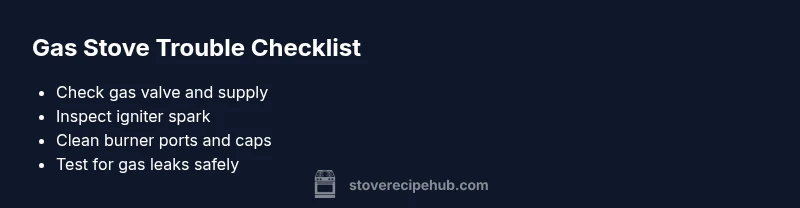
This section outlines a practical flow: (1) confirm gas supply is open; (2) test ignition and spark; (3) clean and realign burner components; (4) check for leaks with a soap solution; (5) test flame quality after each step. If at any point you detect a leak, smell gas, or cannot locate a fault safely, stop and contact a licensed professional. Stove Recipe Hub emphasizes safety-first troubleshooting to prevent accidents in the kitchen.
Preventive maintenance and routine care for longevity
Schedule a routine cleaning every few weeks for easy maintenance: wipe the surface, clean the igniter area, and inspect burner caps for proper seating. Use a soft brush to remove crumbs from the burner ports monthly, and inspect the gas line and valves for signs of wear. Keeping a simple log of maintenance helps you notice gradual changes in performance, allowing earlier intervention before a larger issue develops.
Steps
Estimated time: 20-40 minutes
- 1
Check gas supply and shutoff valve
Ensure the main gas valve is fully open and the supply line is connected properly. If you recently moved or serviced the stove, double-check the connection. A simple visual check can rule out a closed valve as the root cause.
Tip: Always start with the easiest fix first—gas valve position is the most common oversight. - 2
Inspect igniter for spark
With the burner cap removed, ask someone to turn the knob while you observe the igniter. A steady, blue spark is a good sign; a weak spark or no spark indicates a problem with the igniter or wiring.
Tip: Dry the area around the igniter if you see moisture after cleaning. - 3
Clean ignition area and electrode
Gently wipe the ignition area with a dry cloth to remove grease. Use a small brush to remove stubborn residue—avoid water around electrical components.
Tip: Do not use metal scrubbers or abrasive cleaners near the ignition system. - 4
Check burner ports and caps
Inspect each port for crumbs or corrosion. Clear blockages with a fine wire or pin, then realign and re-seat the burner cap so air flows evenly.
Tip: Ensure the cap sits flat; a misaligned cap can suppress ignition. - 5
Test for leaks and air flow
Relight the burner and observe flame quality. If you smell gas or hear hissing, leave the area and call the gas company immediately. Use a soap solution on connections to detect leaks cautiously.
Tip: Never use a flame to test for leaks. - 6
Inspect regulator and gas line
If the flame remains weak after cleaning, the issue may be the regulator or line pressure. This step often requires specialized tools and safety protocols.
Tip: Do not attempt to adjust pressure beyond manufacturer guidance. - 7
Relight and verify stability
After completing checks, wait a moment for any residual gas to dissipate, then relight and verify a steady blue flame. If the flame still flickers, proceed to professional service.
Tip: Document steps taken to share with the technician.
Diagnosis: Gas stove won't ignite or flame is inconsistent
Possible Causes
- highGas supply valve closed or insufficient gas pressure
- highDirty or damaged igniter spark electrode
- highClogged burner ports or misaligned burner cap
- mediumGas line leak or regulator fault
- lowThermocouple safety sensor failure
Fixes
- easyOpen the gas valve fully and verify supply
- easyClean the igniter and electrode; test spark
- easyClear burner ports and reseat the burner cap
- mediumTest for leaks with soapy solution; if leak suspected, call professional
- hardReplace faulty thermocouple or regulator with professional help
Common Questions
Why won't my gas stove ignite?
Ignition failures are usually caused by a dirty igniter, clogged burner ports, or a closed gas valve. Start with cleaning the igniter, then inspect the ports and valve. If the spark is weak or absent, you may need a component replacement.
Ignition problems are typically due to a dirty igniter, clogged ports, or a shut valve. Clean the igniter, clear the ports, and check the valve; if the spark is weak, you may need a part replacement.
Is it safe to use a stove if I smell gas?
No. A gas smell can indicate a leak that requires immediate action. Evacuate, avoid flames or switches, and contact your gas company or emergency services right away.
If you smell gas, leave the area and call your gas company or emergency services immediately.
What does a yellow flame mean?
A yellow flame often indicates incomplete combustion or air flow problems. It warrants cleaning, checking air shutters, and possibly professional inspection if it persists.
A yellow flame means incomplete combustion or airflow issues; clean and check air flow, and seek professional help if it continues.
How should I clean burner ports safely?
Power off, remove the burner cap, and use a thin tool to clear clogged ports. Wipe away residue and re-seat the cap. Avoid water or metal scraping near electrodes.
Turn off power, remove the cap, clear the ports with a thin tool, and re-seat. Don’t use metal scrapers near the igniter.
Can I replace the igniter myself?
Some models allow DIY igniter replacement, but many require professional service due to gas safety considerations. Check your manual and consider a licensed technician for accuracy and safety.
Some stoves let you replace the igniter yourself, but many need a pro. Check the manual and consider safety first.
When should I service my gas stove?
Schedule preventive maintenance at least once a year, especially if you use the stove daily. Regular cleaning and checks reduce risk and improve performance.
Service once a year if you use the stove regularly; routine cleaning helps prevent problems.
Watch Video
Top Takeaways
- Start with basics: gas supply, ignition, and cleanliness.
- Clean and realign burner caps for proper air flow.
- Test for leaks with soap solution and evacuate if you smell gas.
- If ignition issues persist, call a licensed professional.
- Maintain a simple cleaning schedule to prevent recurring problems.