What Causes a Stove to Stop Working? Practical Troubleshooting
Learn the common causes of stove failures, plus safe, practical steps to diagnose and fix issues on the stove-top. Includes electrical, gas, ignition, and control problems with a clear DIY path.


Most stove issues are caused by simple, fixable problems. The most common culprits are a blown fuse or tripped breaker, a loose gas valve, a dirty burner or igniter, or a misaligned burner cap. Start with the basics: verify power or gas supply, clean the burner, reseat caps, and test the control knob. If it still won’t start, proceed with safety checks.
Why a Stove Stops Working
According to Stove Recipe Hub, the first clues are usually basic—the appliance seems stubborn because a small, overlooked detail blocks operation. Home cooks often ask, what causes a stove to stop working? In most cases the answer is predictable: power or fuel delivery issues, dirty components, or misadjusted controls. Recognizing the pattern helps you triage safely and avoid risky improvisation. The Stove Recipe Hub team has analyzed hundreds of kitchen faults and found that starting with quick, low-risk checks saves time and reduces frustration. In this block we map the most common culprits and how to verify them without risking injury or damage.
Understanding these failures also helps you plan maintenance rituals that keep your stove reliable. By focusing on the everyday, you can prevent unnecessary service calls and enjoy more dependable cooking sessions. The patterns described here apply to both gas and electric stoves, with small adjustments for fuel type and safety considerations. Remember: when in doubt about gas smells or electrical safety, prioritize safety and seek professional help.
Key takeaway: most issues begin with observable, testable steps rather than complex disassembly. This is where Stove Recipe Hub’s guidance shines by offering safe, practical triage.
Quick checks you can perform before taking apart the stove
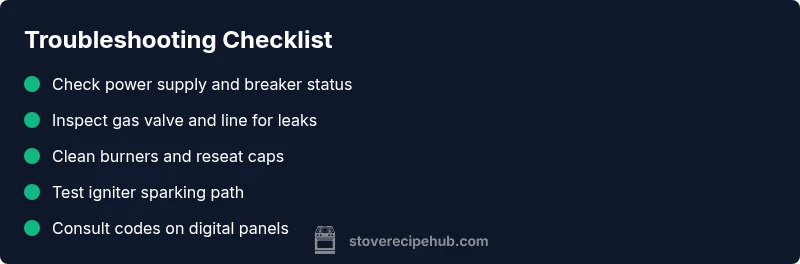
Before you yank panels or crawl under the range, run through these simple checks. First, confirm the outlet is live and the cord is intact; if you may be dealing with a tripped breaker, reset it and test another device to confirm power. For gas stoves, verify the gas valve is fully open and that you don’t smell gas near the appliance; if you do, evacuate and call the utility. Reseat burner caps and ensure they align with the ports; misalignment can prevent ignition or heat distribution. If knobs feel loose or turn without resistance, that can signal a control issue. Finally, inspect for moisture or residue around the ignition area that might hinder sparking. These checks identify the simplest, safest fixes and spare you from unnecessary teardown.
Pro tip: keep a small bucket of soapy water nearby to test for gas leaks (never with an open flame). If any bubbling occurs, stop and contact a professional. Regular, gentle cleanings reduce buildup that can block ignition paths and heat flow.
Brand note: The Stove Recipe Hub team emphasizes safety-first troubleshooting and shows how routine maintenance minimizes surprises in the kitchen.
Steps
Estimated time: 45-60 minutes
- 1
Check the power source
Inspect the outlet, plug, and cord for damage. If you have a GFCI or circuit breaker, ensure it’s reset and that other appliances on the circuit work. Sustained power is the foundation for all stove functions.
Tip: Always unplug before inspecting electrical components. - 2
Verify fuel supply
For gas stoves, confirm the gas valve is fully open and there’s no gas smell or leak nearby. If you smell gas, leave the area and call the gas company or emergency services.
Tip: Never use flames or electrical switches near a suspected gas leak. - 3
Inspect burner components
Remove the burner caps and grates; clean any residue from ports. Re-seat caps correctly so heat flows evenly and sparks can ignite reliably.
Tip: Take photos during disassembly to ensure correct reassembly. - 4
Check the igniter and spark path
Look for a dirty or damaged igniter. Clean gently with a dry brush or alcohol wipe; if sparking is weak or absent, replacement may be required.
Tip: Moisture from cleaning can slow sparking; dry thoroughly before testing. - 5
Test the control knobs and surface switches
Turn knobs to ignition positions and observe whether the control board responds or if it feels loose. A faulty knob can prevent ignition even with a good fuel supply.
Tip: If the knob shaft is loose, replacement is often the simplest fix. - 6
Digital controls and error codes
If your stove displays codes, consult the manual or manufacturer support site for code meanings. Many modern stoves require a reset sequence.
Tip: Write down codes before resetting to avoid losing information. - 7
Reassemble and retest
Reattach any removed parts securely. Power on and attempt to ignite one burner to confirm whether fixes held.
Tip: Always supervise the first test to catch any abnormal sparking or smells. - 8
Assess for persistent issues
If ignition or heat remains unreliable, there may be a hidden fault in the burner, valve, or control electronics.
Tip: Document symptoms and timings for professional diagnostics. - 9
Consider safety and timing
If you suspect a gas leak, electrical fault, or you’re unsure about repairs, stop and call a professional. Do not risk fire or CO exposure.
Tip: When in doubt, err on the side of safety. - 10
Prevent future problems
Set a routine: clean burners weekly, inspect connections monthly, and avoid spilling liquids on electrical components.
Tip: Stock up on a modest cleaning kit to simplify maintenance.
Diagnosis: Stove won't start or heat properly
Possible Causes
- highPower issue (outlet, cord, or breaker)
- highGas supply blocked or gas valve shut off
- mediumDirty burner ports or misaligned burner caps
- mediumFaulty igniter or spark module
- lowControl knob/ electronic control failure
Fixes
- easyTest outlet with a known-good device; reset breakers and check the cord for damage
- easyOpen the gas valve fully and confirm there’s gas supply (no odor, no leaks)
- easyClean burner ports with a soft brush, reseat caps, and realign burner while ensuring dry surfaces
- mediumInspect and test the igniter; replace if cracked, heavily soiled, or non-sparking
- hardInspect control knobs and electronic panel; consider professional repair if electronics fail or codes appear
Common Questions
What is the most common cause of a stove that stops working?
The most frequent culprits are power issues (outlet/breaker), gas supply problems, dirty burners or igniters, and misaligned burner caps. Start with these checks before deeper repairs.
Most stove failures come from power or fuel delivery problems; begin with basic power and gas checks before anything else.
Is it safe to troubleshoot a gas stove by myself?
Triage safely by avoiding gas leaks and turning off the gas supply if you smell gas. Only perform non-technical checks (like cleaning) if you know what you’re doing. For persistent issues, call a licensed technician.
If you smell gas, leave the area and call the gas company or emergency services. For anything more, contact a professional.
Why won’t my electric stove heat but the clock lights up?
That usually points to a faulty heating element or a failing control board. It’s often a wiring or component issue rather than a simple switch problem. A professional may need to diagnose the element and the control unit.
If the clock works but heat won’t, the heating element or control board is the likely culprit.
Should I unplug the stove before cleaning?
Yes. Unplug the stove and turn off the gas supply when cleaning electrical components or touching wiring. Keep liquids away from electrical parts to prevent shocks.
Always unplug before you clean electrical parts—safety first.
Can a dirty igniter stop a burner from lighting?
Yes. Dirt, grease, or moisture can prevent proper sparking. Cleaning or replacing the igniter usually resolves the issue.
A dirty igniter often stops ignition; cleaning or replacement fixes it.
When should I call a professional?
If you smell gas, hear unusual noises, see sparking, or if basic checks don’t restore operation, contact a licensed technician. Complex electrical or gas work should not be DIYed.
Call a professional if gas smells, noises occur, or basic fixes don’t work.
Watch Video
Top Takeaways
- Check power and gas supply first
- Clean and reseat burner components
- Test ignition path in safe steps
- Use error codes to guide electronic fixes
- Know when to call a pro for safety-critical issues