Why Stove Ignition Not Working: Quick Troubleshooting Guide
Urgent, practical steps to diagnose and fix a stove ignition that won’t light. From cleaning igniters to checking gas and electrical supply, learn safe, effective maintenance to restore stove-on performance.


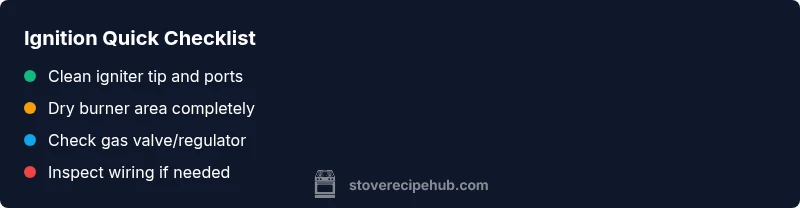
Most ignition failures come from a dirty igniter, clogged burner ports, or a disrupted gas/electric supply. Start with quick fixes: clean the igniter tip and burner, dry the burner, and verify the gas valve is open. If the spark still won't jump, inspect wiring or contact a professional today for safety.
Common Causes of Ignition Problems
Stove ignition can fail for several reasons, and identifying the root cause is the fastest way to fix it safely. The most frequent culprits are a dirty igniter or electrode, which can dull the spark; clogged burner ports that block gas from reaching the flame; and moisture or condensation around the igniter after cleaning or spills. Additional contributors include a misaligned or damaged igniter tip, a faulty spark module in electric stoves, or a partially closed gas valve. If the stove is gas-powered, verify the gas supply is steady and the regulator isn’t restricting flow. For electric ignitions, ensure the plug, outlet, or onboard power supply is delivering power. According to Stove Recipe Hub, consistent maintenance reduces ignition issues in busy kitchens. Regular checks help catch wear before a failure.
Quick Safety Checks Before You Start
Before you take a tool to the stove, prioritize safety and prevention. If you smell gas strongly, evacuate and call emergency services. If you don’t detect a leak, turn off the stove and power at the outlet, then wait for any gas to clear before attempting a re-light. Check that the burner caps are seated properly and dry; moisture around the igniter can inhibit a spark. Ensure your kitchen is ventilated and you’re using dry hands and clean, non-flammable cloths for any cleanup. If your stove has a detachable igniter, remove it carefully and inspect for visible damage or cracks. A calm, methodical approach reduces the risk of accidents and keeps you aligned with safety guidelines.
Cleaning the Igniter and Burner Ports
Cleaning the igniter tip and surrounding burner ports is usually the first actionable step. Remove any debris using a soft brush and a small amount of isopropyl alcohol on a lint-free cloth. Gently scrape away buildup on the igniter electrode with a non-metal tool, then dry the area completely. After cleaning, re-seat the burner cap and try a test ignition. If the flame still won’t light, inspect for stubborn residue inside the burner ports; use a needle or pin to clear clogged holes carefully, being mindful not to bend components. Regular cleaning can prevent recurrent failures and preserve the spark’s integrity.
Electrical and Gas Supply Considerations
Electrical ignition reliability hinges on a clean circuit and proper power delivery. Check the outlet or circuit breaker if the stove is hard-wired; a tripped breaker or blown fuse can stop the spark. For gas stoves, confirm the gas valve is fully open and the regulator isn’t stuck or blocked by debris. If you hear a click but no flame, the igniter thread or wire may be loose; reseat connections if safe to do so, or call a technician. If you’re using a propane cylinder, ensure the cylinder is upright and pressure isn’t low. In all cases, avoid forceful tinkering that could create sparks near gas.
When to Replace Parts vs Call a Pro
Some ignition issues are simple fixes, but others require component replacement or professional service. If the igniter is visibly cracked, bent, or corroded, replace it. If you hear sparking but no ignition, the electrode or switch may be failing; a technician can test continuity and safety features. Replacing burner caps or ports when damaged restores proper gas flow. If the problem persists after basic cleaning and safety checks, don’t delay calling a pro—gas and electrical work require certified handling to prevent leaks, fire hazards, or carbon monoxide exposure.
Safety takeaway: never bypass safety features or continue troubleshooting if you detect a gas leak or strong odor.
Diagnostic Roadmap: From Symptom to Solution
When your stove won’t ignite, follow a simple diagnostic flow: observe the symptom (spark present or absent, flame weak, moisture around igniter). Then consider the most probable causes (clean igniter, clogged ports, power or gas supply). Try the least invasive fixes first, such as cleaning and drying, then progressively check electrical connections and gas lines. If no fix works, escalate to component testing or professional inspection. Having a documented symptom log helps the technician pinpoint the issue faster, reducing downtime and risk.
Preventive Maintenance to Keep Ignition Reliable
Adopt a routine that keeps ignition components in top shape. Wipe spills immediately to minimize corrosion risk, and clean the igniter monthly or after heavy use. Keep burner ports free of debris with a soft brush, especially around the air shutter and burner cap. Inspect wiring for wear and protect electrical connectors from moisture. If your stove is older, consider a periodic professional safety check to prevent gradual deterioration from heat cycling. A proactive plan reduces emergency fixes and keeps the kitchen running smoothly.
Real-World Scenarios and Quick Fixes
In many households, ignition problems stem from simple routine issues: a wet igniter after dishwasher or cooking steam, or a crumb buildup under the burner cap that blocks gas flow. In such cases, drying the area and removing obstructions often restores ignition. For electricity-based ignition, verify power and reset breakers if needed. If you hear a click but no spark, reseating the igniter or replacing a worn electrode typically resolves the issue. When in doubt, follow a step-by-step checklist and consult the manual or a professional for safety-critical components.
Steps
Estimated time: 20-40 minutes
- 1
Assess safety and power
Turn off the stove and unplug or switch off the circuit. Ensure no gas is leaking; if you smell gas, evacuate and call emergency services. Wait until any gas disperses before continuing.
Tip: Always prioritize safety before touching igniter components. - 2
Clean the igniter and area
Remove the burner cap and clean the igniter tip with a cotton swab dampened in isopropyl alcohol. Wipe away residue from the burner base and dry completely.
Tip: Never spray liquids directly onto the igniter. - 3
Dry and re-seat burner
Reassemble the burner, ensuring ports are clear and the cap sits flush. Lightly test the ignition by turning the burner on for a brief moment to observe a spark and flame.
Tip: Even small misalignment can disable ignition. - 4
Check electrical and gas supply
If there’s still no spark, inspect the plug, outlet, or internal wiring for loose connections. For gas stoves, confirm the valve is open and the regulator is unobstructed.
Tip: Only handle electrical connections if the power is off. - 5
Test and document
Attempt ignition on all burners to test consistency. Note symptoms and whether any burner lights, and share this log with a technician if needed.
Tip: A symptom log speeds up professional diagnosis. - 6
Know when to call a pro
If ignition remains inconsistent or you detect gas odors, contact a licensed technician immediately to avoid fire or carbon monoxide hazards.
Tip: When in doubt, safety overrides DIY attempts.
Diagnosis: Stove ignition won't spark or burner won't light
Possible Causes
- highDirty igniter or electrode
- highClogged burner ports
- mediumElectrical supply issue (outlet, breaker, wiring)
- lowGas supply issue (valve, regulator, leak)
Fixes
- easyClean igniter tip and surrounding area with alcohol and a soft brush; dry completely
- easyClear burner ports with a fine tool and re-seat burner cap; test ignition
- mediumCheck electrical supply and reset circuit; verify wiring connections if safe
- mediumInspect gas valve/regulator and confirm gas flow; call a pro for leak checks
Common Questions
What is the most common cause of stove ignition failure?
Dirty igniter and clogged burner ports are the most frequent culprits. Moisture and misalignment can also prevent ignition.
Most ignition failures are due to a dirty igniter or clogged burner ports.
Can moisture affect ignition?
Yes. Moisture around the igniter or burner can block the spark or gas flow, preventing ignition. Drying the area usually resolves it.
Moisture around the igniter can stop ignition; dry the area and retry.
Is it safe to use the stove if I hear sparking but no flame?
No. Sparks without ignition could indicate a faulty electrode or wiring. Stop and inspect safety components or call a pro.
If you hear sparking but no flame, don’t retry repeatedly—safety first and contact a pro.
When should I replace igniter parts?
If the igniter tip is cracked, bent, or corroded, replacement is recommended. Worn electrodes should also be replaced to restore reliable sparking.
Replace damaged igniters or electrodes to restore lighting reliability.
Do I need a professional for gas leaks?
Yes. Gas leaks require immediate professional assessment. If you smell gas, evacuate and call emergency services.
Gas leaks are dangerous—leave the area and call for professional help right away.
Watch Video
Top Takeaways
- Clean igniter and ports regularly
- Dry and reseat burner components
- Check power and gas supply safely
- Escalate to professional if issues persist