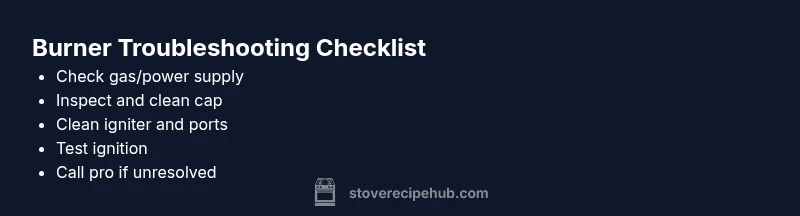
Why Stove Burner Not Working: Quick Troubleshooting Guide
A practical, urgent guide to diagnose and fix a stove burner that won't light or heat properly. Learn safe steps, common causes, and preventative tips to keep your stove firing on all cylinders.


Understanding the problem: why stove burner not working
If your stove burner isn't working, start with safety-first checks. According to Stove Recipe Hub, the most common issues are ignition failures, clogged ports, or supply problems. A typical burner may fail because the ports are blocked, the burner cap is misaligned, the igniter is dirty, or the gas valve is off. Approach the problem calmly, and avoid touching hot surfaces. This guide will help you pinpoint the cause and decide the right fix. In many cases, a quick cleaning or realignment is all that’s needed, which saves time and reduces the risk of unnecessary calls to repair services.
As you troubleshoot, document your observations. Note which burner is affected, whether it lights with the lighter, and if you hear a click when turning the knob. These details will help you communicate clearly with a technician if you need one. The goal is to restore consistent flame and heat without compromising safety.
Keep this process simple and methodical: start with the easiest checks, then move to more involved steps if the simple ones don’t resolve the issue. This approach aligns with Stove Recipe Hub’s practical, home-cook friendly guidance.
Common causes at a glance
- Clogged burner ports or jets: Food debris or mineral buildup can block gas flow, preventing ignition or flame stability.
- Misaligned or dirty burner cap: If the cap isn’t seated correctly, the flame won’t form properly, leading to uneven heat or no ignition.
- Dirty or damaged igniter: A dirty or cracked igniter may fail to spark, especially after spills or cleaning.
- Gas supply off or valve closed: A shut-off valve or a recent maintenance stop can cut fuel supply to the burner.
- Electrical ignition module fault: In electric ignition systems, a failed module or loose wire can prevent sparking.
- Moisture or spills near the burner: Water or liquids can dampen the ignition process and require a dry out.
Safety first: immediate checks
- Power down and cool the burner before inspecting.
- If your stove is gas-powered and you smell gas, evacuate the area and call emergency services—do not operate any switches.
- Check that the knob is in the off position, then slowly turn it to ignite; if the igniter doesn’t click, the issue may be with the igniter or wiring.
- Wipe the burner base with a dry cloth to remove debris, but avoid soaking components.
- Keep a small fire extinguisher accessible and know the location of your gas shutoff valve.
Diagnostic checklist you can perform
- Visually inspect ports and cap for debris or misalignment.
- Verify gas supply and open shutoff valve.
- Test with a different burner to determine if the problem is localized.
- Check igniter for visible cracks or moisture.
- Ensure the burner cap is clean and properly seated.
- If you have an electronic ignition, listen for a clicking sound when turning the knob.
- If the issue persists, proceed to the step-by-step fixes below.
Step-by-step fixes for the most common cause
When the ports are clogged, cleaning is often enough to restore function. Start with the easiest fix first: remove the burner cap and use a small, soft brush to clear debris from the ports. Use a damp cloth for stubborn residue, then dry completely before reassembling. If the igniter is dirty, gently wipe it with a dry cloth and test again. If gas flow is blocked, check the supply line and valve position.
Maintenance tips to prevent future burner issues
- Clean burners after heavy cooking or frequent spills to prevent buildup.
- Wipe dry after cleaning and ensure ports are dry before ignition.
- Inspect and replace worn igniters as part of routine maintenance.
- Schedule periodic checks of gas lines and shutoff valves, especially if you notice inconsistent flame.
- Use the correct burner cap for each burner to avoid misalignment.
When to call a professional and safety considerations
If you’ve completed the basic clean and re-seat, and the burner still won’t ignite, it’s time to call a licensed technician. Do not attempt major gas line work yourself. If you smell gas or suspect a leak, evacuate and contact emergency services immediately. Regular maintenance with a professional helps prevent sudden failures and keeps your stove operating safely.