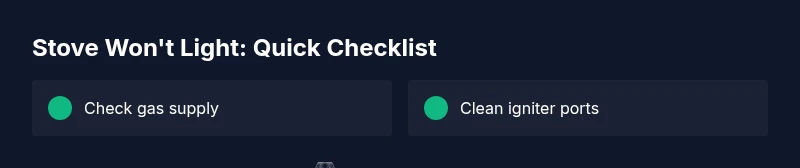
Stove Won't Light: Troubleshooting Guide for Home Cooks
Urgent, practical steps to diagnose and fix a stove that won't light. From ignition sparks to gas flow checks, learn safe fixes and when to call a pro.


Most stove ignition failures come from the gas supply, dirty igniter, or misaligned burner parts. Start with the basics: open the gas valve, ensure the burner cap sits correctly, and observe if a spark is produced. If the burner still won’t light after quick checks, proceed to the step-by-step guide for deeper diagnosis.
Quick checks you can try now
If your stove won’t light, start with the simplest checks and stay safe. According to Stove Recipe Hub, most ignition failures are caused by a blocked gas supply, a dirty or mis-seated burner, or a worn-out igniter. Before you panic, walk through these rapid checks while keeping the kitchen well-ventilated. First, verify the gas valve underneath the cooktop is fully open and that the knob is in the ON position. Next, remove the burner cap and confirm it sits flat and aligned with the burner base. If the cap is loose or rotated, the flame won’t form correctly and the igniter may not spark as expected. Use a soft brush or a wooden pick to clean any crumbs, dust, or residue from the burner ports. Re-seat the cap, ensure ports are clear, and try again. If you still don’t hear a spark or see a flame, switch to a different burner to test whether the issue is local to one head. These checks cover the most common, low-risk causes and can often resolve the problem without tools or professional help. If you smell gas or the stove shows signs of a gas leak at any point, leave the area and call emergency services. Safety first.
Understanding ignition systems on gas stoves
Gas stoves with modern electric ignition rely on a small electrical current to spark across the igniter and light the gas flowing through the burner. When you press the knob, an electrical pulse travels to the igniter. A healthy ignition usually produces a visible blue spark and a quick, consistent flame. If you hear a click but don’t see a spark, the igniter could be dirty, damaged, or worn, or there may be an issue with the electrical supply. Dirty ports or misaligned components can block gas flow even if the spark is present. In older stoves with standing pilots, the pilot flame must be steady; if it goes out, the main burner won’t light. Understanding these pieces helps you diagnose whether the problem lies with ignition timing, gas flow, or a mechanical misalignment. By treating ignition as a system, you can test each component in a logical order rather than guessing blindly.
Check the basics: gas supply and burner alignment
Begin with the simplest checks, as they account for the majority of “stove won’t light” scenarios. Confirm the house gas supply is active and the valve under or behind the stove is open. If you have a gas shutoff at the main line, make sure it hasn’t been turned off inadvertently. Next, inspect the burner itself: remove the burner cap, clean its underside, and re-align the cap so it sits evenly on the burner base. Misalignment can block gas ports and stop ignition. Look for bent burner ports or residual food debris that might restrict flame distribution. Reassemble carefully and retry. If you have multiple burners, try lighting another head to determine whether the issue is isolated to one burner. These checks help distinguish between a global gas-supply issue and a localized problem with one burner.
Diagnosing ignition issues: spark vs gas flow
If ignition still fails, distinguish between spark problems and gas flow. Listen for a click from the igniter when you turn the knob; if there’s no audible click, the igniter or electrical supply could be the culprit. If you hear a click but see no spark, the igniter may be dirty or damaged, or the wiring could be loose. For gas flow, check the burner ports for obstructions; a clogged port can prevent gas from reaching the flame even when the igniter fires. You can gently brush the ports with a dry soft-bristled brush to clear debris. If you suspect gas is not reaching the burner, avoid applying liquids or forcing gas through—this could create a hazardous situation. In cases where a gas smell is present, evacuate and contact the gas supplier or emergency services. A slow or inconsistent spark may indicate a failing igniter module that needs replacement.
Common fixes you can perform safely
Many ignition problems respond to quick, safe fixes. Start by ensuring the valve is open, the burner cap is seated, and the ports are clean. Dry the burner thoroughly after cleaning to prevent moisture from inhibiting ignition. If the igniter is visibly dirty, remove loose debris with a dry brush; never use water or solvents on electrical components. For stubborn issues, try cleaning or replacing the igniter if you have the model’s manual and feel confident. Resetting the range’s power by unplugging or turning off the circuit breaker for a minute can also clear a transient electrical fault. If gas is involved, never override safety features; if you suspect a leak or a persistent flame irregularity, call a professional immediately. Routine maintenance—like cleaning burners after each use and inspecting ignition components monthly—helps prevent future failures.
Step-by-step: Clean or replace the igniter
- Disconnect power to the stove and turn off the gas supply if you’re comfortable doing so. 2) Remove the burner cap and housing as per your model’s manual. 3) Inspect the igniter tip for signs of wear or carbon buildup. 4) Clean gently with a dry brush or a cotton swab; avoid touching the delicate ceramic tip. 5) Reassemble, reconnect power, and test the ignition. 6) If there’s still no spark, consider replacing the igniter with a compatible replacement part or seeking professional help. 7) After any cleaning or replacement, perform a safety test to ensure there are no gas leaks and that ignition is reliable.
When to replace parts and safety considerations
Ignition components wear out over time. If the igniter glows or sparks weakly, or if the flame is inconsistent, replacement is often the best long-term solution. For safety, never operate a stove with a known gas leak or if you smell gas around the appliance. If you’re unsure about any step—especially those involving gas lines, gas valves, or electrical connections—call a licensed technician. When replacing parts, verify compatibility with your stove model and follow manufacturer instructions. Frequent failures in one burner may indicate a broader issue with the ignition module or control board. Invest in quality parts from reputable brands and keep a record of part numbers for future maintenance.
Maintenance habits to prevent future failures
Regular cleaning and inspection reduce the likelihood of stove ignition problems. Wipe down burners after cooking to prevent oil and food residue from entering ports. Periodically inspect the igniter and look for loose connections or corroded terminals. Keep the area around the stove clear of combustibles and ensure adequate ventilation when testing ignition. If your kitchen experiences frequent power fluctuations, consider a dedicated outlet or surge protection for the range’s ignition module. Schedule professional servicing every 1–2 years if your stove is older or if you rely on it heavily. Small, proactive maintenance habits can dramatically reduce the risk of a stove won’t light scenario.
Common mistakes to avoid
- Forcing gas flow or using liquids near open flames, which can ignite unexpectedly.
- Ignoring a faint or irregular spark; it usually means a worn igniter or loose wiring.
- Attempting to fix gas lines without proper training; this is dangerous and should be left to pros.
- Not turning off the gas supply before inspecting burners; safety protocols must be followed.
- Over-cleaning with metal tools that can bend ports or damage components.
Steps
Estimated time: 20-40 minutes
- 1
Verify gas supply and open valve
Turn the knob fully to the ON position and confirm the main gas supply is active. If you have a separate shutoff valve, ensure it’s not closed. This quick check often resolves ignition failures caused by a simple valve misalignment.
Tip: If you’re unsure which valve controls your burner, consult the stove manual or label on the underside of the cooktop. - 2
Inspect burner cap and alignment
Remove the burner cap and check that it sits flat and aligned with the burner base. Misalignment or a dirty contact surface can block gas flow and prevent ignition.
Tip: Use a soft brush to remove debris and dry any moisture before reassembling. - 3
Check for a spark and igniter condition
Turn the knob to ignite and listen for a quick sparking sound. If you don’t hear a spark, inspect the igniter for dirt, cracks, or loose connections. A poor spark often means the igniter needs cleaning or replacement.
Tip: Never touch the igniter while the stove is powered. - 4
Clean burner ports and reassemble
Gently clean the burner ports with a dry brush or cotton swab. Ensure ports are unobstructed, then reassemble the burner components correctly.
Tip: Avoid using metal objects that could bend or damage ports. - 5
Test ignition again
Power the stove back on and attempt to light the burner. If the flame appears inconsistently or goes out, there may be a gas flow issue beyond the ports or a faulty ignition module.
Tip: If you still see no ignition, proceed to the next steps or seek professional help. - 6
Consider igniter replacement
If the igniter is worn or damaged, replacing it with a compatible part can restore reliable ignition. Follow the manufacturer’s replacement procedure carefully.
Tip: Keep model numbers handy when buying parts. - 7
Call a professional if needed
If you detect a gas smell, hear hiss after turning off the valve, or cannot safely diagnose the issue, stop and call a licensed technician. Gas-related problems require expert intervention.
Tip: Your safety comes first; don’t bypass safety features.
Diagnosis: Stove won't light
Possible Causes
- highGas supply shutoff or closed valve
- highDirty or misaligned burner cap
- highFaulty ignition spark or igniter
- mediumClogged burner ports or gas line obstruction
- mediumElectrical power issue (electric ignition system)
- lowBroken thermocouple or safety valve
Fixes
- easyOpen the gas supply valve and ensure valve knob is fully turned on.
- easyRemove and clean the burner cap and ports; re-seat the cap.
- mediumInspect ignition system for spark; if no spark, replace igniter or check wiring.
- easyClear clogged ports with a soft brush; avoid metal tools.
- mediumCheck electrical supply and reset breaker if needed; ensure ignition module has power.
- hardIf thermocouple or safety valve is suspected, contact a licensed technician.
Common Questions
What should I try first if my stove won’t light?
Start with the basics: verify the gas valve is open, ensure the burner cap sits correctly, and check for a visible spark. If ignition still fails, consult the full guide for deeper diagnostics.
First, make sure the gas is on and the burner is seated properly. If it still won’t light, continue with the full troubleshooting guide.
How can I tell if the igniter is faulty?
If you hear a click but see no spark, the igniter or its wiring may be the culprit. A weak or absent spark usually means cleaning or replacement is needed.
If you hear a click but no spark, the igniter might be faulty and likely needs cleaning or replacement.
Is it safe to clean the burner ports myself?
Yes, use a dry brush or wooden tool to remove debris. Do not use metal tools that could bend ports or cause damage. Ensure the ports are dry before testing ignition.
Cleaning with a dry brush is generally safe, just avoid metal tools and moisture near electrical parts.
What if the burner clicks but won’t light?
A clicking sound with no flame usually points to an ignition or gas flow issue. Check the igniter position and gas ports, then test again. If unresolved, follow the diagnostic steps or call a pro.
If it clicks but won’t light, check the igniter and ports, then proceed with the steps in this guide or contact a professional.
Why does my stove light sometimes and then go out?
This can indicate an unstable gas supply, a weak ignition spark, or a thermocouple that isn’t sensing correctly. Inspect ignition strength and consider replacing aging parts.
If it lights intermittently, you may have a flaky ignition or sensing issue that needs replacement or adjustment.
When should I call a professional?
If you smell gas, suspect a leak, see no spark despite a working power supply, or cannot safely inspect gas lines, call a licensed technician immediately.
Call a professional if you smell gas or if safe DIY steps don’t fix the problem.
Watch Video
Top Takeaways
- Identify the simplest cause first
- Clean and reseat burner's cap to restore ignition
- Test spark and gas flow separately to locate the fault
- Call a pro for gas leaks or unknown failures
- Regular maintenance prevents most ignition problems