Why Is My Stove Not Turning On? An Urgent Troubleshooting Guide
Urgent stove not turning on? This guide helps home cooks diagnose power, ignition, and gas issues safely with clear steps, diagnostics, and maintenance tips to get back to cooking fast.


The most likely cause is a power or ignition issue or faulty control switch. Check the outlet, circuit breaker, and stove power switch; then inspect the ignition system or gas supply. If power is present but it won’t light, reset the breaker and try a safe manual ignition, or contact a professional.
Common Causes at a Glance
When your stove won’t turn on, there are a few culprits you should consider first. In most households, power supply and ignition systems top the list. For electric stoves, a tripped circuit breaker or a blown fuse can cut power to the cooktop. For gas stoves with electronic ignition, a faulty igniter module, a weak spark, or an obstructed gas flow can prevent burners from lighting. Mechanical knobs or safety interlocks can also fail, leaving the surface cold. The approach is methodical: confirm power, check controls, test ignition or gas flow, and assess safety issues before attempting repairs. If you smell gas or hear hissing, stop and evacuate immediately and call emergency services if needed.
By staying calm and following a checklist, you’ll quickly distinguish between an easy fix and a situation that requires a pro. This guide, informed by Stove Recipe Hub, emphasizes practical, safe steps you can take as a home cook to get back to sizzling meals without delay.
Safety First: Gas, Sparks, and Surges
Gas furnaces and stoves demand respect for safety. If you have a gas stove and notice a strong gas smell, hear an audible hissing, or feel faint fumes, evacuate the area and call your gas utility or emergency services. Do not attempt to light burners or fiddle with gas lines in such situations. For electrical issues, ensure you are not standing in water or touching wet surfaces when inspecting outlets or components. Always unplug the appliance before you touch any electrical parts behind access panels. If you’re unsure at any step, it’s safer to contact a licensed technician. Keeping your kitchen area ventilated and maintaining a clear access to the switch, outlet, and gas valve are important preventive habits.
Quick Safety Checks You Can Perform
You can perform several checks safely before calling for help. Start with the simplest: verify the stove is receiving power. Confirm the outlet is live by plugging in a lamp or charger. Check the circuit breaker or fuse box for a recently tripped breaker or blown fuse and reset or replace as needed. Examine the power switch and knobs for any obvious damage or misalignment; indicator lights should respond when you turn the control. For gas stoves, ensure the gas valve is fully open and that the burner cap is seated correctly. Do not bypass safety interlocks or disable protective features.
Document any odd behaviors (stuck knobs, crackling noises, delayed ignition) to share with a technician if you need to call for service. These observations help pinpoint whether the issue is electrical, mechanical, or gas-related.
What the Diagnostic Flow Tells Us
Understanding symptoms helps narrow down causes quickly. If the surface never powers up, the problem points to electrical supply, wiring, or a main switch. If the display lights up but burners won’t ignite, the issue is likely ignition hardware or gas flow. When ignition clicks but no flame appears, check the igniter position, electrode cleanliness, and cap seating. If gas smells present, the situation is dangerous and requires immediate action. By mapping symptoms to likely causes, you can decide whether a simple reset, component replacement, or professional service is needed.
This logical approach reduces frustration and helps you communicate clearly with repair professionals. Stove Recipe Hub’s troubleshooting framework emphasizes safety, methodical testing, and using available tools to avoid unnecessary parts replacements.
Top Fixes You Can Try Now (Non-technical Summary)
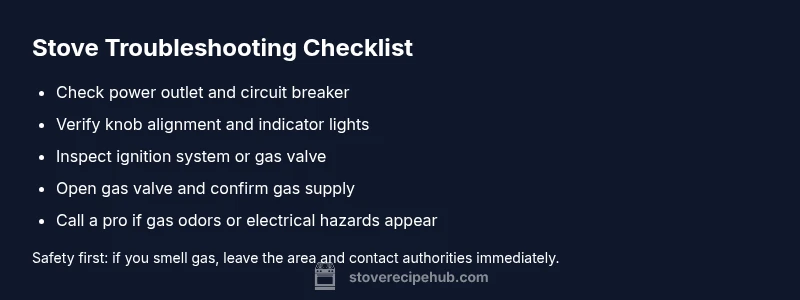
- Power basics: ensure the stove is plugged in and the breaker is ON; reset the breaker if it tripped.
- Knob and selector checks: confirm knobs align with the burner you select and that indicator lights respond.
- Ignition inspection: listen for a spark when turning on a burner; if you hear nothing, the igniter may be dirty or faulty.
- Gas flow check: verify the gas valve is open and there’s no interrupted gas supply; if in doubt, contact your gas provider.
- When in doubt, call a pro: if you see sparks, hear cracking, or smell gas, stop and seek professional help immediately.
These steps help you separate quick fixes from issues that require professional intervention.
Prevention and Maintenance for Future Reliability
Regular upkeep is the best defense against stove failures. Keep the ignition area clean and free of grease; clean burner ports and caps to ensure proper flame. Periodically test and replace worn power cords or damaged knobs. If you have a gas stove, have the gas line and valve inspected by a licensed technician every few years, and never operate a stove with a gas odor or a known gas leak. Maintain a simple routine: check electrical connections, keep the area around the stove dry, and track any recurring symptoms so you can address them early.
Integration of Quick Checks with Long-Term Care
Linking the quick checks to long-term maintenance reduces downtime. After you resolve a stove not turning on, make a short habit of testing the power and ignition before each use, especially after a power outage or appliance relocation. Use a simple beat-the-delay checklist to verify: power supply, control response, igniter function, and gas valve status. This proactive approach helps you catch small issues before they escalate into full-blown failures. Stove Recipe Hub emphasizes practical, safe habits that fit a home cook’s routine.
Steps
Estimated time: Total time: 30-45 minutes
- 1
Confirm power supply
Unplug the stove or switch off at the wall and inspect the outlet by plugging in a known working device. If the outlet is dead, check the circuit breaker and reset or replace the fuse. If power returns, move to the next step.
Tip: If the outlet shows signs of discoloration or warmth, stop and call a licensed electrician. - 2
Reset circuit and test a burner
Turn off the stove, reset the circuit breaker, and wait 60 seconds before restoring power. Try lighting the burner again; note if the indicator light responds or if you hear a spark.
Tip: Use a lamp or phone charger to confirm the outlet is delivering power after the reset. - 3
Check knobs and indicators
Ensure the burner selector aligns with the active burner and that any indicator lights show activity when you turn the knob. A misaligned knob can stop ignition even when power is available.
Tip: If a knob feels loose, replace it to ensure proper contact with the switch shaft. - 4
Test the ignition system
Listen for a spark near the burner when you turn it on. If you hear clicking but no spark, the igniter or electrode may be dirty or cracked. Clean gently with a dry brush or replace as needed.
Tip: Avoid using liquids to clean electrical parts; use a dry brush or compressed air. - 5
Check gas supply (gas stoves only)
Make sure the gas valve is fully open and the burner cap is seated correctly. If you smell gas or hear hissing, leave the area immediately and contact your gas provider.
Tip: Never attempt to light burners if you smell gas; evacuate and call emergency services. - 6
Decide on next steps
If power returns but ignition still fails, or if you notice damaged wiring, components, or gas smells, schedule professional service. Document symptoms to help the technician.
Tip: Keep notes of which burners fail and any sounds or smells you observed.
Diagnosis: Stove won't start or ignite when pressing the control knob or button
Possible Causes
- highPower supply issue (outlet, circuit breaker, or switch)
- highIgnition or control module failure (electric ignition or electronic control)
- mediumGas supply issue (blocked line, valve closed, or pressure problem)
Fixes
- easyCheck outlet and ensure the stove is plugged in; test the outlet with a lamp to confirm power. If the breaker tripped, reset it and test again.
- easyInspect the stove's power switch and knob alignment; test indicator lights and reset a weak control board if safe to do so.
- mediumFor gas stoves, verify the gas valve is open and there’s a steady gas supply; if you detect gas odor, evacuate and call the gas company immediately.
- mediumIf ignition components are dirty or damaged (igniter, electrode, spark module), clean or replace as needed; this may require a technician.
- hardIf the control board or main wiring seems faulty, seek professional evaluation and replacement; avoid DIY repairs on electrical boards.
Common Questions
What is the first thing I should check if my stove won't turn on?
Begin with power. Verify the outlet is live, confirm the circuit breaker hasn’t tripped, and ensure the stove is plugged in. If power is present, move to ignition and gas checks as needed.
First check the power: outlet and breaker. If power is present, proceed to ignition and gas checks.
Why doesn’t my gas stove ignite even though I hear a click?
A clicking sound with no flame usually points to a dirty or damaged igniter, misaligned burner, or blocked gas flow. Clean or replace the igniter and ensure the burner cap sits properly.
If you hear a click but no flame, check the igniter and burner alignment and clean as needed.
Is it safe to try to fix electrical issues myself?
Only if you have training and the right tools. For electrical components, unhook power before inspecting, and call a licensed technician if you are unsure.
Only attempt electrical work if you’re trained; otherwise call a pro.
What should I do if I smell gas near the stove?
Leave the area immediately, avoid flames or switches, then contact your gas provider or emergency services. Do not attempt to operate the stove until cleared by professionals.
If you smell gas, evacuate and call the gas company right away.
How long should I wait after resetting a breaker before testing again?
Wait about 60 seconds after resetting the breaker to let the system stabilize, then test the burner.
Wait a minute after resetting the breaker and then test the burner.
Watch Video
Top Takeaways
- Check power first: outlet, breaker, and switch.
- Inspect ignition and gas supply if power is present but no flame.
- Safety always comes first; stop if you smell gas or hear leaks.
- Call a professional for electrical or gas issues you can't safely resolve.