Why Is the Stove Not Turning Off? A Troubleshooting Guide
Experiencing a stove that won't turn off? This urgent guide from Stove Recipe Hub covers common causes, safety tips, and step-by-step fixes you can perform at home before calling a technician.


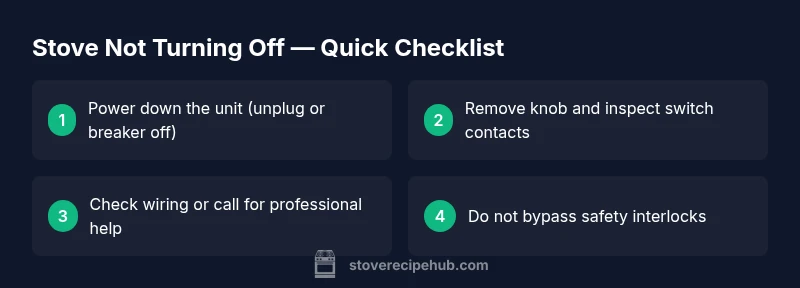
Most likely the stove control is sticking or the switch wiring has a fault. Another common culprit is a faulty thermostat or control board that ignores the OFF command. Quick safety steps: unplug or switch off the circuit breaker, then remove the knob to inspect the switch. If the issue persists, seek professional help to avoid danger.
Urgent reality: why a stove won't turn off
Stoves not turning off is more than a nuisance—it's a safety risk that can lead to overheating, burns, or gas concerns. According to Stove Recipe Hub, most cases begin with a simple mechanical issue (a sticking knob or misaligned switch) or an electrical fault in the control system. The first priority is to cut power to the unit safely and inspect the obvious causes before attempting any repair. If you smell gas or hear hissing, evacuate and call emergency services immediately. Stay calm, keep others away from the kitchen, and avoid using the stove again until the issue is resolved by a qualified professional.
From a home-cooking perspective, understanding the layout of the control panel helps you identify whether the problem is the knob, the switch under the dial, or the electronics behind the control board. This section lays the groundwork for a methodical approach rather than a frantic, guesswork fix. Remember, safety first: power down before touching any interior components.
Common root causes you might overlook
A stove that won't turn off can stem from several root causes. The most frequent include a physically stuck or damaged control knob, dirty or corroded switch contacts, a failing thermostat or electronic control board, and in gas stoves, a valve or regulator issue that keeps a flame active. Electrical faults may also present as a persistent heat even when OFF is selected, which is why testing power supply and wiring is essential. In many households, a simple cleaning of the knob mechanism or reseating a loose wire can resolve the problem; more complex failures require professional service. Keeping a repair log helps identify patterns (e.g., temperature-driven failures or post-cleaning recurrences).
Pro-tip: Document the model number and the exact symptom onset time. This detail helps a technician diagnose faster and reduces unnecessary parts replacement.
Safe, at-home checks you can perform now
Perform these checks only after you have cut power to the stove. Start with the simplest fixes and progress to more involved ones if needed. Check that the OFF knob is in the correct position and that the knob is properly aligned with the shaft. Remove the knob carefully and inspect the switch contacts for dirt, corrosion, or hairline cracks; clean gently with isopropyl alcohol and re-seat. Verify there are no objects or cookware interfering with the control panel. If you smell gas or detect a hissing sound, do not attempt to fix it—evacuate and contact emergency services. If your stove is electric, ensure the power cord is undamaged and the outlet is not loose. Keep a log of any readings you measure with a multimeter or continuity tester if you have the tools.
Next, restore power and test if the OFF setting now shuts the burner down. If the burner remains active, the problem likely lies in a damaged switch, control board, or wiring harness that requires professional inspection. Do not bypass safety interlocks or try to rewire components yourself.
Finally, assess how the issue started. If it coincided with a recent spill, cleaning, or remounting of the control panel, you may have inadvertently loosened a connector. Recheck all connectors behind the control panel (with the power off) and reassemble carefully.
When to call a professional and what to expect
If the stove continues to heat after OFF or you notice sizzling sounds, erratic display readings, or burning smells, call a licensed appliance technician immediately. Electrical faults and gas-related issues pose significant safety risks and require specialized testing equipment and adherence to code standards. A pro will typically perform a controlled power-down, meter checks for continuity and resistance, verify gas valve operation if applicable, and inspect the control board for failed components. Expect a diagnostic report with recommended parts and a separate safety check for gas lines, regulators, and shut-off valves. If the unit is under warranty, contact the manufacturer or authorized service provider to preserve coverage.
Steps
Estimated time: 45-90 minutes
- 1
Power down safely
Disconnect power to the stove by unplugging or flipping the circuit breaker. Wait 30 seconds to discharge residual energy before inspecting the control area.
Tip: Always verify the outlet is de-energized with a tester before touching wires. - 2
Remove and inspect the knob
Carefully pull off the OFF knob and look at the shaft alignment and switch contacts behind it. Check for dirt, corrosion, or damage that would keep the switch engaged.
Tip: Photograph the knob position to aid reassembly if needed. - 3
Test the switch and wiring
If you have a multimeter, test continuity across the OFF position. Look for a stuck contact or a short in the wiring harness behind the control board.
Tip: If you’re unsure how to test safely, skip to step 5. - 4
Inspect control board and connectors
Visually inspect the control board for burnt components, loose connectors, or traces that look damaged. Reseat any loose plugs carefully.
Tip: Handle metal components with dry hands to avoid electric shock. - 5
Gas considerations (if applicable)
For gas stoves, ensure the gas valve is fully closed if you can do so safely. Do not test gas leaks with open flames or electrical devices.
Tip: If you smell gas, evacuate and call emergency services immediately. - 6
Decide on next steps
If the stove still won’t turn off after these steps, don’t continue troubleshooting. Schedule professional service for a safe, code-compliant repair.
Tip: Keep a service appointment date and model number handy for the technician.
Diagnosis: Stove won't turn off or continues to heat after OFF setting
Possible Causes
- highStuck or faulty stove knob/controls
- mediumElectrical switch short or wiring fault
- lowThermostat or control board failure
- lowGas valve or regulator issue (gas stove)
Fixes
- easyPower down completely (unplug or switch off breaker) and remove the knob to access the switch; re-seat wiring if accessible
- easyInspect knob alignment and examine switch contacts for debris; clean with isopropyl alcohol and reassemble
- hardIf electrical faults are suspected, do not attempt repair—contact a licensed technician
- hardFor gas stoves, ensure the gas supply is safely shut off and contact a pro if you detect leaks or abnormal odors
Common Questions
What should I do first when my stove won't turn off?
Power down the stove by unplugging or turning off the circuit breaker. If gas is involved or you smell gas, evacuate and call emergency services. After power-down, inspect the control knob and look for obvious signs of sticking or damage.
First, cut power to the stove. If you smell gas, evacuate and call for help right away.
Is it safe to keep using the stove while it's stuck on?
No. A stove that won't turn off can overheat quickly and may pose a burn or gas risk. Stop using it and seek professional help promptly.
No—stop using it and contact a professional as soon as possible.
Can this issue cause a gas leak?
Yes, if a gas valve or regulator is involved. Evacuate if you detect gas odors and call emergency services. Do not operate switches or attempt repairs yourself.
Gas leaks are serious—evacuate and call authorities if you smell gas.
Should I remove the knob myself?
Only if you’re comfortable and power is disconnected. If unsure, contact a professional to avoid damaging the control or wiring.
Only do so if power is off; otherwise, call a pro.
When should I replace the stove or control board?
If tests indicate persistent failure of the board or thermostat and repairs aren’t feasible, replacement is usually recommended by a professional.
If the board fails consistently, replacement is often needed.
Watch Video
Top Takeaways
- Power down first to stop danger.
- Check knobs and switches for sticking issues.
- Electrical/gas faults require professional service.
- Document findings for the technician.