Why My Stove Won t Heat Up: Urgent Troubleshooting Guide
Facing a stove that won t heat up? Stove Recipe Hub delivers an urgent, practical troubleshooting guide with quick fixes, safety steps, and clear advice on when to call a professional.


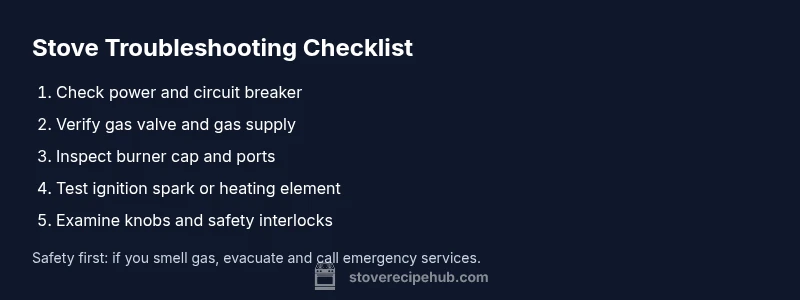
The most likely causes are power, gas supply, or ignition failure. Start by confirming the stove is powered and the outlet/circuit breaker is functioning. For gas stoves, check that the gas valve is open and the burner cap sits correctly. For electric stoves, inspect the heating element or coil. If you smell gas or hear hissing, stop and call a professional.
Why why my stove won t heat up matters for home cooks
When your stove won t heat up, it disrupts weeknight meals and raises safety concerns. According to Stove Recipe Hub, this problem is commonly caused by power issues, gas supply interruptions, or ignition faults. Understanding the basics helps you triage quickly and avoid risky attempts. This guide uses practical, stove-top language and real-world checks that you can perform safely in minutes before calling a pro. The Stove Recipe Hub team emphasizes that staying calm and methodical reduces risk during troubleshooting.
Note: Throughout this article, we’ll use plain language and safe, common-sense steps you can take in a typical kitchen. If you’re ever unsure, err on the side of safety and contact a professional technician.
Safety first: immediate steps before you diagnose
Safety matters above all else. If you smell gas, evacuate immediately and call emergency services. For electric stoves, disconnect power by unplugging the unit if accessible; if not, switch off at the wall or breaker. Once safety is secured, you can begin basic checks with confidence. Stove Recipe Hub Team recommends pausing any repair attempt if there is any doubt about gas or electrical safety.
Always ventilate the area and do not create sparks or flame near a gas leak. If in doubt, step back and seek professional assistance before proceeding.
Diagnostic mindset: how to approach the problem quickly
Start with the simplest checks that require no tools. Confirm the outlet is live, the clock or display powers on, and the gas valve (for gas stoves) is open. Listen for ignition sounds or clicks. This approach helps you isolate likely causes with minimal risk. Stove Recipe Hub highlights that a systematic flow saves time and reduces potential damage to sensitive components.
Common causes to verify
Power issues are the leading cause: a tripped circuit breaker, a blown fuse, or a loose plug can prevent heat from forming. Gas issues can include a closed gas valve, empty supply, or a misaligned regulator. Ignition problems occur when the spark module or igniter is worn. Burner components—cap alignment, dirty ports, or food debris—can obstruct heat. Electrical faults such as a faulty control board or heating element also prevent heat. Each cause has a safe, straightforward check you can perform before calling a pro.
Step-by-step troubleshooting you can follow
This section lays out a practical workflow, starting with the simplest checks and escalating only as needed. Begin with safety-first checks for power and gas where applicable, then inspect ignition and burner components. If nothing resolves the issue, progressively test the major subsystems and document what you observe. By following a deliberate flow, you minimize risk and avoid unnecessary damage. The aim is to restore heat safely and efficiently.
Prevention tips to reduce future no-heat events
Regularly clean burner ports, caps, and igniters to prevent fouling that blocks heat. Schedule periodic professional inspections of gas lines and electrical components, especially after a noisy ignition or irregular flame. Keep the area around the stove clear and use appropriate cookware that distributes heat evenly. Maintain a simple log of any issues, codes, or noises to help a technician diagnose faster next time.
When to call a professional and what to expect
If basic checks fail to restore heat, or if you notice gas smells, electrical burning odors, or abnormal flames, contact a licensed technician immediately. A professional will test gas pressure, inspect ignition systems, and verify control electronics and safety interlocks. Stove Recipe Hub reminds readers that certain issues require specialized tools and safety protocols; timely professional help protects your home.
Steps
Estimated time: 30-60 minutes
- 1
Check power supply
Ensure the stove is plugged in and the outlet is live. If the display doesn’t light up, test another device in the same outlet. Reset the circuit breaker if it has tripped, then re-test the stove.
Tip: Use a lamp or phone charger as a quick outlet test. - 2
Verify gas supply (for gas stoves)
Confirm the gas valve is fully open and there’s no gas odor. If you hear hissing but no ignition, the issue might be gas delivery or regulator adjustment. Do not attempt to fix a leaking gas line yourself.
Tip: If you suspect a gas leak, leave the area and call emergency services immediately. - 3
Inspect ignition and spark
Listen for a consistent spark when you attempt to light the burner. If there’s no spark, the igniter or ignition module could be faulty. Do not damage the wiring; a professional may need to replace components.
Tip: Quiet clicking without ignition usually points to a worn igniter. - 4
Check burner caps and ports
Remove the burner cap and clean any buildup from the ports with a soft brush or pin. Reassemble and test heat again. Debris or misalignment can prevent proper ignition or heat distribution.
Tip: Avoid using metal tools that could scratch ports; use a wooden skewer or plastic brush. - 5
Test control knobs and safety interlocks
Make sure knobs align correctly with their indicators and that safety interlocks engage when you turn the knob. A misaligned knob can prevent ignition or heat altogether.
Tip: If a knob feels loose, replace the knob sleeve to ensure accurate control. - 6
Evaluate heat output and seal the test
Turn to a standard heat setting and observe whether you get consistent heat. Note any codes or abnormal sounds. If heat remains absent, discontinue use and seek professional assessment.
Tip: Document any error codes or blinking lights for the technician.
Diagnosis: Stove won't heat up or only partial heat
Possible Causes
- highPower issue (outlet, plug, circuit breaker)
- mediumGas supply interrupted or valve closed (gas stove)
- mediumIgnition or spark module failure (electric ignition)
- lowDirty or misaligned burner cap / clogged ports
- lowFaulty heating element or electric coil
Fixes
- easyTest outlet with a known-working device; reset or replace a tripped breaker
- easyEnsure gas valve is fully open and gas is flowing; if gas odor is detected, evacuate and call emergency services
- easyClean and reseat burner cap; inspect ports for debris and clear as needed
- mediumReplace ignition spark module or heating element; consult a professional for safe handling
- hardIf the control board or major electrical component is faulty, schedule professional service
Common Questions
What is the most common reason a stove won't heat up?
Power issues or ignition faults are the most common culprits. Start by checking the outlet, breaker, and gas flow if applicable. If the problem persists, proceed with the diagnostic steps in this guide.
Typically, power or ignition problems cause a stove not to heat. Check the outlet and breaker, then inspect gas flow if you have a gas stove.
Why won t my electric stove heat even after power seems fine?
Electric stoves can fail due to a faulty heating element or damaged control board. Check the coil or element connection, and consider replacement if it remains cold after basic tests. When in doubt, call a professional.
If the heating element is dead, the burner won’t heat even with power.
Gas smell and no ignition: what should I do?
Evacuate the area immediately and call emergency services if you detect a gas odor. Do not operate switches or try to light the stove. A professional should inspect gas supply and safety valves before any testing resumes.
If you smell gas, leave now and call for help right away.
Should I use a professional if my stove still won t heat after basic checks?
Yes. If basic checks don’t restore heat, or if you suspect gas lines, electrical faults, or ignition problems, a licensed technician is the safest option. They can diagnose with proper tools and safety protocols.
If basic checks fail, it’s time to call a professional.
Can a clogged burner port cause no heat even with a lit flame?
Yes. Debris can block ports and prevent proper flame distribution. Clean the ports and verify the flame pattern after reseating the burner cap. If heat still doesn’t return, pursue professional service.
A clogged port can stop heat even if the burner lights properly.
What maintenance helps prevent future no-heat events?
Regular cleaning of burner ports, caps, and igniters helps prevent fouling. Schedule periodic professional checks for gas lines and electrical components. Keeping manuals handy also speeds up future diagnostics.
Regular maintenance helps prevent future problems.
Watch Video
Top Takeaways
- Identify power, gas, or ignition as primary culprits
- Prioritize safety before troubleshooting
- Follow a step-by-step workflow to avoid risky repairs
- Know when to call a professional for gas or electrical issues