What to Do When Your Stove Stops Working: A Practical Troubleshooting Guide
Facing a stove that won't heat? This urgent troubleshooting guide from Stove Recipe Hub walks home cooks through quick checks, safe fixes, and when to call a pro.


Most stove failures start with a simple power or gas supply issue. First, check the circuit breaker or fuse for the outlet, and confirm the stove is receiving power. For gas stoves, ensure the gas valve is open and there’s no gas leak indicator. If these basics don’t restore heat, continue with deeper diagnostics.
Quick Safety First
If you’re wondering what to do when your stove stops working, start with safety and basic checks. A non-heating stove can be caused by something as simple as a tripped breaker or a valve left closed, but there’s real danger if gas is involved or if electrical components are damaged. Before you touch any wiring or gas fittings, remove persons and pets from the area if you smell gas or hear hissing. Use approved safety practices and never bypass safety devices. This first step protects you and your kitchen while you diagnose the fault.
Stove problems can escalate quickly if ignored. By prioritizing safety, you create a baseline for effective troubleshooting and reduce the risk of leaks, electrical shocks, or fire hazards. Remember: when in doubt, pause and consult a professional. The Stove Recipe Hub team emphasizes safety as the foundation of any repair plan.
Quick Checks You Can Do Right Now
When you start troubleshooting, keep the keyword in mind: you want to confirm whether the issue is simple and resolvable without specialized tools. Begin with these non-invasive checks:
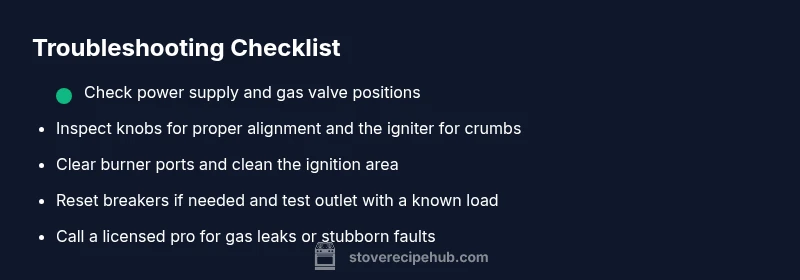
- Power supply: Verify the stove is plugged in (if applicable), and inspect the outlet with a basic tester or a known working device.
- Circuit breaker: Look for a tripped breaker or blown fuse in the main panel. If you reset a breaker, wait a few minutes to see if the stove responds.
- Gas valve (gas stoves): Ensure the gas valve is fully open and there’s no obvious odor of gas. If gas is detected, evacuate and contact your gas provider.
- Knobs and control panel: Make sure the knob positions align with the burners they control; a misaligned valve can prevent ignition.
If these quick checks restore heat, you’ve isolated the issue to a simple fix. If not, proceed to deeper diagnostics using the flow in this guide. The Stove Recipe Hub team notes that many calls to repair services stem from skipping these basic checks.
Common Causes That Stop Heating and How to Diagnose Them
A stove may stop heating due to several common causes. Understanding these helps you decide what to try next and what to call a professional for. The most frequent culprits are power and gas supply problems, followed by burner or igniter fouling, and finally a faulty control or sensor.
- Electrical power issues: a tripped breaker, blown fuse, or a failed outlet can render both electric coils and induction surfaces unresponsive.
- Gas supply problems: a closed valve, gas line issue, or gas odor indicates a risk that requires immediate action and evaluation by a qualified technician.
- Dirty or clogged burners/igniters: crumbs, grease, or mineral buildup can prevent ignition or flame stability, particularly on older stoves.
- Control panel or sensor faults: worn knobs, faulty electronic controls, or dirty sensing probes can prevent heat delivery.
Diagnosing these causes involves careful inspection and process elimination. Start with the simplest fixes (power and gas), then move to mechanical cleaning and sensor checks. The goal is to identify the exact failure mode without risking safety or damaging components.
How Environment Impacts Stove Performance
Sometimes external factors contribute to poor stove performance. For example, living in areas with low gas pressure, frequent voltage sags, or a recently tripped area circuit can impair startup power. Ensure your kitchen’s wiring is up to date and that the gas line is adequately pressurized. If you notice frequent breaker trips or dimming lights when the stove is on, this points to broader electrical issues that deserve professional assessment.
Prevention: Maintenance to Avoid Future Breakdowns
Regular maintenance reduces the odds of sudden stove failures. Simple, routine tasks keep your appliance reliable and safer:
- Clean burner ports and igniters weekly to prevent clogs.
- Wipe down knobs and control surfaces to avoid misalignment or contact corrosion.
- Schedule annual professional checkups for gas lines, regulators, and safety valves.
- Use proper cookware and avoid overheating elements that can waste energy and accelerate wear.
- Keep a small fire extinguisher and a flashlight nearby for emergencies and night-time checks.
These steps not only help extend the life of the stove but also give you peace of mind when cooking under time pressure.
When to Call a Pro and What to Expect
If you encounter a gas leak, a strong odor, or ongoing failure after basic checks, contact a licensed technician immediately. For electrical concerns that require disassembly or diagnostic testing beyond basic inspection, a professional should handle it. When you call, provide details about what you observed, any noises, smells, and what tests you performed. This helps the technician diagnose the problem faster and more safely. The Stove Recipe Hub team reminds readers that some issues, such as gas leaks or faulty ignition systems, demand specialized training and tools.
Steps
Estimated time: 30-45 minutes
- 1
Verify power and gas readiness
Begin with the simplest checks: confirm the stove is plugged in, the outlet has power, and the gas valve is open (for gas stoves). If you find a tripped breaker or blown fuse, reset/replace it and try again. This step eliminates half the common issues without tools.
Tip: Keep a dedicated breaker map for the kitchen to speed future checks. - 2
Inspect the control panel and knobs
Ensure knobs are firmly attached and aligned with their burners. A misaligned knob can prevent ignition or heat. If the panel looks damaged or unresponsive, note the model and consult the manual for reset procedures before opening the unit.
Tip: Take a quick photo of the control layout to reference during service. - 3
Clean igniters and burner ports
Power off the unit and remove burner caps. Use a soft brush or a toothpick to dislodge debris from ignition holes and ports. Wipe away grease and residue with a mild cleaner; dry completely before testing.
Tip: Avoid using metal objects that can bend or widen ports. - 4
Test ignition and flame stability
Reassemble the burner and attempt ignition. If the flame is weak, uneven, or fails to light, note which burner is affected and whether it lights but goes out on its own. This helps discriminate fuel supply from ignition faults.
Tip: If the flame is irregular, you may need to call a pro for jet cleaning. - 5
Evaluate electrical components
Check for obvious signs of damaged wiring or scorched connectors near the control board. Do not probe inside the control module. If you observe signs of overheating or burnt smells, discontinue testing and contact a technician.
Tip: Never bypass safety interlocks or reset a control board with power on. - 6
Gas-safety check and decision point
If you smell gas or hear hissing, evacuate immediately and call the gas company or emergency services. If no odor is present but ignition still fails after the above steps, schedule a professional service appointment; do not continue experiments.
Tip: Gas safety is non-negotiable; prioritize evacuation and professional evaluation.
Diagnosis: Stove won't heat or ignite after basic safety checks
Possible Causes
- highPower supply issue (outlet, breaker, or fuse)
- highGas supply issue (valve closed, gas odor)
- mediumDirty igniter or clogged burner ports
- lowFaulty control panel or sensor
- lowWorn wiring or terminal connections
Fixes
- easyReset circuit breaker or replace blown fuse; test outlet with a known-good device
- easyOpen gas valve fully and ensure there is no gas odor; if odor is detected, evacuate and call the gas company
- easyClean igniter and burner ports; remove surface debris; reassemble and test ignition
- mediumCheck control knobs alignment and panel for signs of damage; consult the manual for reset options
- hardIf wiring or sensors appear damaged, isolate power and contact a professional
Common Questions
Why won’t my electric stove heat up even though the burner is on?
Common causes include a tripped breaker, blown fuse, faulty outlet, or a malfunctioning control board. Start by checking power at the outlet and the breaker panel. If power is present, the issue may require professional diagnostics or replacement of internal components.
Common causes include a tripped breaker or faulty outlet. Check power first; if power is present, you may need a professional diagnostic.
Is it safe to use the stove if I smell gas?
No. A gas odor indicates a potential leak. Evacuate the area immediately and contact your gas provider or emergency services. Do not operate switches or appliances until cleared by a professional.
If you smell gas, leave the area right away and call your gas company or emergency services.
What basic checks should I perform before calling a technician?
Confirm power supply, reset the breaker if needed, verify the gas valve is open on a gas stove, and inspect for obvious signs of damage or loose connections. Document symptoms and tests to share with the technician.
Check power and gas, reset breakers, and note what you tested before calling a pro.
Can a blown circuit breaker cause only some burners to fail?
Yes. A tripped breaker can cut power to the entire stove or specific circuits feeding certain burners. Reset the breaker and test again. If it trips repeatedly, there may be an underlying overload or wiring issue.
A faulty breaker can affect some controls; reset it and consider a professional check if it trips again.
How often should I clean the stove to prevent problems?
Clean weekly or after heavy cooking to remove grease and food debris. Regular cleaning helps maintain ignition and flame stability and reduces the risk of clogs in burner ports.
Clean weekly and after heavy cooking to keep ignition reliable.
When should I replace rather than repair a stove component?
If a component is old, repeatedly failing, or involves costly diagnostic work, replacement may be more cost-effective and reliable. A technician can provide a proper assessment and cost estimation.
If repairs keep failing or cost exceeds replacement value, consider replacing the unit.
Watch Video
Top Takeaways
- Begin with safety and basic power/gas checks
- Power and gas issues are the most common culprits
- Clean burners and igniters to prevent ignition problems
- If gas is smelled or persists after fixes, call a pro immediately
- Document failures and maintenance to prevent recurrence