Why Did Stove Stop Working? Urgent Troubleshooting Guide
Urgent stove troubleshooting guide to diagnose why your stove stopped working. Learn quick checks, a detailed diagnostic flow, and step-by-step fixes to restore heat quickly.


If you’re asking why did stove stop working, you’re not alone. Most stove failures come from simple, checkable causes like power supply, gas supply, or a faulty igniter or thermostat. First confirm the outlet is live and the circuit breaker is on, then verify the stove switch is fully engaged. If it still won’t work, follow the diagnostic flow for a safe, step-by-step fix.
Immediate Safety and First Checks
If you’re asking why did stove stop working, you’re not alone. In many homes, the stove failure comes from a simple, fixable problem rather than a failing appliance. Before you reach for tools, prioritize safety: unplug the appliance, turn off the gas supply if you smell gas or hear hissing, and ensure the area is well ventilated. According to Stove Recipe Hub, most stove failures stem from basic issues that home cooks can diagnose safely. This quick-start section helps you perform immediate checks in minutes to avoid accidents and narrow down the cause.
- Verify there is no visible damage to cords, hoses, or knobs.
- If gas is involved, never operate flames near the area; leave and call your gas utility if you smell gas.
- Keep children and pets away while you troubleshoot and resume testing only after you’re sure the area is safe.
Note: If you’re unsure at any point, power off completely and postpone further testing until you have professional guidance.
Check Power at the Outlet and Circuit
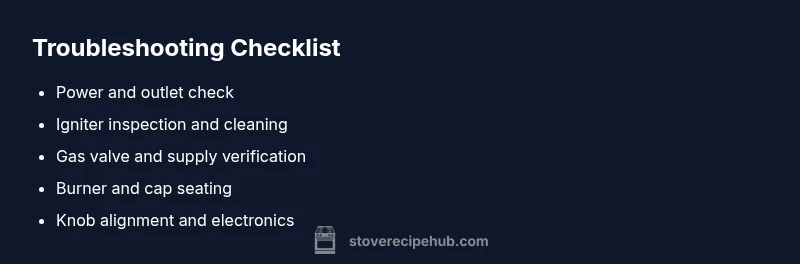
A surprising number of stove failures start with a dead outlet or a tripped breaker. Begin by ensuring the outlet is live: plug in a small lamp or charge a phone to confirm power. If nothing lights, check the kitchen circuit breaker panel; reset any tripped breakers. Inspect the stove’s power cord for cracks or scorch marks. If you use a GFCI outlet, make sure it hasn’t tripped. If you reset a breaker and power returns but the stove still won’t light, you’ve narrowed the problem to either the stove’s internal electronics or a gas/ignition issue. Keep notes of what you test so you don’t double-check the same item twice.
Inspect Ignition System (Gas or Electric)
Electric ignition stoves rely on a spark to light the burner. Listen for a crisp click when you turn the knob and watch for a blue flame once ignition succeeds. If you hear nothing, the igniter plate may be dirty or cracked, or the wiring might be loose. For gas stoves, a failing igniter or faulty spark module can prevent ignition even when gas is on. In either case, inspect the igniter for debris, clean with a soft brush or alcohol wipe, and reseat any removable parts. If the igniter is visibly damaged or won’t spark after cleaning, plan a replacement or professional service.
Check the Gas Line and Gas Shutoff
If your stove is gas-powered, ensure the main gas valve is fully open. A partially closed valve or an obstruction can starve the burner of fuel, leaving you with a spark but no flame. If you suspect gas pressure issues, do not attempt complex repairs — call your gas provider or a licensed technician. Do not attempt to test for leaks with a flame. If you notice a strong smell of gas, exit the area immediately and call emergency services.
Inspect Burner Heads, Caps, and Spark Module
Debris or misaligned caps can prevent even ignition. Remove burner heads and caps and clean thoroughly with warm, soapy water. Dry completely before reassembly to avoid moisture interfering with ignition. Ensure the caps sit flush and correctly aligned with their ports. If the burner still won’t ignite, inspect the spark module for signs of wear or corrosion and replace if needed.
Control Knobs and Electronics
Misaligned or loose control knobs can prevent ignition or heat. Make sure knobs click into place and align to the marked settings. If the stove uses electronic controls, a blown fuse or a faulty control board can also cause a total no-heat condition. In that case, you’ll typically see error codes or blinking lights. Consult the manufacturer’s manual and consider professional service for electronics.
Electrical Issues and Safety Warnings
Electrical faults can feel subtle but are dangerous. Avoid probing live circuits; unplug and isolate the stove whenever possible. If the digital display behaves abnormally, or there are burning smells, stop troubleshooting and call a professional. Do not bypass safety interlocks.
Reset, Re-test, and Confirm Successful Ignite
After cleaning or replacing parts, power down the stove completely for at least 60 seconds, then power back on and attempt ignition again. Run through all burners to confirm consistent ignition and heat. If one burner remains stubborn, switch to a spare burner if available or note the issue for the technician. Remember to reconnect gas lines only when the area is safe and confirmed free of leaks.
When to Call a Professional
If you smell gas, cannot locate the cause after a thorough check, or the stove remains dead after all tests, it’s time to call a licensed technician or your gas utility. A professional can safely test gas pressure, seals, wiring, and the ignition module. Prompt professional help protects your home from fire risk and gas leaks.
Routine Maintenance to Prevent Recurrence
Preventive care extends the life of your stove. Clean spills promptly, inspect knobs and burners monthly, and schedule yearly professional servicing to keep ignition, sensors, and fuel lines in good condition. Regular maintenance reduces the odds of a sudden outage and improves safety around the stove.
Steps
Estimated time: 45-60 minutes
- 1
Power safety and initial checks
Unplug the stove and, if you smell gas or must handle lines, shut off the gas supply. Clear the area of combustibles and ensure good ventilation. This step reduces risk before you touch any components.
Tip: Never work on gas lines near an open flame; keep a working flashlight handy. - 2
Test the outlet and circuit
Plug a lamp into the same outlet to confirm power. If the lamp doesn’t light, check the kitchen circuit breaker and reset if needed. Note any tripped breakers and avoid repeatedly flipping them if you’re unsure why they tripped.
Tip: If the outlet is controlled by a wall switch, ensure it’s in the on position before testing. - 3
Inspect ignition components
Turn the knob and listen for a sharp click. Watch for a blue flame when ignition succeeds on gas models. If you hear nothing or see a weak spark, the igniter or spark module may be dirty or damaged.
Tip: A flashlight can help you see the igniter mid-cycle; don’t touch hot parts. - 4
Clean burners and caps
Remove burner heads and caps; soak in warm water with mild dish soap. Scrub away crusted residue, rinse, and dry thoroughly before reassembling to ensure proper ignition.
Tip: Dry completely to avoid moisture inhibiting sparks or gas flow. - 5
Check gas line and shutoff
Confirm the main gas valve is open fully. If you notice gas smell, evacuate and contact the gas provider. Do not attempt leaks testing with an open flame.
Tip: If gas odor is strong, leave immediately and call emergency services. - 6
Inspect knobs and seating
Ensure knobs push in fully and land on the correct settings. Misaligned knobs can prevent ignition or heat from engaging.
Tip: A stiff knob may indicate debris or misalignment; remove and clean gently. - 7
Re-test ignition
Re-seat all parts, restore power, and attempt ignition again. Observe for a consistent spark and a stable flame on gas models.
Tip: If flame looks crooked, reseat the burner and caps again. - 8
Reset and re-power
Power down the stove for at least 60 seconds, then power back on and test all burners. A quick reset can clear electronics glitches.
Tip: Avoid touching multiple controls at once; test one burner at a time. - 9
Document tests and next steps
Keep a log of what you tested and the outcomes. If the issue persists after all checks, you should contact a technician.
Tip: Structured notes save time for service visits. - 10
Call a professional when needed
If you smell gas, have persistent ignition failures, or no heat after comprehensive checks, hire a licensed technician or contact the gas utility for safety.
Tip: Professional service protects your home from fire risk and gas leaks.
Diagnosis: Stove won't ignite or heat, or ignites intermittently
Possible Causes
- highPower issue (outlet, cord, breaker)
- highFaulty igniter or spark module
- mediumGas supply valve shut or low pressure
- mediumControl knob or electronics fault
Fixes
- easyTest outlet with a lamp; reset any tripped breakers; inspect the cord for damage
- easyClean or replace the igniter; reseat wiring and re-test ignition
- mediumConfirm gas valve is fully open and gas supply is uninterrupted; call a pro if gas issues persist
- mediumInspect knobs and control boards for loose connections or fault codes; replace or service as needed
Common Questions
What are the most common reasons a stove stops working?
Most stoves stop working due to power issues, ignition problems, gas supply issues, or dirty burners. A systematic check helps identify the culprit quickly.
Most stoves stop working because of power, ignition, gas, or dirty burners. We'll go step by step to find the cause.
Is it safe to troubleshoot a gas stove myself?
Basic checks like power and cleaning can be done safely. If you smell gas or suspect a leak, leave the area and call your gas provider immediately.
You can do basic checks, but if you smell gas, leave now and call the gas company.
Why won't the ignition click on my gas stove?
The igniter or spark module may be dirty or damaged. Cleaning or replacing the igniter usually resolves the issue.
Often a dirty or damaged igniter blocks the spark. Cleaning or replacing it usually fixes it.
What should I do if the stove won't ignite after resetting the breaker?
Double-check gas supply and knobs. If unresolved, there may be an electrical or gas safety issue requiring a professional.
If it still won't ignite after a reset, check gas and knobs; if not, call a pro.
When should I call a professional?
If you smell gas, can't locate the issue, or the stove remains dead after checks, contact a licensed technician or the gas utility.
Call a professional if you smell gas or can't fix the issue.
Will DIY repairs void my warranty?
Check the manufacturer’s warranty; some repairs require approved service to keep coverage.
Check your warranty because DIY could affect coverage.
Watch Video
Top Takeaways
- Start with power checks; most failures are electrical.
- Clean and reseat igniters and burners for reliable ignition.
- Never ignore gas smells; call a professional immediately.
- Document every step to streamline service if needed.
- Regular maintenance reduces future outages.