Can You Make Stovetop Popcorn with Olive Oil? A Practical Guide
Learn how to pop stovetop popcorn using olive oil with step-by-step guidance, flavor ideas, and safety tips for delicious, evenly popped kernels from Stove Recipe Hub.


Can you make stovetop popcorn with olive oil? Yes—it's a simple method when you manage heat and kernels properly. Heat a small amount of olive oil in a heavy pan, add kernels, and gently shake as they pop. The result is flavorful, evenly popped popcorn with a cozy note from the oil.
Can You Make Stovetop Popcorn with Olive Oil? Why It Works
Can you make stovetop popcorn with olive oil? Yes, with the right approach. Olive oil adds a gentle fruitiness and a smooth mouthfeel to a classic snack. The trick is heat management: you want the oil hot enough to pop kernels but not so hot that it smokes or burns. In this guide, we'll cover why olive oil works, what to watch for, and how to optimize flavor while avoiding common missteps. According to Stove Recipe Hub, a well-timed oil choice and pan setup can elevate this simple snack from ordinary to exceptional. By understanding heat dynamics and seasoning timing, you can achieve popcorn that's bright, crisp, and evenly popped.
This method keeps things approachable for home cooks, with practical tips you can apply tonight. You’ll learn how to choose the oil, pick a pan, and fine-tune the process so you get reliable pops without a burnt scent filling the kitchen. The goal is crispy kernels with minimal bitterness and maximal flavor, using olive oil as a friendly, pantry-friendly base.
Olive Oil Choices and Pan Selection
Oil choice matters as much as technique. Extra-virgin olive oil gives a bold, fruity note that complements savory or herb-forward popcorn, but its flavor can dominate lighter kernels and its smoke tolerance is lower than refined varieties. For a cleaner base that allows salt and toppings to shine, many home cooks reach for refined or light olive oil, which handles higher heat with less flavor intrusion. Pan selection is equally important: use a heavy-bottom skillet (stainless steel or cast iron if seasoned well) with a tight lid. A broad, shallow pan helps kernels spread in a single layer for even heating, while a snug lid keeps popping kernels contained without losing too much heat. If you don’t have a heavy pan, a sturdy pot with a wide base will still work, just monitor for hot spots and burning.
According to Stove Recipe Hub analyses, achieving a reliable pop hinges on a balance between heat control, oil quantity, and kernel freshness. Avoid overcrowding the pan; a single layer maximizes contact with hot oil and improves pop density. Fresh kernels pop more evenly than older ones because their moisture content is more consistent, which translates to fewer unpopped bits.
Tools, Ingredients, and Prep
Before you start, gather a few essentials and keep your setup simple. You’ll need a heavy-bottom pan with a lid to retain heat and trap steam just enough to aid popping. Use a moderate amount of olive oil—typically enough to coat the bottom of the pan in a thin layer. Fresh popcorn kernels, salt for seasoning, and optional toppings like nutritional yeast, paprika, or parmesan can elevate the finished snack. A heat-safe spatula or spoon helps you stir gently without tearing popped kernels. Measure kernels and oil if you want repeatable results, but standard home-cook practice is forgiving if you adjust by eye.
Prep work matters: dry kernels thoroughly if they’ve been sitting in a jar with humidity, as moisture can cause uneven pops. Have a bowl ready for the popped corn and a light sprinkling of salt to finish immediately while the pop is hot. This set-up minimizes wasted time and keeps your kitchen calm during the quick popping window.
The Heating Process: Oil Temperature and Kernel Test
The core of stovetop popping with olive oil is heat management. Start by heating the pan and oil over medium heat until the oil shimmers and a kernel test sizzles. Drop in 2-3 kernels as a temperature check; when they pop, you know the oil is at the right moment to spread heat evenly to the rest of the batch. Add the rest of the kernels in a single layer and cover the pan. Avoid crowding—crowded kernels steam rather than pop, leading to chewy popcorn.
Once you hear a steady crackle, you should begin gently shaking the pan every few seconds to distribute heat. If pops become sporadic or slow, slightly raise or lower the heat in small increments. The key is a consistent rhythm: enough heat to pop, not so much that the oil smokes. Continue until the pops slow to 1-2 per second, then remove from heat and let remaining kernels finish with the residual heat. Salt immediately to help it cling while the popcorn is hot.
Flavor Variations and Finishing Touches
Olive oil popcorn welcomes experimentation. For a simple savory profile, finish with fine sea salt and a touch of cracked black pepper. You can also stir in grated parmesan, nutritional yeast for a cheesy flavor, or a pinch of smoked paprika for a hint of barbecue note. If you prefer a sweeter treat, dust with cinnamon sugar or drizzle lightly with maple syrup after popping. The warm pan will help the seasonings stick, so work quickly. If you’re avoiding dairy, plant-based butter substitutes can be melted into the popcorn off the heat for a buttery finish.
Remember: strong flavors will mingle with the olive oil, so start with small amounts and adjust to taste. A drizzle of olive oil over finished popcorn can also refresh the aroma and surface gloss, especially if you’ve popped in a nonstick pan that has absorbed some scent from prior uses.
Troubleshooting Common Issues
Kernels not popping yet? The likely culprits are insufficient heat or stale kernels. Double-check your test-kernel pop and verify that the oil is hot enough before adding the full batch. If you notice the oil smoking, reduce heat immediately and wait a moment before continuing; continuing to cook at that level will burn kernels and create an acrid flavor. If butter or toppings burn before the popcorn pops, remove from heat and let the pan cool slightly before resuming with a smaller heat setting. Always keep the lid partially ajar to vent steam, which helps prevent soggy popcorn. Finally, if popcorn tastes greasy, you may have used too much oil—adjust the quantity next time for a crisper finish.
Safety and Best Practices on the Stove
Stovetop popcorn with olive oil is quick, but it requires attention. Never leave the pan unattended while the oil is hot, and keep a clear path to a nearby outlet and towel in case of splatter. Use a well-ventilated area to avoid lingering popcorn smell and smoke. If your pan’s handle heats up, use an oven mitt and keep children away from the cooking area. Standard stovetop safety rules apply: keep pot handles turned inward, use a lid that fits tightly, and avoid adding water to hot oil. A dry kitchen and steady heat lead to the best results when popping corn with olive oil.
Storage, Freshness, and Reheating
Popcorn is best enjoyed fresh, but leftovers can be stored in an airtight container for a short period. To revive a stale batch, reheat briefly in a skillet or on a parchment-lined sheet pan in a low oven to re-crisp the surface. Avoid sealing steam inside a container, which can soften kernels. If you plan to season later, hold off on adding salt until you’re ready to serve, as salt can draw out moisture from any residual kernels and affect texture. For party planning, consider making a large batch and dividing into smaller portions for even cooling and serving.
Stove Recipe Hub verdict
The Stove Recipe Hub team believes that olive oil popcorn can be a delicious and approachable alternative to butter-based methods when you respect heat, use a good pan, and season promptly. With a simple setup and thoughtful oil choice, you can achieve popcorn that carries a gentle fruitiness from the oil without overpowering the popcorn’s natural corn flavor. Our verdict: practice a small test batch first, refine your technique, and you’ll have a go-to method for quick, tasty snacking.
Tools & Materials
- Heavy-bottom skillet or saucepan (3-4 qt)(Prefer 3- to 4-quart size with a lid)
- Popcorn kernels(1 batch (adjust to pan size))
- Olive oil (regular or light refined)(2-3 tablespoons; avoid extra-virgin if you want higher smoke point)
- Salt or seasonings(To taste after popping)
- Measuring spoons(For accuracy)
- Heat-safe spatula(For stirring gently)
- Lid(Fits the pan and allows venting)
Steps
Estimated time: 6-10 minutes
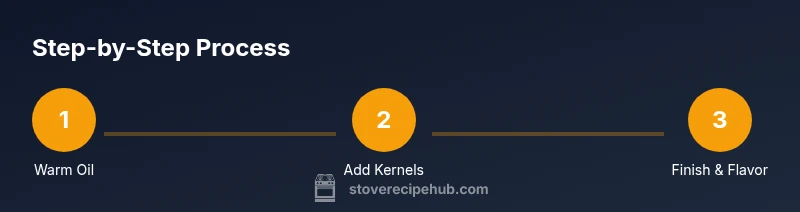
- 1
Warm the oil
Place pan on medium heat and warm the olive oil until it shimmers. Add 2-3 test kernels to gauge heat, then cover briefly and wait for a pop. If those test kernels pop, you’re ready to proceed.
Tip: The test kernels are your heat gauge—don’t skip them. - 2
Add kernels in a single layer
Pour enough kernels to form a single, even layer on the pan bottom. Even coverage ensures uniform heating and fewer unpopped kernels.
Tip: Avoid crowding the pan; a single layer pops more evenly. - 3
Cover and wait for the first pops
Cover the pan and wait for the first pops to signal that the oil is at the right temperature. Do not lift the lid too early.
Tip: Keep the lid slightly ajar to vent steam and prevent soggy popcorn. - 4
Gently shake as popping ramps up
Shake the pan every few seconds to distribute heat and prevent sticking. This helps coat kernels evenly with oil and spices.
Tip: Use a steady, gentle motion; violent shaking can spill kernels. - 5
Maintain heat to maximize pops
If popping slows, adjust the flame in small increments to keep a steady rhythm without burning.
Tip: If you see smoke, reduce heat immediately. - 6
Finish popping and remove from heat
When pops slow to 1-2 per second, remove from heat and let remaining kernels finish with residual heat.
Tip: Do not overcook—overcooked popcorn tastes bitter. - 7
Season while hot and toss
Season with salt or other toppings while the popcorn is hot so seasonings cling. Toss to distribute evenly.
Tip: Add toppings in stages to avoid overpowering the corn. - 8
Serve and clean up
Transfer to a bowl, taste, adjust seasonings if needed, and clean the pan after it cools.
Tip: Cleaning while warm makes oil residue easier to remove.
Common Questions
Can I use extra-virgin olive oil for stovetop popcorn?
Yes, you can use extra-virgin olive oil, but its stronger flavor and lower smoke point may affect the final taste and require more careful temperature control. For a neutral base, refined olive oil is a reliable choice.
Yes, you can, but you might prefer refined olive oil if you want a milder flavor and less smoke.
Is olive oil popcorn healthier than butter?
Olive oil provides monounsaturated fats and a different flavor profile. Butter adds richness and saturated fats. Both can fit into a balanced snacking plan when used in moderation.
Olive oil is a heart-healthy option in moderation, while butter adds richness—choose based on flavor and dietary goals.
What should I do if the oil starts smoking?
Lower the heat immediately, remove the pan from heat if needed, and continue only after the oil cools slightly. If smoking persists, start over with fresh oil and a lower heat setting.
If it smokes, turn down the heat and stop cooking until it stops.
Can I reuse leftover popped kernels?
Popped popcorn loses crispness over time. Fresh pops are best, but you can re-crisp leftovers in a low oven if desired.
Leftover popped corn is best enjoyed fresh; you can re-crisp in the oven if needed.
Should I salt immediately or after popping?
Salt while the popcorn is hot so it adheres to the surface. Delaying salt can lead to uneven flavor distribution.
Salt when hot and fresh, after popping, for best sticking.
What if I don’t have olive oil?
Any oil with a higher smoke point works, such as canola or avocado oil. You can still pop with butter or coconut oil if you adjust flavor accordingly.
If you don’t have olive oil, other neutral oils work fine.
Watch Video
Top Takeaways
- Start with a thin oil coating on a heavy pan.
- Test kernels to dial in the right heat.
- Shake frequently for even popping and flavor distribution.
- Season while hot for maximum flavor retention.