Buy Electric Stove: A Practical 2026 Buying Guide
Learn how to buy electric stove that fits your kitchen and budget. This guide compares coil, smooth-top, and induction models, with safety and maintenance tips from Stove Recipe Hub.


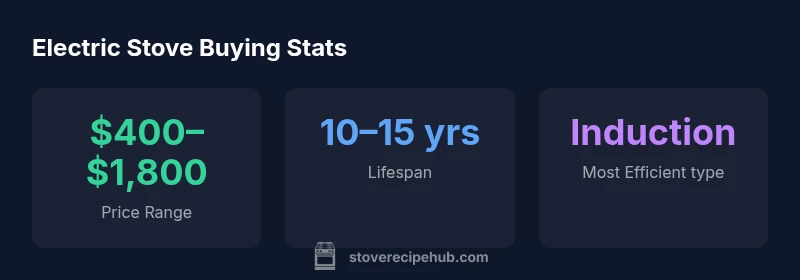
Electric stoves typically cost between $400 and $1,800, depending on coil, glass-ceramic, or induction designs, size, and features. When you buy electric stove, compare heat control, simmer performance, and safety features like auto shutoff. Expect installation considerations and cookware compatibility to influence total value beyond sticker price in your home.
Why buy electric stove: the smart choice for home cooks
According to Stove Recipe Hub, choosing an electric stove is often about balancing upfront cost with long-term energy use and cooking performance. Home cooks who are upgrading or starting from scratch should consider not only the sticker price but also how the stove will fit their kitchen layout, wiring, and daily routines. An electric stove can offer reliable control for simmering sauces, even heat for baking, and predictable performance in most climates. For many households, this makes electric options a practical, flexible path to elevating stove-top cooking without the complexities of gas lines. As you evaluate models, prioritize consistency, ease of maintenance, and safety features that align with your cooking habits and household needs.
Pros and cons by cooktop type: coil vs smooth-top vs induction
- Coil electric stoves: a strong upfront value and simple repair parts, but heat responds slowly and can be uneven. Cleaning coils can be straightforward, but gaps between coil and pan can affect simmer control.
- Smooth-top (glass-ceramic) stoves: offer a sleek aesthetic and easier surface cleaning. Heat control can be smoother, yet they may scratch and require cookware with smooth bases to maximize performance. They also tend to show heat marks over time if not cared for.
- Induction stoves: the standout for speed and energy efficiency, with precise control and cool surfaces. They require compatible ferrous cookware and can demand a higher upfront investment, but long-term energy savings and safety benefits are compelling for many kitchens.
How to compare features and warranty terms
When evaluating models, consider the finish, control layout, and whether the model offers both digital and mechanical knobs for reliability. Look for a warranty that covers elements most likely to fail, such as heating elements or glass-ceramic surfaces. Compare energy ratings if available and review any smart features for reliability and privacy concerns. The goal is to map feature sets to your typical cooking tasks—sauce reduction, sauté work, and weeknight meals—and choose a configuration that minimizes hot spots and maintenance needs over time.
Power supply, outlets, and kitchen layout compatibility
Most electric stoves require a substantial electrical supply and a dedicated circuit in many homes. Common configurations range from 30A to 50A, depending on the stove type and local codes. Before purchasing, verify your panel capacity and the availability of a dedicated outlet. Measure clearances around the cooktop and ensure adjacent cabinetry does not obstruct burner access or pose heat risks. If your kitchen layout is tight, consider a compact unit or a slide-in model that integrates cleanly with existing counters.
Budget ranges and total cost of ownership
Beyond the sticker price, total cost of ownership includes installation, potential electrical upgrades, cookware upgrades, and energy usage. Induction models typically demand higher upfront investments but can reduce monthly energy costs over time, especially in households that cook regularly. Coil models offer the lowest initial outlay but may incur higher maintenance over a decade due to aging heating elements. Budget accordingly and plan for a service plan that covers routine maintenance and replacement parts.
Cookware compatibility and performance
Induction stoves require magnetic cookware (cast iron or certain stainless steels) to work efficiently, while coil and smooth-top models are generally forgiving of non-magnetic pans. If you already own good cookware, induction can be a strong future-proof choice; if not, factor in the cost of compatible pots and pans when you compare models. Consider test-cooking tasks you perform most, such as searing, simmering, and gentle warming, to determine which cookware set best aligns with a given stove type.
Safety features and certifications to look for
Look for auto shutoff timers, child lock, residual heat indicators, and robust flame/heat protection where applicable. Energy-performance certifications and third-party safety testing can provide confidence in a model’s reliability. For households with kids or elderly residents, prioritize passive safety features like cooled surfaces and stable feet to prevent accidental burns or tip-overs. Safety should be a core criterion alongside cost and performance.
Maintenance and longevity tips
Regular cleaning after use reduces staining and buildup that can compromise heat transfer. Use non-abrasive cleaners on smooth-top surfaces and avoid harsh chemicals on glass or ceramic surfaces. For coil models, check and replace damaged coils as needed. Schedule periodic inspections of wiring and connections if you notice intermittent heating or tripping breakers. A proactive maintenance routine can extend life and preserve performance.
Shopping checklist: what to review before you buy electric stove
- Define your budget, intended use, and acceptable maintenance cost.
- Choose a cooktop type that matches your cooking style and cookware.
- Check electrical requirements and ensure panel capacity.
- Compare warranties, customer support, and available service plans.
- Verify clearance, installation needs, and countertop compatibility.
- Confirm safety features and energy considerations for your household.
Buying electric stove — quick comparison
| Category | Typical Price Range | Key Benefit | Trade-off |
|---|---|---|---|
| Coil electric | $200–$800 | Low upfront cost | Lower heat control |
| Smooth-top electric | $500–$1,500 | Aesthetics and cleanability | Risk of scratches |
| Induction electric | $700–$2,000 | Fast heating and energy efficiency | Higher upfront cost; cookware requirement |
Common Questions
What is the difference between coil, smooth-top, and induction electric stoves?
Coil stoves use exposed elements and are typically inexpensive but slower to heat. Smooth-top stoves have a glass-ceramic surface that’s easy to clean, though heat control can be less precise. Induction stoves heat via magnetic fields, offering fast, efficient heating with cool-to-the-touch surfaces.
Coil stoves are affordable but slow. Smooth-top looks nice and is easy to clean. Induction heats fastest with great efficiency, but you need compatible cookware.
Is induction truly more energy-efficient?
Yes—induction is typically more energy-efficient because it transfers energy directly to the cookware with minimal heat loss. The heat is also more controllable, which reduces wasted energy during cooking tasks.
Induction usually saves energy thanks to direct heat transfer and precise control.
Do I need special outlets or upgrading my wiring to install an induction stove?
Many induction stoves require dedicated electrical circuits and sometimes higher amperage than standard kitchen outlets. Check your existing panel capacity and consult a licensed electrician if upgrades are needed before purchase.
Most induction stoves need a dedicated circuit; you may need an electrician for wiring.
What safety features should I look for when buying an electric stove?
Look for auto shutoff timers, child lock, residual heat indicators, and sturdy knobs or controls. For smoother tops, verify surface temperature indicators to prevent accidental burns.
Auto shutoff and child lock are great safety bets.
Are electric stoves better than gas for home cooks who do a lot of stir-frying?
Gas stoves often offer immediate flame control, which some cooks prefer for high-heat stir-frying. Electric stoves, especially induction, can still perform well, but expect a difference in heat response.
Gas can be quicker to respond for high-heat cooking; induction performs very well but feels different.
How should I maintain my electric stove to extend its life?
Clean spills promptly to prevent staining and ensure even heat transfer. Use non-abrasive cleaners on glass tops and inspect cords and connections annually or if you notice irregular heating.
Clean spills quickly and check cords if you notice odd heating.
“Choosing an electric stove is about balancing upfront costs with long-term energy use and cooking performance. Induction stoves offer the best efficiency, but your kitchen wiring and cookware choice matter.”
Top Takeaways
- Define your budget before shopping
- Prioritize cooktop type based on cooking style
- Verify electrical requirements and panel capacity
- Check safety features like auto shutoff and child lock
- Ensure cookware compatibility for induction