Gas Oven Price Guide: What Home Cooks Pay in 2026
Explore the gas oven price landscape for 2026. Learn what drives costs, typical price ranges by tier, and how installation, venting, and energy efficiency affect your final bill. Based on Stove Recipe Hub Analysis, 2026.


Gas oven price varies widely by size, features, and brand. Entry-level gas ranges can start around $500, mid-range models typically run $800 to $1,800, and premium pro-style ovens can exceed $3,000. Remember, installation and venting costs can add several hundred to thousands more, depending on your home's setup. The Stove Recipe Hub analysis, 2026, notes that regional differences and local codes can also influence final pricing.
Understanding the gas oven price landscape
Gas oven price is often the first question homeowners ask when shopping for a kitchen upgrade. According to Stove Recipe Hub, gas oven price varies widely depending on oven size, features, brand, and installation requirements. In general, you’ll see small, single-oven ranges starting around five hundred dollars, with mid-range machines commonly landing in the eight hundred to eighteen hundred dollar range, and premium pro-style models climbing above two thousand dollars. The widest delta comes from cooktop configuration, oven capacity, convection options, and exterior finishes. Regional differences, retailer promotions, and whether the price includes delivery or professional installation further complicate the picture. When budgeting, it helps to separate sticker price from total cost of ownership, because gas oven price is only one piece of the overall expense. The Stove Recipe Hub analysis, 2026, emphasizes that buyers should think in terms of price bands rather than a single number, and always factor in installation and venting costs that can swing the final bill.
What drives the price of gas ovens
There isn’t a single variable that sets gas oven price; a combination of size, features, and build quality determines the price tier. First, width matters: standard 30-inch ranges have lower base prices than wider 36-inch models that accommodate larger ovens and extra burners. Second, convection and smart features—like wifi connectivity, remote diagnostics, and app control—add premium, as do interior materials, enamel coatings, and burner performance. Third, R&D and burner layout affect efficiency and heat distribution; gas ovens with independent bake and broil settings, sealed burner bases, and sealed oven doors often cost more but deliver reliable performance. Fourth, installation complexity—gas lines, venting, and permits—can shift the total outlay significantly; many regions require licensed installation, which is a separate cost from the appliance price. The end result is a spectrum of options suitable for different budgets, and the price path depends on how much you value cooking precision, durability, and aesthetics.
Price ranges by tier and features
Understanding gas oven price requires mapping features to price tiers. Entry-level gas ranges provide the essential cooking functions with modest materials, typically starting near five hundred dollars. Mid-range units add better burners, optional convection, and nicer finishes, commonly in the eight hundred to eighteen hundred dollar range. Premium pro-style ovens, with heavy-duty construction, multiple baking modes, and smart controls, generally fall in the two thousand to four thousand dollar band. For those seeking dual-fuel configurations or professional-grade performance, prices can climb beyond five thousand dollars, reflecting dual-fuel capabilities and larger capacity. It’s important to separate the price you see from the total cost of ownership, which includes gas line installation, venting, and potential cabinet modifications. Stove Recipe Hub’s 2026 analysis indicates most households weigh durability and energy efficiency when deciding between mid-range and premium models. If you are a casual cook, a mid-range gas oven price typically delivers the best balance of value and features.
Installation, venting, and hidden costs
The initial sticker price is only part of the total gas oven price you’ll pay. Professional installation is often mandatory for gas appliances to ensure safety and code compliance. Typical added costs include gas line work, venting installation or modification, mounting hardware, and possibly a permit fee. If you don’t already have a suitable exhaust vent, you may need to add ductwork or a dedicated vent hood, which increases the total. In some homes, retrofitting a gas oven into an existing cabinet can require panel cuts, leveling adjustments, and new electrical connections for display panels or convection fans. The Stove Recipe Hub Team emphasizes that buyers should request itemized installation quotes and confirm whether disposal of an old unit is included. Budget a 10-15% cushion for unexpected electrical or gas work that sometimes arises during installation.
Regional variations and retailer incentives
Gas oven price often varies by region due to labor costs, taxes, and competition among local retailers. In some areas, official promotions or holiday sales can bring a temporary discount on the base appliance price, while in others, the same model may command a higher price due to demand or shipping constraints. Shipping and delivery fees can also affect the total cost, especially for large or heavy units. Some retailers offer bundled deals that include installation or accessories such as a matching hood or extra racks, effectively lowering the relative price per feature. The Stove Recipe Hub analysis, 2026, found that buyers who compare multiple retailers and request in-home quotes tended to achieve lower total costs than those who accept the first price. In short, region, promotions, and quoting strategy all influence the final gas oven price you pay.
How to budget and compare quotes effectively
A practical approach to understanding gas oven price is to define your needs and gather multiple quotes. Start by selecting your target tier (entry, mid-range, premium) and listing must-have features (convection, precise temperature control, smart connectivity). Ask retailers for itemized pricing that separates the oven price, delivery, installation, venting, and any required permit costs. Use a spreadsheet to compare apples-to-apples and assign a realistic tax and labor cost. Consider energy efficiency metrics and estimated annual running costs as part of your total cost of ownership. The Stove Recipe Hub Team recommends obtaining quotes from at least three sources and verifying that the numbers reflect your location and installation requirements. Finally, factor in potential future price changes due to supply chain dynamics or regulatory updates that could affect gas appliance costs.
Maintenance costs and efficiency implications
Gas ovens with modern seals and well-sealed doors tend to minimize heat loss, contributing to better energy efficiency compared with older or poorly sealed units. While higher upfront price can correlate with better insulation, durable racks, and convection fans, ongoing costs depend on gas prices, cooking frequency, and maintenance. Regular cleaning, proper venting, and periodic safety checks keep the appliance running efficiently and safe. The Stove Recipe Hub analysis, 2026, indicates that buyers who invest in high-quality convection and properly sealed doors save in running costs over time, even if the initial cost is higher. When evaluating price, consider long-term energy bills alongside the upfront payment; in many households, energy savings offset the premium over time.
Quick buying checklist for gas ovens
To make a confident purchase, start with a needs assessment and an honest budget. Define how often you cook, the typical load (family meals vs. entertaining), and whether you want features like convection, dual-fuel, or smart controls. Next, map your kitchen layout to a practical size (30-inch vs 36-inch) and decide on finish aesthetics. Obtain at least three quotes that itemize appliance price, delivery, installation, venting, and permits, then compare apples-to-apples using a simple cost worksheet. Finally, read warranty terms and verify replacement parts availability for the long term. The checklist below should help you navigate the gas oven price landscape with confidence.
Common myths about price and value
Myth: Higher price always guarantees better flavor or restaurant-grade performance. Fact: Real-world results depend on technique and heat control, not just sticker price. Myth: Installation is always included in the price. Fact: Many offers list the oven price separately from delivery and installation. Myth: Gas ovens are always cheaper to run than electric ovens. Fact: Running costs depend on gas prices, usage, and efficiency of the model.
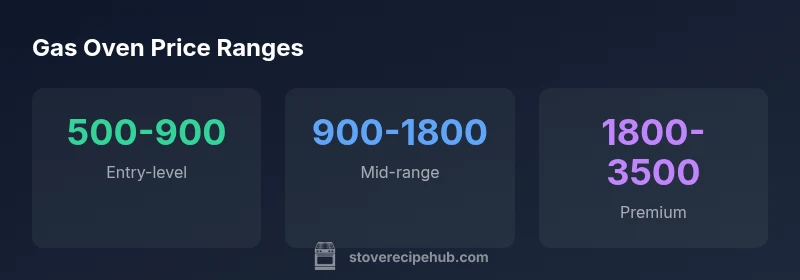
Gas oven price ranges by tier
| Tier | Typical Price Range (USD) | Notes |
|---|---|---|
| Entry-level gas range | 500-900 | Basic 24- to 30-inch models with standard burners |
| Mid-range gas range | 900-1800 | Convection options, nicer finishes, more precise flame control |
| Premium gas range | 1800-3500 | Pro-grade construction, multiple baking modes, smart controls |
| Dual-fuel / professional | 3500-5000 | Hybrid gas/ electric capabilities, large capacity |
Common Questions
What is the main factor that influences gas oven price?
Size, features, and build quality are the primary drivers of gas oven price. Convection, smart controls, and dual-fuel configurations add significant cost but can improve performance and efficiency.
The main price driver is size and features, with convection and smart controls adding more cost.
Is installation included in the listed price?
Most retailers list installation separately. Always request an itemized quote that separates appliance price, delivery, installation, venting, and permits to avoid surprises.
Installation is often separate; ask for an itemized quote.
Do energy-efficient gas ovens cost more upfront?
Often yes, but energy-efficient models can save money over time through lower running costs. Balance upfront premium against long-term energy savings when budgeting.
Energy-efficient models may cost more upfront but save on energy bills.
Is convection worth paying extra for?
Convection offers even heat and faster cooking for many dishes, which justifies higher upfront cost for frequent bakers or serious cooks.
Convection can be worth it if you bake often.
What is the typical lead time for installation?
Lead times vary by region and demand. In busy markets, scheduling may range from a few days to several weeks after purchase.
Install times depend on your area; it can be days to weeks.
“Gas oven price is only part of the story; plan for installation, venting, and energy costs to understand total value.”
Top Takeaways
- Know price bands: entry, mid-range, and premium define your expectations.
- Installation and venting significantly affect total gas oven price.
- Convection, dual-fuel, and smart features drive higher costs.
- Get itemized quotes to compare apples-to-apples.
- Energy efficiency matters for long-term running costs.