How Much is a Pellet Stove? 2026 Price Guide
Comprehensive 2026 pricing guide for pellet stoves: upfront costs, installation, fuel costs, rebates, and budgeting tips from Stove Recipe Hub.


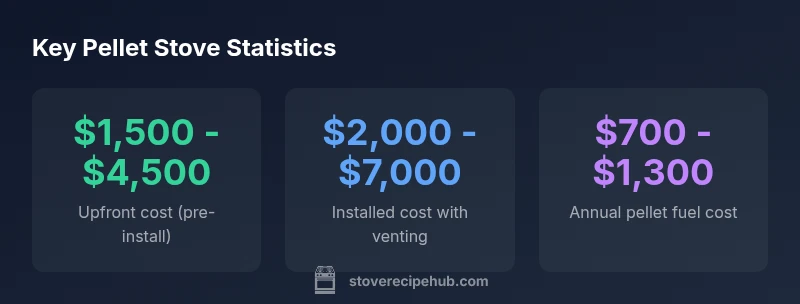
Pellet stove prices typically range from about $1,500 to $4,500 before installation, with higher-end models reaching $5,500. Installation and venting add roughly $200 to $1,000, depending on chimney setup and electrical work. Prices vary by heat output, efficiency, pellet hopper capacity, and features like automatic ignition, thermostats, and smart controls. Quality and warranty can push the price upward, but regional costs also matter.
Real cost drivers behind how much is a pellet stove
For many homeowners, figuring out how much is a pellet stove requires looking beyond a sticker price. Several cost drivers matter: the stove’s heat output (BTUs), its thermal efficiency, hopper size, and the quality of its ignition system. According to Stove Recipe Hub, the most noticeable swing comes from the combination of capacity and efficiency; a higher-efficiency unit will burn pellets more slowly, but it may come with a higher upfront price. The space you want to heat also dictates the required BTU rating; room dimensions, ceiling height, insulation levels, and window exposure will determine whether you need a compact model or a high-output unit. If you oversized a unit, you’ll pay for unnecessary capacity and more frequent maintenance. The space heating needs also influence maintenance and fuel use. Beyond the unit itself, installation complexity—whether a new vent, a metal chimney, or a retrofit into an existing fireplace—will add to the total cost. Understanding these drivers helps you answer the broader question of how much is a pellet stove in your home.
Upfront costs and price bands (how much is a pellet stove)
The sticker price for a pellet stove before installation typically runs in a broad range. Basic freestanding units start around the lower end, mid-range models rise toward the middle, and premium units with smart features push higher still. When you ask how much is a pellet stove, you’re really asking about the combination of the stove price and your installation plan. In general, plan for about $1,500 to $4,500 for the stove itself, depending on size, efficiency, and build quality. Venting requirements, chimney work, gas or electrical considerations, and local permitting can add several hundred to several thousand dollars to the total. Some homes require a dedicated electrical circuit or a new vent chase, which increases labor time. If your goal is maximum automation, look for models with auto-ignition, programmable thermostats, and Wi-Fi connectivity—these features drive the price up but may improve daily comfort and fuel economy. Finally, regional price differences and seasonal promotions can shift numbers by a few hundred dollars.
Installation and venting: what affects cost
Installation complexity is a major determinant of total project cost. A simple freestanding stove with a short vent run and no structural work may fall on the lower end of the range, while a long, through-wall vent or a retrofit into an existing fireplace can raise the price significantly. Labor tasks include securing the stove clearance from walls, routing vent piping, sealing connections to prevent leaks, and ensuring proper air intake. Electrical work for fans, displays, or thermostats can add to the bill. If you’re replacing an existing masonry chimney or adapting to a metal chimney with proper supports, you’ll need a licensed professional and possibly a permit. The quality of installation also affects efficiency and safety; a suboptimal venting layout can cause back-drafting or creosote buildup, increasing maintenance costs and reducing performance. Some homes require a dedicated electrical circuit or a gas line relocation, which marketers may cite as optional but can be necessary for safe operation. In short, installation costs can be a substantial portion of the total, and you should plan for them alongside the stove price.
Operating costs: pellets, efficiency, and payback
Pellet fuel prices and consumption heavily influence ongoing costs. Most pellet stoves advertise efficiency ratings that indicate how effectively they convert pellet energy into usable heat; higher efficiency often means less fuel waste, translating into lower annual fuel costs. The exact pellet price in your region will fluctuate with supply, demand, and pellet quality. On average, a season’s pellet consumption may represent a substantial portion of your home heating budget in cold climates, but smaller spaces or milder regions may see lower usage. To estimate annual costs, multiply your expected burn hours by the stove’s heat output and the pellet price per bag or ton, then adjust for pellet efficiency and heat loss. Smart features like programmable thermostats, automatic start/stop, and zoning controls can further reduce consumption by tailoring heat to occupancy patterns. Remember that pellet prices can swing with energy markets, so be conservative in your budgeting and consider weather-normalized projections for several winters.
Pellet stove vs alternatives: a quick comparison
Choosing between a pellet stove and other heat sources requires looking at comfort, emissions, maintenance, and cost over time. Compared with wood stoves, pellet models typically offer cleaner burning and easier automation, but they depend on a steady pellet supply and electricity for ash removal or auger motors. Gas fireplaces often deliver consistent heat with less daily maintenance but may have higher installation costs and ongoing fuel expenses tied to natural gas prices. Electric resistance heating is cheap to install but expensive to run in cold climates if you’re heating a large space. Pellet stoves tend to be most economical when used for a dedicated living zone or supplemental heat, especially in regions with reliable pellet markets. When you ask how much is a pellet stove in your situation, you should compare not just the upfront price but the long-term operating costs, reliability of pellet supply, and the convenience of automation features.
Rebates, financing, and how to maximize value
Many regions offer energy efficiency rebates or incentives for pellet stoves that meet specific efficiency criteria. These programs can help offset the upfront cost and shorten the payback period, especially when combined with local utility incentives. Check state or provincial energy offices, local sustainability programs, and utility providers for current offers. Financing options from retailers or lenders can ease cash flow during installation, sometimes with promotional low-interest terms. To maximize value, choose a stove with a BTU rating matched to your space, an efficient combustion system, and a reliable after-sales service plan. Compare total costs over 5, 10, and 15 years rather than just the first year; consider pellet price volatility, venting needs, and the cost of maintenance. A well-planned purchase with incentives can significantly improve long-term savings.
Buying tips: how to evaluate models and installers
Begin with a precise heat load calculation for your space, then identify stoves that fit that range. Compare efficiency ratings (AFUE or similar metrics), hopper capacity, and ease of maintenance. Ask manufacturers for real-world performance data and warranty terms. Get multiple quotes from reputable installers and verify requirements for venting, clearance, and electrical work. Check customer reviews and request references; ensure the installer is certified and insured. Finally, plan for a test run after installation to validate performance, warm-up times, and noise levels. By following a structured evaluation, you’ll reduce risk and select a pellet stove that delivers consistent comfort with predictable costs.
Budgeting checklist for your pellet stove project
- Define your climate zone and target BTU output
- Estimate stove price, installation, and venting costs
- Research pellet prices and forecast fuel budgets for 5–10 years
- Look for rebates and financing options in your area
- Compare warranties, service plans, and retailer support
- Schedule a professional installation with proper permits
- Plan for periodic cleaning and professional inspections
A disciplined budgeting approach helps you avoid surprises and ensures the project pays off through steady, economical warmth.
Pellet stove cost ranges by model type (pre-install vs installed) - indicative only
| Model Type | Estimated Price (Pre-Install) | Installed Range | Notes |
|---|---|---|---|
| Freestanding Pellet Stove | $1,500 - $3,000 | $2,000 - $5,000 | Popular for living rooms |
| Insert Pellet Stove | $2,000 - $4,000 | $3,000 - $7,000 | Built into existing openings |
| Smart/High-Efficiency | $2,500 - $4,500 | $4,000 - $7,000 | Advanced controls |
| Ventless Pellet Stove | $1,500 - $3,500 | $2,800 - $6,000 | No chimney required in some cases |
Common Questions
What factors influence the price of a pellet stove?
Unit size, efficiency, hopper capacity, brand, features, and installation complexity all affect the sticker price. Higher efficiency models tend to cost more upfront but save fuel over time.
Price is driven by size, efficiency, and features as well as how difficult the install is.
Is installation included in the price?
Most quotes separate the stove price from labor, venting, and electrical work. Expect installation to add several hundred to several thousand dollars, depending on your home.
Installation is usually extra and varies by home.
Are pellet stoves expensive to operate?
Pellet fuels have variable costs; overall, operating costs depend on pellet prices and usage. In many climates, pellets can be cheaper than electric heat, but regional price changes matter.
Fuel costs depend on pellets price and how much you run the stove.
Do rebates exist for pellet stoves?
Yes, many regions offer rebates or incentives for pellet stoves that meet efficiency criteria. Availability varies by state or country and current programs.
There are incentives in some areas; check local programs.
What should I budget for a full installed pellet stove?
Plan for the stove price plus installation, venting, and electrical work. Typical total installed costs can span a broad range and depend on your setup.
Total cost depends on install complexity; budget accordingly.
What maintenance is required?
Regular cleaning, ash removal, and annual vent or chimney inspection help maintain efficiency and safety. Schedule professional service if you’re unsure how to perform inspections.
Keep it clean and have routine checks.
“A well-chosen pellet stove balances upfront price with installation complexity and daily fuel use; the right model delivers long-term savings if sized correctly.”
Top Takeaways
- Evaluate total installed cost, not just sticker price
- Match heat output to room size to avoid overspending
- Factor in venting and electrical work
- Explore rebates and financing options
- Budget for ongoing pellet fuel costs