How to Make a Stove Out of a Can: A DIY Guide
Learn how to make a stove out of a can with practical safety tips, step-by-step instructions, and DIY guidance from Stove Recipe Hub. Ideal for outdoor cooking, camping, and emergency setups.


You can craft a compact, functional stove from a simple aluminum can for lightweight camping or backcountry cooking. This guide covers safety considerations, required materials, and a step-by-step process to build and test a can stove. Expect to work outdoors, use proper fuel, and follow wind and ventilation precautions for best results.
Why a Can Stove Is Worth Exploring
According to Stove Recipe Hub, a stove crafted from a simple aluminum can offers a compact, lightweight option for backcountry cooking, weekend camping, or an emergency kit. When designed and used with safety in mind, these improvised stoves can boil water or simmer small meals without the need for heavy hardware. The appeal goes beyond portability—this design teaches core concepts like air intake, heat concentration, and fuel control, which influence flame behavior and efficiency. A well-made can stove can provide reliable performance in light-to-moderate cooking tasks, making it a valuable skill for DIY enthusiasts who want to keep gear minimal without sacrificing technique. This section lays the foundation for safe experimentation, including what to expect regarding heat output, wind influence, and the importance of deburring edges to prevent cuts. It also helps you set realistic expectations about boil times, simmering, and fuel consumption when comparing a can stove to purpose-built camping stoves. By understanding the underlying physics of combustion in a small, closed can, you’ll be better prepared to design, test, and adapt your setup for different outdoor conditions.
Safety First: Risks, Ventilation, and Legal Considerations
Safety is the top priority when making and using any improvised stove. Open flames in confined spaces can produce dangerous levels of heat and, in poorly ventilated areas, carbon monoxide. Always perform testing and use the stove outdoors in a well-ventilated area, away from tents, foliage, and flammable materials. Check local rules for outdoor cooking or campfires; some parks restrict open flames and require regulation-compliant stoves. Wear protective gear such as heat-resistant gloves and safety glasses when handling hot metal, and keep a bucket of water or a fire extinguisher within reach. Never leave a lit stove unattended. After use, allow the can to cool completely before handling. This block emphasizes proactive risk management so you can enjoy safe, controlled practice without compromising your health or environment. As you gain confidence, you’ll learn to adapt windbreaks and flame behavior while maintaining strict adherence to safety protocols.
Design Variants: From Penny Stoves to Can Stoves
There are several can-based design variants, each with its own heat characteristics and ease of construction. A basic single-can stove uses vent holes near the base to draw in air while the can concentrates heat around a small burning surface. A penny stove (a compact, small-format option) relies on refined vent patterns to regulate oxygen flow and fuel consumption. More complex designs may involve a double-can setup or a ring-and-vent arrangement to improve stability and heat delivery. The core idea is to balance air intake, fuel delivery, and flame containment to achieve a steady boil or gentle simmer. When choosing a design, consider your intended cooking tasks, the fuel type, and the outdoor conditions. This section contrasts the simplest build with more intricate variants, offering practical guidance on when to upgrade and how to test each configuration under real conditions. Remember: more complex designs often require greater attention to edge finishing and vent placement to avoid accidental fuel leaks or dangerous flare-ups.
Materials Overview and Practical Constraints
Before cutting, map out every action to minimize metal waste and risk. A standard aluminum soda can serves as the base, but you may experiment with different can sizes for varied heat output. Essential tools include tin snips, a metal file or sandpaper, a marker, a ruler, and PPE such as gloves and goggles. For fuel, choose a safe, approved option (e.g., denatured alcohol or a similar camping-friendly fuel) and ensure you have a windscreen or outdoor shelter to stabilize the flame. Plan your vent hole layout based on the can height and diameter, leaving a stable base ring to support a small cooking vessel. The edge finish is critical—sharp burrs can cause injuries or ignite stray chips of metal; always deburr and smooth interior and exterior surfaces. Finally, test your setup outdoors with a controlled burn to observe heat concentration, flame height, and boiling performance. This section provides a practical checklist and discusses trade-offs between portability, heat output, and reliability.
Preparing Your Workspace and Safety Gear
Set up in a stable, open outdoor area with a flat surface and good ventilation. Keep a water source, a small metal tray, and a fire extinguisher or bucket of sand nearby. Put on safety goggles and heat-resistant gloves to protect against sharp edges and hot surfaces. Work on a non-flammable mat or bare earth to minimize fire risk. Clear a wide circle around your workspace and avoid overhanging branches or dry grass. If you’re cooking, ensure the wind is not blowing flames toward you or any gear. Establish a routine for checking ventilation, flame behavior, and fuel stability during the build. A clean, organized workspace helps you identify potential issues quickly and prevents mishandling of hot components. This block reinforces the idea that safety is not optional but integral to the success of any improvised stove project.
How to Test and Use Your Can Stove Safely
Testing should happen outdoors with a controlled environment. Start with a small amount of fuel and a short burn to observe how the vent holes interact with air intake and flame stability. Keep a close eye on flame height, smoke, and heat concentration; adjust vent patterns if needed, but never alter a hot stove while it’s burning. Place a safe, non-flammable stand or ring to support your pot, and monitor boil times closely. Use only suitable cookware designed for open-flame cooking and avoid overloading the stove. When you’re ready to cook, preheat the vessel slightly and maintain a consistent, moderate flame. After use, extinguish the flame with a safe method and allow everything to cool before handling. This section emphasizes careful progression from testing to actual cooking while maintaining strict safety practices.
Common Mistakes and How to Avoid Them
Common pitfalls include using indoors, rushing edge finishing, and neglecting vent hole planning. Avoid inner edge burrs by deburring thoroughly, which reduces risk of cuts and accidental fuel leaks. Do not over-tighten fuel exposure or store fuel near the hot stove. Refrain from using unapproved fuels or improvising with unknown liquids. Maintain a steady flame instead of chasing a roaring fire, which wastes fuel and increases the risk of flare-ups. Finally, don’t neglect wind protection; a small windscreen dramatically improves efficiency and safety in outdoor conditions. By recognizing these missteps early, you’ll improve safety, control, and cooking outcomes across different scenarios.
Making the Most of Can-Stove Cooking on the Go
A can stove is a compact, portable solution for basic outdoor cooking tasks like boiling water or warming simple meals. For trail cooks, it’s wise to include an ultralight windscreen and a compact pot or mug that fits the flame efficiently. Practice makes perfect: start with water-only tests to calibrate heat output and boil times before attempting any recipe that requires longer simmering. The goal is to maximize safety, minimize fuel, and learn to adapt vent patterns to wind and altitude. With careful design, mindful fuel management, and consistent safety practices, a can stove can be a dependable part of your DIY cooking toolkit. The Stove Recipe Hub team recommends treating improvised stoves as supplementary gear for specific outdoor scenarios, not as a universal replacement for purpose-built camping stoves.
Tools & Materials
- Empty aluminum can (e.g., soda can)(Remove top and bottom, clean and dry; keep edges smooth.)
- Tin snips or metal scissors(Cut can sections safely; wear PPE.)
- Metal file or fine sandpaper(Deburr edges until smooth to prevent cuts.)
- Marker and ruler(Plan vent holes and layout precisely.)
- Puncturing tool (pin/awl)(Optional for creating vent patterns (use cautiously).)
- Fuel source (denatured alcohol or approved fuel)(Use only recommended fuels; store away from heat.)
- Small metal pot stand or ring(Supports cookware above flame.)
- Heat-safe gloves(Protect hands during cutting and testing.)
- Safety goggles(Eye protection during metalwork and testing.)
- Fire extinguisher or bucket of water(Keep within reach during testing.)
- Outdoor testing area(Ventilated space away from flammables.)
Steps
Estimated time: 30-45 minutes
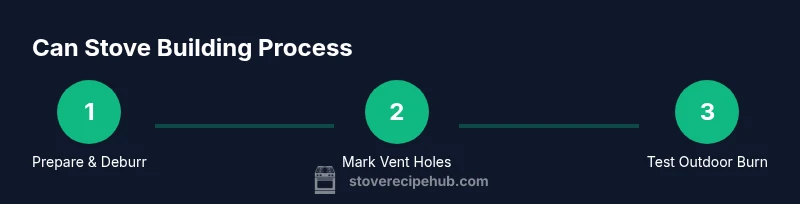
- 1
Prepare the can and safety gear
Put on gloves and goggles. Remove the top and bottom of the can, then carefully cut away enough material to form a stable base and vent area. Deburr all edges with a file or sandpaper to prevent cuts and shield against metal splinters.
Tip: Use a straightedge and mark lines first to ensure clean cuts. - 2
Mark vent holes and pot support
Draw a vent-hole pattern near the top rim and a circular ring on the base to support a pot. Holes should be evenly spaced to promote consistent airflow without leaking fuel. The goal is a controlled flame that stays upright.
Tip: Start with a small hole pattern and expand gradually if needed for flame stability. - 3
Finish edging and test fit
Smooth all cut edges and test the fit of a pot stand or ring. Ensure the stand sits evenly and the pot rests securely above the flame. Re-sand any burrs that appear when the stand is placed.
Tip: Always test with the pot in place before introducing fuel. - 4
Prepare the outdoor testing area
Choose a clear, wind-stable outdoor space. Have water or a fire extinguisher ready. Set the stove on a non-flammable surface and position it so wind will not blow flames toward you.
Tip: Keep a safe distance from any dry vegetation during the test. - 5
Light and observe the flame
In a controlled outdoor environment, introduce a small amount of fuel and ignite carefully. Observe flame height, consistency, and heat transfer to the pot. If flames are erratic, adjust holes or shelter to stabilize the burn.
Tip: Do not lean over the stove while lighting; stand to the side. - 6
Iterate and finalize
Refine vent patterns and pot support based on test results. When satisfied, run a longer boil test and document boil time. Store your stove safely and clearly label fuel storage.
Tip: Document your preferred vent pattern for future recreations.
Common Questions
Is it safe to make a stove out of a can?
When done outdoors with proper safety gear and ventilation, a can stove can be used safely for simple cooking tasks. It requires careful handling, edge deburring, and strict adherence to fuel guidelines. Do not attempt in enclosed spaces or near flammable materials.
Yes, but only in an outdoor, well-ventilated space with the right safety precautions and fuel handling.
What fuels are suitable for a can stove?
Use approved fuels such as denatured alcohol or other camping-safe fuels. Avoid unknown liquids and never mix fuels in the same container. Always follow manufacturer safety guidelines and local regulations when selecting a fuel.
Stick to approved camping fuels and never experiment with unknown liquids.
Can I cook full meals on a can stove?
Can stoves are best for boiling water or heating small portions. They’re compact and portable but have limited simmer control. For longer or more complex meals, consider a purpose-built camping stove.
They’re good for boiling water or warming small portions, not ideal for big meals.
Is using a can stove legal in parks or camping areas?
Rules vary by location. Some parks allow portable stoves with fuel, while others restrict open flames. Always check local regulations, follow posted guidance, and practice Leave No Trace principles.
Check local rules before using it in parks or campsites.
What are safer alternatives if I’m not comfortable with a can stove?
Consider purpose-built camping stoves or alcohol stoves from reputable manufacturers. They offer tested safety features, standardized fuel, and reliable performance in varied conditions. These alternatives reduce edge-case risks associated with improvised designs.
A purpose-built camping stove is often a safer, more reliable option.
How should I dispose of leftover fuel after testing?
Store fuel in approved containers in a cool, ventilated area away from heat. Do not pour leftover fuel down drains or onto the ground. Follow local hazardous waste guidelines for proper disposal.
Safely store and dispose of fuel per local guidelines.
Watch Video
Top Takeaways
- Can stoves offer a lightweight, portable cooking option.
- Safety, ventilation, and outdoors-only use are non-negotiable.
- Vent hole patterns and edge finishing determine heat control.
- Practice with water-only tests before cooking real meals.
- Always have safety gear and a fire outlet nearby.