Is a 24 Inch Stove Too Small? A Practical Guide for Stove-Top Cooking
Explore whether a 24-inch stove fits your cooking needs. Compare sizes, optimize space, and learn when upgrading makes sense for compact kitchens and family meals.


For most households, a 24-inch stove is not ideal for serious cooking; it's usually too small for accommodating multiple pots and a full-sized oven. If you regularly cook for 4+ people or use large pans, consider upgrading to 30-inch or 36-inch models. However, for compact kitchens or singles, a 24-inch stove can meet basic needs.
Is a 24 inch Stove Too Small for Serious Cooking?
The question, is a 24 inch stove too small for serious cooking, comes up often if you’re upgrading a compact kitchen or evaluating a rental unit. According to Stove Recipe Hub, 24-inch stoves are designed to maximize footprint efficiency rather than culinary flexibility. They are well-suited for single cooks or small households with simple weeknight meals, but they quickly reveal limitations when you try to juggle multiple pans, a stock pot, and a roasted dish. In practice, the size matters most when your meal plan routinely includes sauce reductions, searing, simmering, and baking tasks that require organizational headroom. If your kitchen constraints push you toward a 24-inch stove, plan your workflow around its strengths: quick weeknight meals, limited multi-pot cooking, and predictable everyday routines.
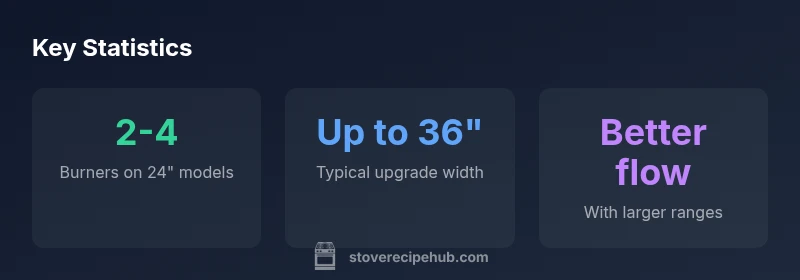
For households contemplating a larger upgrade, the decision often hinges on how many burners you typically use at once, whether you rely on a dedicated oven, and how much counter space you can spare for prep and warming. The Stove Recipe Hub team sees that the optimal choice balances both cooking capacity and kitchen ergonomics. If you expect heavy multi-dish cooking, you should consider stepping up to a 30-inch or 36-inch model to reduce bottlenecks and improve timing during crowded dinner preparations. The core takeaway is practical: match stove size to actual cooking habits, not just available wall space. In many urban kitchens, a 24-inch stove can be a sensible, space-saving solution when used with thoughtful planning and selective appliance pairing.
When a 24-inch Stove Fits Best
There are compelling reasons to choose a 24-inch stove if your cooking style and living situation align. For solo chefs and couples, a compact stove can free up cabinet space, leave room for a larger fridge, or provide space for a designated baking/roasting area elsewhere in the kitchen. In studio apartments or small rental units, the 24-inch option is often the most practical compromise between livable layout and functional cooking. The crucial factor is meal planning: if your typical repertoire includes quick one-pot dishes, simple sautés, or a pasta-night for two, the 24-inch stove can be perfectly adequate. It also tends to be easier to install in kitchens with restricted layouts and can be more budget-friendly than larger ranges. In short, the right context makes a 24-inch stove not too small, but a poor fit in busy, multi-course cooking environments.
The Limits: Burners, Ovens, and Ventilation
Understanding the limitations helps set realistic expectations. A 24-inch stove typically houses 2-4 burners and a compact oven cavity, which restricts large roasting pans, high-volume batch cooking, or heavy simultaneous tasks. You’ll likely experience longer prep-to-table timelines when attempting complex dinners. Additionally, ventilation requirements become critical in tight spaces: insufficient range hood capacity or poor ducting can lead to lingering odors and heat buildup. If your kitchen lacks adequate ventilation, even a modest cooking load can feel overwhelming. Beyond that, dweller layouts like island configurations, peninsula counters, or enclosed dining nooks influence airflow and heat dispersion. If you live in a high-traffic kitchen, consider upgrading or pairing with countertop appliances (e.g., air fryer, toaster oven) to cover extra needs without sacrificing the main range’s footprint.
How to Maximize a 24-inch Stove's Efficiency
Optimizing a 24-inch stove requires smart workflow and selective appliance investments. Start by batch-cooking core components (protein, starch, vegetables) in sequence to minimize heat cycling and idle stove time. Use a single large cast-iron skillet for searing, then finish in the oven if applicable, ensuring you don’t crowd the cooktop. Invest in a compact countertop oven or air fryer to handle tasks that would otherwise occupy a burner, such as roasting vegetables or reheating pastry. Place commonly used ingredients within arm’s reach to reduce motion while cooking, and adopt time-saving pre-prep routines. Finally, keep a timer visible in the cooking zone to coordinate steps with oven cycles. With disciplined planning, you can achieve meals that feel larger in scale than the stove’s footprint would suggest.
Comparing 24-inch to 30-inch and 36-inch Models
The size gap between 24-inch and 30-inch ranges is meaningful for everyday cooking. A 30-inch model typically offers more burners and a larger oven cavity, which translates into improved multitasking capacity and more forgiving bake times. A 36-inch range represents a higher tier of cooking flexibility, with additional burners, stronger heat output, and often more oven space, ideal for frequent entertaining or larger family meals. The trade-offs include space, cost, and installation complexity. If your kitchen layout supports it and your budget allows, upgrading to a larger model reduces scheduling friction and expands your repertoire, particularly for recipes that demand simultaneous stovetop and oven work.
Buying Considerations and Installation
Before purchasing a 24-inch stove, measure the footprint precisely: width, depth, and exact height to ensure proper fit under cabinets and above the plinth. Check gas or electrical connections, venting options, and clearance around the appliance to comply with safety standards. If renovating, consult a professional to verify line sizing and ventilation compatibility. Consider your preferred fuel source: gas stoves provide fast heat changes but require ventilation adequacy, while electric models may offer consistent performance with simpler venting. Finally, think about future needs: if you foresee family growth, frequent entertaining, or changing dietary patterns, factor in scalability when deciding between staying with 24 inches or upgrading.
Real-World Scenarios: Recipes and Workflows
Imagine two typical weeknights: a quick skillet dinner and a roasted chicken with vegetables. On a 24-inch stove, you can brown the chicken in a skillet, then finish in the oven if space allows, while simultaneously simmering a sauce in another pan. For a family meal weekend, consider a 24-inch setup paired with a countertop oven for reheating slices, a separate griddle for morning breakfasts, and a pressure cooker or slow cooker to handle sides with less heat on the main range. By recognizing when to rely on the main range and when to bring in auxiliary appliances, you can deliver satisfying meals without upgrading to a larger stove. The key is to map your most frequent tasks to the burners and oven and reserve the main stove for essential, time-sensitive steps.
Comparison of common stove sizes and their typical use cases
| Stove Size (in) | Typical Use Case | Pros | Cons |
|---|---|---|---|
| 24 | Small apartments / single cooks | Compact footprint; lower upfront cost | Limited oven capacity; fewer burners |
| 30 | Small families / shared kitchens | Better balance of space and capacity | Still may feel tight for big meals |
| 36 | Large households / gourmets | Full cooking flexibility; larger oven | Requires more space and budget |
Common Questions
Is a 24-inch stove enough for a family dinner?
For occasional family dinners, a 24-inch stove can work if you plan ahead and limit multitasking on the stove. For frequent large meals, upgrading to a larger model reduces bottlenecks and improves timing across courses.
A 24-inch stove can handle small family meals, but for frequent large dinners, upgrading helps with multitasking.
What kitchens benefit most from a 24-inch stove?
Compact apartments, studios, and kitchens with tight layouts benefit most. If you have limited space but moderate cooking needs, a 24-inch stove offers a practical compromise.
Small spaces and light cooking are where a 24-inch stove shines.
Can I retrofit a 24-inch stove into a full kitchen?
Retrofitting can be challenging if current cabinets and ventilation are designed for larger appliances. Consult a pro to verify clearances and venting before switching sizes.
It’s possible but may require cabinet tweaks and new venting.
Should I upgrade or add a countertop oven for more capacity?
If you frequently juggle several dishes at once, an upgrade to 30–36 inches provides the most seamless workflow. A countertop oven adds flexibility without a full range upgrade.
Consider a larger range for core cooking, plus a countertop oven for overflow.
Are 24-inch stoves more energy-efficient?
Smaller stoves typically use less energy for lighter cooking loads, but efficiency depends on usage patterns and oven efficiency. Large meals may offset the savings with longer cooking times.
Small stoves can save energy for light cooking, but not necessarily for big meals.
“"A 24-inch stove can be perfectly adequate for small households, but it often bottlenecks busy cooks. Planning and smart appliance pairing can mitigate some limits, yet upgrading to a larger range remains the strongest path to cooking flexibility."”
Top Takeaways
- Evaluate actual cooking load before upgrading.
- Balance kitchen footprint with oven and burner capacity.
- Use smart workflow and countertop appliances to maximize a 24-inch stove.
- Consider upgrading to 30- or 36-inch models for busy households.