What Are the Dimensions of a Stove? A Practical Guide
Discover standard stove dimensions, how to measure safely, and how size affects fit, cooking space, and kitchen workflow. A practical guide by Stove Recipe Hub.


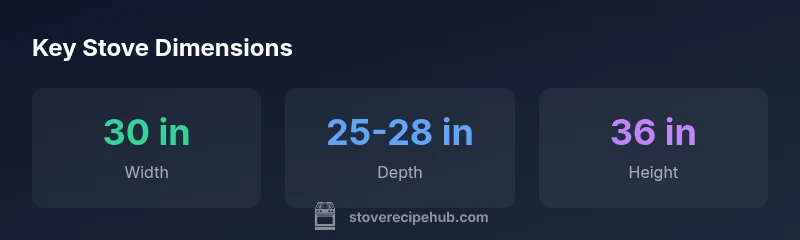
Most standard stoves are 30 inches wide, about 25-28 inches deep, and 36 inches tall. Compact models typically run narrower (about 20-24 inches wide) while professional ranges can reach 36 inches in width. Knowing these dimensions helps you plan space, ventilation, and cabinet clearance before installation.
What are the dimensions of a stove and why they matter
For home cooks and kitchen renovators, understanding what are the dimensions of a stove is essential for fit, safety, and workflow. The three primary measurements are width, depth, and height, which together determine how the appliance sits in a counter enclosure and how it interacts with burners, ventilation, and surrounding cabinets. In practical terms, most standard stoves begin at about 30 inches wide, about 25 to 28 inches deep, and around 36 inches high. These dimensions influence how much usable prep space remains, how easy it is to reach the back elements, and whether an oven door clears a nearby wall or island. From a stove-top perspective, those numbers matter for heat distribution, burner spacing, and the ability to slide pans in and out without brushing knobs or controls. According to Stove Recipe Hub, selecting the right size is not merely aesthetic; it affects airflow, heat retention, and pan stability in busy kitchens. When you plan a cooking zone, measure the space between adjacent cabinets and ensure you have at least a few inches of clearance to prevent heat damage and to allow door clearance. In short, the core dimensions are width, depth, height, plus the extra clearance needed for venting and exhaust.
Standard vs compact models: dimensions you should know
Kitchen stoves come in a few broad families, and the dimensions vary accordingly. The most common width for freestanding and slide-in models in residential kitchens is 30 inches. Depth typically runs about 25 to 28 inches, though some models push toward 29 inches for additional burner access or simmer space. Height commonly targets 36 inches to align with standard countertops, but taller installations exist when cooktops are set into raised cabinetry or with special feet. Compact or apartment-grade stoves often shrink to 20–24 inches wide and may trade a little oven capacity for a tighter footprint. Conversely, professional or premium ranges frequently adopt a 36-inch width with deeper, heavier construction to accommodate larger burners and more robust metalwork. When planning a remodel, you will also encounter “counter-depth” variants designed to sit flush with cabinetry; these can reduce ventilation room and alter door swing, so they require careful cabinet planning. Throughout this guide, remember that dimensions are a starting point; real-world fit depends on model row tolerances, installation clearances, and local building codes. The Stove Recipe Hub team notes that recognizing these categories early saves time in shopping and measurement.
How to measure a stove safely and accurately
Measuring a stove or preparing to install a new one should be done with care and a tape measure, a level, and a helper if possible. Start by measuring overall width: place the tape at the outer edges of the appliance's front from left to right, then confirm whether the cabinet faces protrude beyond the appliance. Next, measure depth: from the wall or backsplash to the front edge of the control panel or handles. Height is taken from the floor to the top surface, but you may also want to measure the clearance to the underside of any overhanging cabinetry or a range hood. Check door clearance by opening the range door fully and noting any obstruction from nearby cabinets or islands. Do not rely on discontinued manufacturer drawings; measure in the space where the unit will sit, including the gap for ventilation and service access. Finally, test mock placement by temporarily positioning a cardboard template or painter’s tape outline to simulate the footprint. By following these steps, you can confirm that your planned installation will accommodate door swing, hinge clearance, and ventilation, reducing surprises on delivery day.
Variations by stove type: freestanding, slide-in, drop-in, professional ranges
Freestanding stoves carry their own finished sides, so they typically leave more flexibility in wall clearance and cabinet alignment. Slide-in and drop-in models are designed to sit between cabinets and counter tops; they usually share the same width as standard freestanding units but may have shallower front-to-back dimensions to sit flush with countertop edges. Drop-in and built-in styles integrate with cabinetry and can have tighter tolerances around the frame, depth, and trim. Professional ranges, often 36 inches wide, are built with reinforced frames, heavier grates, and wider burner configurations, which affects oven door size and ventilation clearance. When evaluating types, consider how each model’s mounting, trim kit, and installation requirements influence overall space, especially if your kitchen has an unusual ceiling height or a curved work zone. The right type depends on cabinet structure, ventilation path, and your preferred aesthetic, but balancing width, depth, and height remains the core challenge.
Planning space: counter depth, ventilation, clearance, and cabinetry
When planning space, counter depth matters. A flush-with-cabinet profile can create a seamless kitchen line but may reduce front ventilation space and complicate ovens. In practical terms, aim for at least a modest gap in front of the appliance to allow airflow and to accommodate door swing. Ventilation must be considered: range hoods and exhaust manifolds need proper clearance above the stove; if you are replacing an existing unit, verify whether your hood's ducting will align with the new model’s height and back clearance. Cabinet depth and door swing clearance influence how far the stove can sit from the nearest wall or island; ensure there is enough room for hands and hot pans to pass safely. If you plan a remodel, draw two or three layout options showing different stove widths and cabinet gaps, then use painter’s tape to visualize the footprint. Stove Recipe Hub emphasizes that misjudging cabinet depth or hood clearance is a common pitfall; taking measurements on-site and cross-checking with the hood's installation instructions will save delays and rework.
Impact of dimensions on cooking workflow and kitchen layout
Dimensions influence reach, pan trajectory, and overall kitchen rhythm. A wider stove can accommodate more burners and larger griddles, but it may force you to relocate prep zones or reduce counter space for chopping and mise en place. The depth can affect the ease of grabbing pots from the back burners and the fit of a backsplash or tile design; deeper stoves may require thicker countertops or taller toe-kicks. Height interacts with seating and island height; mismatches can cause uncomfortable working angles and wasted space. When you adjust stove size, adjust the surrounding work triangles, ensuring the refrigerator, sink, and prep area remain within a short reach. In short, dimensions are not just numbers; they shape what you cook and how you cook it. The Stove Recipe Hub analysis shows that even small changes in width or depth can shift appliance placement, ventilation routing, and cabinet utilization in a typical kitchen.
Practical measurement checklist and common mistakes
Checklist: measure opening width, depth, and height; verify clearance; assess hood height; check door swing; confirm venting path; measure toe-kick and cabinet depth; confirm if a trim kit is required; confirm service access. Common mistakes include assuming factory specs match installed dimensions, failing to account for ventilation clearance, and neglecting to test door swing in the actual space. To avoid errors, perform measurements in the room with the stove footprint modeled by tape or cardboard cutouts, and double-check both left and right margins for symmetry. Lastly, don't forget to plan for future upgrades; if you anticipate adding a taller hood or deeper cabinets, choose dimensions that accommodate potential changes. Stove Recipe Hub recommends cross-referencing with official installation manuals and consulting a professional if you are unsure about fit or venting.
Typical stove dimensions by model type
| Model Type | Width | Depth | Height |
|---|---|---|---|
| Freestanding/Standard | 30 inches (76 cm) | 25-28 inches (63-71 cm) | 36 inches (91 cm) |
| Slide-In/Counter-Depth | 30 inches (76 cm) | 27-29 inches (68-74 cm) | 36 inches (91 cm) |
| Professional/36 inch | 36 inches (91 cm) | 24-28 inches (61-71 cm) | 36 inches (91 cm) |
Common Questions
What are the standard stove dimensions?
Standard stoves are typically about 30 inches wide, 25-28 inches deep, and 36 inches high. Variations exist with compact and professional models.
Most stoves are around 30 inches wide, 28 inches deep, and 36 inches tall, with variations for compact and professional models.
Do stove dimensions differ by type?
Yes. Freestanding stoves generally follow standard widths, while slide-in or drop-in models may share width but differ in depth. Professional ranges are often wider and built heavier.
Yes. Type affects width, depth, and installation details; know whether you want freestanding, slide-in, or professional models.
How should I measure space for a stove?
Measure width first across the opening, then depth from wall to front, and height from floor to top. Check door swing and ventilation clearance in the actual space.
Measure width, depth, and height in the exact space, plus door clearance and venting.
Are there safety guidelines for clearance and ventilation?
Yes. Follow manufacturer guidelines and local codes for clearance around the stove and above the range hood to ensure safe operation.
Always follow code and manufacturer instructions for clearance and ventilation.
What is counter-depth, and when should I choose it?
Counter-depth stoves sit closer to cabinetry for a seamless look, but may require careful measurement for ventilation and door clearance.
Counter-depth can look sleek, but you’ll need precise measurements for ventilation and clearance.
Can I replace a stove with a different size?
Yes, but you may need cabinet adjustments, hood repositioning, or electrical and gas line considerations. Consult a professional for a safe fit.
You can swap sizes, but you might need cabinet work and professional help.
“Dimensions matter because they determine fit, airflow, and practical usability in real kitchens.”
Top Takeaways
- Measure width, depth, and height before buying.
- Leave space for ventilation and door clearance.
- Know standard sizes to anticipate cabinet fit.
- Check installation clearance and venting requirements.
- Use on-site measurements rather than relying on specs alone.