Are Most Stoves the Same Width? A Practical Guide
Discover if stove widths are standardized, how to measure for a perfect fit, and tips for choosing 24, 30, or 36-inch models in your kitchen. A practical guide by Stove Recipe Hub.


Are most stoves the same width? Not at all. In residential kitchens, stove widths vary, with common options at 24, 30, and 36 inches. Standard practice is to fit the stove to your cabinet opening and ventilation, while accounting for trim and clearance. Understanding these widths helps prevent awkward gaps and misaligned panels.
Are most stoves the same width? Understanding standardization
Are most stoves the same width? Not by a long shot. The quick answer may surprise you: width variety is deliberate, not accidental. In typical home kitchens, you’ll see 24-inch, 30-inch, and 36-inch stoves as standard options, with rarer departures like 42-inch ranges for large, pro-style kitchens. This variety stems from different cabinet footprints, ventilation constraints, and front trim designs. According to Stove Recipe Hub, planning around these standard widths helps you avoid awkward gaps and misaligned panels, especially when combining a stove with a hood or decorative trim. When you start with the actual cabinet opening, you’ll find the fit becomes more predictable, which saves time and reduces remodeling surprises. For home cooks, it’s a practical balance between available space and cooking needs.
Standard width options in residential kitchens
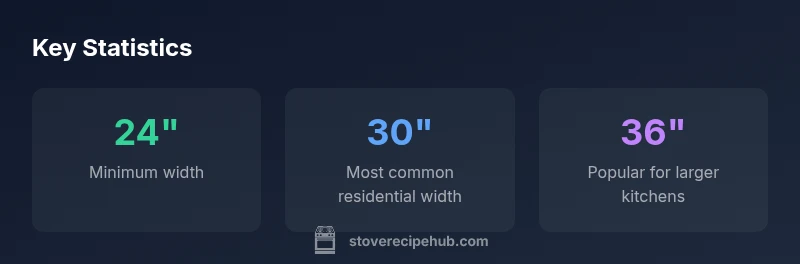
Most households encounter three primary widths: 24, 30, and 36 inches. Each size serves different spaces and budgets. A 24-inch stove is common in compact apartments or small kitchens where every inch counts. A 30-inch model is the workhorse for many homes, offering a sensible balance of cooking surface and cabinet space. A 36-inch range suits larger kitchens or serious cooks who value extra burner space and oven capacity. Beyond these, you may find rare 42-inch pro-style models for high-end kitchens, but these require wider cabinets and specialized ventilation. If you’re shopping, note that the 30" and 36" options remain the most popular according to Stove Recipe Hub analysis, 2026.
How to measure for a proper fit
Before buying, measure the cabinet opening, not just the appliance itself. Start with the horizontal width: measure from the inside edge of one cabinet wall to the opposite edge, at multiple heights to account for any bowing. Account for trim or paneling that will surround the unit, and leave room for a ventilation hood. Don’t forget to measure the vertical clearance under the countertop and the depth where the stove will rest. If you’re replacing an old stove, check for any deviations in width between the built-in opening and the appliance to avoid a forcing fit. Finally, confirm the gap tolerance specified by your local code and the appliance manufacturer.
International and code considerations
Widths aren’t universal worldwide. In Europe, for example, many built-in appliances align with metric standards (roughly 60 cm, about 23.6 inches), while the U.S. and parts of Asia commonly use 24, 30, or 36-inch widths. If you’re relocating or renovating across regions, verify local standards for clearance, safety, and venting requirements. Stove Recipe Hub notes that misalignment with regional codes can lead to installation delays or unsafe gaps, so treat width decisions as a component of overall kitchen compliance.
Impact on cabinet design and ventilation
Width choices ripple through cabinet design and ventilation planning. A wider range demands deeper or taller cabinets, more robust hood systems, and, sometimes, different countertop cutouts. Narrow openings can constrain burner configurations and oven accessibility. If you’re upgrading from a narrower to a wider model, consider cabinet reconfiguration or trim kits to preserve a cohesive look. A poor fit can reduce airflow, affect heat distribution, and complicate maintenance, so map out airflow paths early and consult a pro if you’re unsure.
Handling non-standard gaps: built-ins and adapters
Non-standard gaps aren’t the end of the world. Use trim kits, panel adapters, or decorative fillers to smooth the transition between the appliance and cabinetry. In some cases, you can modify adjacent cabinetry to widen the opening, but this should be done with professional guidance to preserve warranty and structural integrity. If the space is just a hair under a standard width, consider a thinner trim panel or a custom panel that conceals irregularities while maintaining a clean edge.
Data-driven expectations: widths by model types
The data behind stove widths isn’t just anecdotal. In residential contexts, the majority of models land in the 24-30-36-inch spectrum, with proportionally fewer 42-inch or custom-width options. This distribution aligns with typical kitchen footprints and cabinet dimensions, making the 30-inch and 36-inch families the most practical for the majority of homes. As you compare models, use the data-driven framework below to anticipate fit and plan for trim and hood requirements. The key takeaway is to start with the cabinet opening and end with a confirmed installation plan.
Practical steps for selecting a stove width
To choose the right width, follow a simple, repeatable process: 1) measure the cabinet opening to confirm the usable width. 2) check trim, panel, and hood clearance to ensure a clean look. 3) compare the available widths against your cooking needs—more space often means a larger oven or more burner area. 4) verify local codes for required clearances and ventilation. 5) consult a professional if you’re unsure about structural or venting implications. By anchoring your decision to measured openings, you’ll avoid guessing games and costly mistakes.
The Stove Recipe Hub team recommends a practical approach
The Stove Recipe Hub team recommends starting with standard widths (24", 30", 36") and validating your cabinet openings, trim, and ventilation before narrowing to your preferred model. By prioritizing measured openings and code-compliant clearances, you’ll secure a fit that looks integrated and performs reliably. If you face non-standard constraints, professional guidance can save you time and money while preserving warranty coverage.
Standard stove widths and practical usage
| Width (inches) | Typical Use | Notes |
|---|---|---|
| 24 | Small kitchens/apartments | Covers compact spaces; limited cooking area |
| 30 | Most homes | Balanced option for space and cooking area |
| 36 | Large kitchens | More cooking space; demands cabinet/hood clearance |
Common Questions
What are the standard stove widths used in most homes?
Most homes use 24, 30, or 36 inches. These widths cover the majority of cabinet openings and appliance configurations. When in doubt, measure the opening and compare with model specs.
Most homes use 24, 30, or 36 inches. Check your opening and compare with model specs.
Can I install a 36-inch stove in a 30-inch opening?
No. A wider stove requires an appropriately wider opening and often cabinet modifications. If you’re set on a wider model, plan cabinetry or use trim kits with professional assistance.
You can’t safely fit a 36-inch stove into a 30-inch opening without changes.
How do I measure width for a built-in or slide-in stove?
Measure the cabinet opening width at multiple heights, add space for trim, and confirm hood clearance. Always account for potential door swing and venting.
Measure your opening at several heights and check trim and hood clearance.
Are European stoves the same width as American stoves?
European widths are often narrower (around 60 cm, ~23.6 inches). Check local standards and be prepared to adapt with trim or cabinetry changes.
European widths can be different; check local specs and plan for possible adjustments.
What if my cabinet opening is non-standard?
Custom trim kits, trim panels, or cabinet modifications are common fixes. Consult a pro to ensure warranty and safety are preserved.
Non-standard gaps can be fixed with trim kits or cabinet work.
“Width selection isn’t arbitrary; accurate measurements and ventilation clearances determine a successful install.”
Top Takeaways
- Measure before buying to ensure fit.
- Common widths are 24, 30, and 36 inches.
- Account for trim, ventilation, and cabinet gaps.
- Non-standard widths exist; plan accordingly.
- Consult a professional for non-standard openings if needed.