Width of Stove: Choosing the Right Width for Your Kitchen
Learn how to choose the right stove width, measure openings accurately, and understand how width impacts layout, ventilation, and cooking workflow in your kitchen.


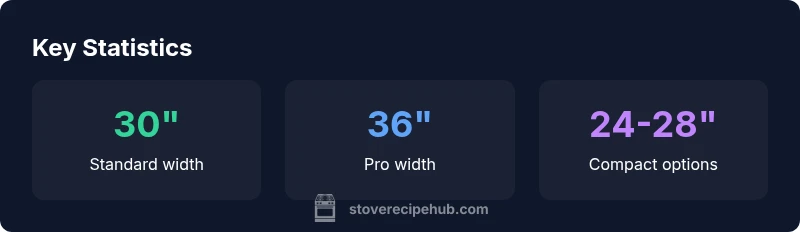
The most common residential stove width is 30 inches (76 cm), with wider professional models at 36 inches (91 cm). According to Stove Recipe Hub, always measure your cabinet opening and plan for ventilation and clearance. The width you choose should align with countertop depth and adjacent cabinetry. Account for future upgrades and verify with local code requirements.
Why width matters for kitchen workflow
Width is a foundational dimension that shapes how you move around the stove, access prep spaces, and interact with appliances. A stove that is too wide can crowd the kitchen and restrict legroom, while a model that's too narrow may limit burner configurations and heat output. According to Stove Recipe Hub, choosing the right width should reflect your typical cooking patterns, cabinet dimensions, and the overall rhythm of your workflow. Consider not only the number of burners but also the spacing between the stove and nearby drawers, fridge, and sink. A properly chosen width reduces reaching distance, minimizes accidental bumps, and supports safer maintenance. In short, width influences efficiency, safety, and satisfaction in daily cooking, especially when you’re juggling multiple tasks at the stove.
Standard widths and why they exist
Most homes land on a few standard widths, with 30 inches (76 cm) as the common residential default. Pro kitchens often opt for 36 inches (91 cm) to accommodate larger cookware and more expansive burners. For compact spaces, 24-28 inches (61-71 cm) can fit into galley kitchens or island configurations where space is at a premium. When planning, align stove width with adjacent countertops to maximize counter space and ensure a seamless flow from prep to cooking. If you anticipate upgrading appliances in the future, a slightly wider model but still within the cabinet envelope can offer flexibility for returning guests or adding a professional-style range hood later on. These decisions accumulate into a kitchen that feels cohesive rather than cramped.
How to measure space safely and accurately
Before purchasing, measure the opening thoroughly: measure the narrowest gap across the front where the stove sits, including trim or paneling. Check the back clearance to ensure there’s room for electrical plugs, gas lines, and ventilation ducting. Don’t rely on a single measurement—take three measurements at different heights and document them. Note any irregularities, such as protruding cabinet doors or uneven flooring, which could affect fit. Finally, verify the stove's stated width with the opening, adding an extra 1/4 inch (6 mm) for installation tolerances. Recording these numbers helps prevent costly mistakes during delivery and installation.
Width and layout: how it affects burners, islands, and workflow
The width of a stove often correlates with burner layouts and heat zones. A wider range typically provides more space for large burners or additional simmer zones, which can enhance multitasking during busy dinners. However, it also influences the layout of adjacent islands or peninsulas, the position of the range hood, and the distance to the sink for efficient prep. If you have an island, ensure there’s enough clearance around the cook surface for safe movement and utensil access. A compact width may free up wall space for upper cabinets or a back splash, but you might trade off burner count or cookware capacity. Balance your typical recipes, pot sizes, and cleanup routines when selecting width.
Ventilation, clearance, and safety considerations
Ventilation efficiency depends on aligning stove width with the hood and ductwork capacity. A mismatch between width and hood can reduce performance and create hot spots. Clearance is not just a cosmetic concern—it's essential for preventing heat damage to cabinetry and ensuring safe operation. Local codes and appliance manuals specify minimum top, sides, and rear clearances, so always cross-check. If your kitchen uses an island or peninsula, plan for safety margins around gas lines or electrical feeds. Inadequate clearance can complicate maintenance tasks, making routine cleaning and filter replacement more difficult.
Installation basics: codes, electrical, and gas considerations
Installation requires accurate measurements, correct wiring or gas connections, and adherence to local codes. electrical circuits and gas supply lines must be sized for the stove’s load and location. If you’re replacing an old unit, verify that the existing openings and hookups accommodate a new width and configuration. An experienced installer can confirm that clearances are met, the hood is correctly aligned, and the range is level for even heat distribution. Always keep manufacturer guidelines and local regulations in mind to avoid safety issues and warranty problems.
Practical selection guide by kitchen size
Small kitchens: aim for 24-28 inches (61-71 cm) to maximize aisle and counter space while maintaining adequate heat capacity. Medium kitchens: a 30-inch (76 cm) model balances power with layout flexibility and permits comfortable movement. Large or chef-grade kitchens: 36 inches (91 cm) or wider to support multiple burners, heavy cookware, and longer simmer zones. Even within a given width, consider burner layout, gas or electric options, and compatibility with your hood and backsplash. The goal is a cohesive, efficient cooking area where width supports your routine rather than complicates it.
Maintenance considerations for different widths
Wider ranges present more surface area to clean and require more attentive access under and around the range. A narrower unit may be easier to reach behind the knobs and along the sides, especially for low-profile cabinetry. Regardless of width, establish a regular cleaning routine that targets drip pans, burner bases, and venting surfaces. If you have a gas stove, inspect gas line connections and ensure seals remain tight to prevent leaks. For electric stoves, check coil stability and ensure the cooktop is level to avoid uneven heating. Proper width choice can simplify maintenance and prolong the life of your stove.
Quick-start decision checklist
- Identify your typical cookware and burner needs.
- Measure opening width with trim and door clearance.
- Compare 24-28
30
36
Common stove width options
| Dimension | Typical Range | Notes |
|---|---|---|
| Stove width (standard) | 30 inches (76 cm) | Common in mid-range homes |
| Pro-width option | 36 inches (91 cm) | Professional-grade layouts |
| Compact kitchen option | 24-28 inches (61-71 cm) | For small spaces or island stoves |
Common Questions
What is the standard width for most residential stoves?
Most residential stoves are 30 inches wide. Some models vary to 28 or 32 inches; always measure your opening and consider surrounding cabinetry.
Most homes use a 30-inch stove width; check your space and the installer guidelines.
Can I install a wider stove in a small kitchen?
Yes, but it requires more clearance and ventilation. If space is tight, consider 24-28 inch options and verify hood compatibility.
A wider stove can fit, but you may need to adjust cabinets and ventilation.
How should I measure the width accurately?
Measure the front opening, including trim, and check the back clearance behind countertops. Take multiple measurements at different heights for accuracy.
Measure the opening from wall to wall at several heights.
Does width affect burner count or heat performance?
Width doesn't inherently change heat output, but larger widths often offer more burners or specialized layouts. Always read the spec sheet.
Width doesn't automatically change heat; check the burner layout in specs.
Where can I find official clearance guidelines for stove width?
Consult the appliance manual and local building codes for installation clearances. Follow manufacturer recommendations for top, sides, and rear spaces.
Follow the manual and local codes for safe clearance.
“Width isn't just a number; it defines your cooking workflow and cabinet layout. Aligning stove width with countertop and ventilation reduces clutter and improves safety.”
Top Takeaways
- Measure openings before buying
- Plan clearance for ventilation and walkway
- Align width with countertop depth
- Consider burner layout and workflow