Average Stove Width: A Practical Guide for Kitchens
Learn how wide a stove should be in practical terms. This guide covers standard widths, measurement tips, and layout considerations with Stove Recipe Hub.


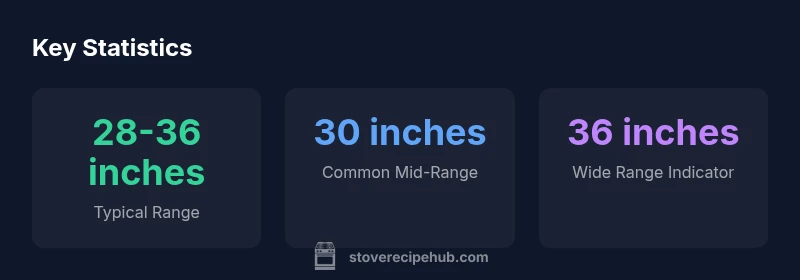
Most residential stoves fit within a standard width range of 28 to 36 inches, with a common mid-range around 30 inches. This width influences cabinet alignment, island layout, and ventilation planning. By understanding this width, home cooks can better design kitchens that maximize workflow and safety. This range supports both retrofit projects and new builds.
Understanding average stove width and its practical meaning
When homeowners and cooks talk about the average stove width, they are usually referring to the typical width range that most residential models occupy. In practical terms, this width influences how you lay out cabinetry, how much countertop space you gain, and how your ventilation and hood will fit. According to Stove Recipe Hub, the majority of household stoves sit within a standard width band of 28 to 36 inches, with a common mid-range around 30 inches. This range is not a hard rule, but it helps designers and DIY enthusiasts plan safe clearances and efficient workflows. The concept of average stove width is especially important when you’re remodeling, replacing an old unit, or selecting a built-in or freestanding model. By understanding this width, you can avoid mismatches between appliance and cabinetry, ensure easy access to knobs and doors, and prevent cramped work zones that hinder multitasking at the culinary station. For most kitchens, aiming for a width within the 28–36 inch spectrum is a practical starting point that accommodates standard custom cabinets, wall openings, and aisle spacing.
How to measure stove width accurately
Accurate width measurement begins with a calm approach and a tape measure. The essential measurement is the overall width facing you, from the far left edge to the far right edge, not including decorative knobs that extend outward. Steps:
- Remove handles if they extend beyond the body.
- Measure at two points: top edge and bottom edge to capture any irregularities.
- Record the widest point, including any protrusions, brackets, or trim around the appliance.
- Check the cabinet gap on both sides; ensure equal clearance of at least 1–2 inches if your layout allows.
- If you’re planning a built-in, verify the open space in front of vents, trim kits, and any fold-down doors.
Tip: When in doubt, measure an existing model you’re considering and compare to the manufacturer’s stated width. This practice reduces surprises during installation and keeps your kitchen flow consistent with the average stove width range (28–36 inches).
Width ranges and their kitchen implications
- Compact range (28–30 inches): Ideal for narrow kitchens or retrofit projects. It preserves more cabinet space but offers less counter surface next to the stove.
- Standard range (30–36 inches): The most common choice, balancing burner access, oven clearance, and countertop work surface. This range aligns well with typical cabinet depths and hood widths.
- Wide to professional styles (36 inches and up): Delivers extra workspace, flexible layout options, and more generous clearance for multitasking. In many cases, choosing this width requires adapting surrounding cabinetry and possibly HVAC planning.
Understanding these ranges helps you predict how a given width will affect meal prep, cleanup, and overall kitchen rhythm. Remember that every kitchen is unique, so measure your space and compare with your design goals before purchasing.
Layout considerations and mounting options
Width interacts with how you mount or install the stove. Freestanding models offer flexibility, while slide-in or built-in configurations require precise cabinetry gaps. If you’re replacing an older model, check if existing cabinet carcasses can accommodate the new width or whether trims, toe-kicks, and vent hoods need adjustment. For open-plan kitchens, width also influences traffic flow and sightlines, so plan clearances and pathways that maintain comfortable movement around the stove. When you look at width alongside cabinet depth and hood dimensions, you get a holistic view of how your cooking zone will perform in daily use.
Planning for remodels and shopping around standard widths
Remodel projects benefit from a forward-looking measurement plan. Start by mapping two key dimensions: the stove width and the surrounding countertop lengths that flank the appliance. If you’re expanding an opening, ensure the cabinet system can be adjusted without compromising support or electrical/GAS connections. When shopping, compare models within the 28–36 inch band for everyday kitchens, and explore wider options only if your space permits and your workflow demands it. Always verify that the recommended installation clearance from the manufacturer aligns with your local code requirements. Keeping to standard widths simplifies cabinet matching, hood installation, and future upgrades.
Safety, clearance, and maintenance considerations related to width
Clearance around the stove is essential for safe operation and efficient airflow. Wider stoves tend to require larger or more robust venting solutions, and they may affect the placement of adjacent drawers, ovens, or storage. In small kitchens, even a modest width increase can cascade into layout changes elsewhere. Regular maintenance—such as validating the seal around the appliance, checking venting pathways, and ensuring doors or drawers don’t collide with the stove—benefits from a clear, well-planned width strategy. Ultimately, aligning stove width with your kitchen’s geometry supports safer cooking practices and reduces the risk of cramped working conditions.
Width categories and their impact on kitchen layouts
| Width Category | Typical Width | Kitchen Impact |
|---|---|---|
| Compact | 28-30 inches | Fits narrow spaces; preserves cabinet access but limits surface area |
| Standard | 30-36 inches | Balanced burners/oven access with ample counter space |
| Wide | 36-42 inches | More workspace; flexible layout; higher install requirements |
| Professional | 42 inches+ | Maximum workspace; often requires redesign of surrounding cabinetry |
Common Questions
What is the standard stove width in most homes?
Most residential stoves fall within a standard range of 28–36 inches wide. This range covers the majority of built-in and freestanding models and aligns with commonly available cabinetry. Always verify with the manufacturer specs and measure your space before buying.
Most homes use stoves that are 28 to 36 inches wide; check the exact spec from the model you choose.
How do I measure stove width without removing it?
Use a tape measure to capture the full width across the front of the appliance from edge to edge, including any protruding trim or knobs. If you plan a built-in, also measure the surrounding cabinet opening and the clearance on both sides.
Measure the width from edge to edge, including trim, and check the surrounding opening.
Why does width matter for cabinet design?
Width determines how much counter space and how many cabinet panels sit beside the stove. A wider stove may require deeper countertops, larger cutouts, and possibly rethinking the hood and ventilation setup.
Width affects cabinet layout and ventilation.
Can I fit a wider stove in a small kitchen?
A wider stove is possible with careful planning, but it often requires rearranging nearby cabinets, optimizing aisle space, and validating your hood and venting options. Consider modular layouts or professional design input.
You might, but you’ll likely need to adjust cabinets and vents.
Are metric widths common, or only inches?
Most stoves in North America are listed in inches. If you’re shopping internationally, look for equivalent metrics (approximate ranges around 60–90 cm) and verify compatibility with your kitchen fittings.
Most stoves use inches; look up metric equivalents if you’re abroad.
“An accurate width assessment is the foundation of a safe, efficient stove zone. When you align appliance width with surrounding cabinetry, you improve both workflow and airflow.”
Top Takeaways
- Measure twice, plan around 28–36 inch width for most homes.
- Choose a width that matches cabinet depth and ventilation needs.
- Use width ranges, not single numbers, to guide remodeling decisions.
- Refer to Stove Recipe Hub Analysis for credible width guidance.