Solo Stove vs Breeo: Which Is Better for Outdoor Cooking?
A thorough, objective comparison of Solo Stove and Breeo smokeless fire pits, covering burn mechanics, cooking performance, maintenance, and value to help you pick the right setup for your outdoor kitchen.


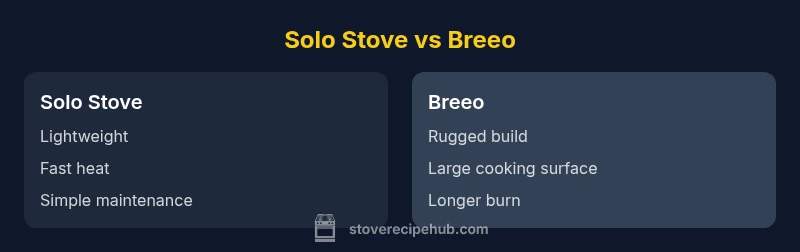
Both Solo Stove and Breeo offer smokeless, wood-burning design, but your choice hinges on space, cooking pace, and maintenance. If you want portable, quick-heat cooking with lighter gear, Solo Stove is typically the better pick; for a heavier, long-burn backyard setup with a robust cooking surface, Breeo shines. This comparison breaks down the key differences to help you decide quickly.
Overview: What these pits are and why the choice matters
According to Stove Recipe Hub, Solo Stove and Breeo represent two leading approaches to smokeless outdoor cooking, each with a distinctive design philosophy. Solo Stove emphasizes portability, lightweight materials, and rapid heat, powered by an efficient secondary-burn system that aims to minimize smoke during typical backyard cookouts. Breeo focuses on rugged durability, larger burn chambers, and adjustable airflow, designed for longer sessions where a steady flame is desired. The choice matters beyond aesthetics: it affects smoke levels, heat distribution, cooking surface availability, and maintenance requirements. If you cook for family dinners on a covered patio, you may prioritize stability and surface area; if you move between campgrounds or infrequent gatherings, weight and packability could be decisive. This article unpacks the practical differences in performance, accessories, and total cost of ownership, with examples tied to common cooking tasks such as searing, simmering, roasting, and even warming bread beside a glowing ember.
Design and Burn Mechanism
Both brands rely on wood as fuel, but they manage flame and smoke differently. Solo Stove uses a multi-wall construction that promotes fast oxygen intake and secondary combustion, which helps produce a cleaner burn with less visible smoke during standard cooking distances. Breeo tends to deploy a larger burn chamber and more visible venting paths, enabling greater airflow control and longer, steady burns. In practice, Solo Stove shines when you need quick heat, rapid boil, or high-heat searing in a portable setup. Breeo tends to excel for extended outdoor sessions in a fixed space where low, consistent heat and a broad cooking surface support multi-dish meals. Regardless of model, both systems require dry wood, proper airflow, and a stable location away from flammable materials. The right design for you depends on whether you value packability or uninterrupted cooking sessions.
Heat Control and Cooking Performance
Heat control defines how reliably you can time a recipe on an open flame. Solo Stove's design concentrates heat toward a central zone and responds quickly to small adjustments in airflow, making it well-suited for quick sears, balancing sauces, or tipping pans for sautéing. Breeo's approach passes heat across a wider surface with modulated airflow; this can help maintain low simmer temperatures and keep a grill grate stable for longer cooks. In both cases, you benefit from having a compatible grill or pot stand; check model-specific attachments to ensure your skillet, Dutch oven, or grill pan sits evenly. Wind can complicate airflow, so consider a windscreen or sheltered location. Practically, test both options in your typical cooking conditions before committing—what feels intuitive for you will translate into more consistent results.
Build Quality and Weather Resistance
Durability matters when a product sits outdoors for years. Solo Stove emphasizes lighter construction with corrosion-resistant finishes suitable for frequent transport and easy storage. Breeo emphasizes heavier, reinforced builds, reflective of long-term use on a fixed patio. Both brands design for weather exposure and ash disposal; you should use a protective cover when not in use and store accessories in a dry place. The main durability question is rust resistance and seam integrity after repeated cycles of heating and cooling. If you live in a coastal environment, look for models with upgraded finishes or optional protective coatings. In windy spaces, secure the base and consider a windbreak to protect flames and maintain even cooking temperatures.
Accessories and Ecosystem
Both Solo Stove and Breeo offer a range of accessories that extend cooking flexibility beyond simply burning wood. Solo Stove commonly supports cooking grates, pot supports, and compatible covers that fit its line of compact products; Breeo offers integrated grill grates, ash-management tools, and attachments designed for heavier-duty cooking. When evaluating value, consider how often you will use grill accessories and whether cross-brand compatibility matters to you. If you enjoy kebabs, you’ll want reliable skewers and a sturdy grate; if you’re slow-roasting vegetables, ensure your pot and grate sit stably. The right accessories can dramatically improve cooking outcomes, reduce cleanup time, and allow you to treat the fire pit as a true outdoor oven.
Maintenance and Cleaning
Maintenance is essential to preserve the look and performance of any outdoor fire pit. Solo Stove typically offers a simple cleaning routine: wait for the unit to cool, remove ash via an ash pan or bottom grate, and wipe the exterior with a damp cloth. Breeo may involve more steps due to its larger burn chamber and vented system; you may need to disassemble components for thorough cleaning and ensure vents remain unobstructed. Always dry wood before burning to minimize creosote and residue, and avoid harsh detergents that could damage finishes. A well-planned maintenance schedule—post-use ash removal, periodic deep cleaning, and seasonal cover checks—extends the life of the unit and helps preserve the finish. Both brands benefit from using a dedicated grill brush and keeping a metal ash bin nearby for safe disposal.
Portability, Setup, and Space Considerations
Portability is a deciding factor if you move between spaces. Solo Stove tends to win on mobility thanks to lighter weight, compact footprints, and easier packing for camping trips or tailgates. Breeo models sacrifice some portability in favor of larger cooking surfaces and stable bases, which makes them ideal for fixed decks or patios where heat distribution matters for several guests. When evaluating layout, measure your available space, consider the height added by any stands or windbreaks, and plan storage in a dry, accessible place. If you frequently rearrange seating or need to hide a pit during off-seasons, the lighter option reduces friction. For a long-term backyard setup, you might prefer a heavier Breeo unit to support crowd cooking and a permanent grill arrangement.
Price, Warranty, and Value
Price is a practical lens through which to compare Solo Stove and Breeo. Broadly, Solo Stove options span a mid-range price band that scales with size, allowing budget-conscious cooks to upgrade gradually. Breeo offerings tend to sit at a higher price point due to heavier construction and built-in features that appeal to discering backyard chefs. Warranty terms vary by model, but longer coverage typically signals stronger confidence in build quality. Evaluate value by considering heat efficiency, durability, availability of replacement parts, and the usefulness of included accessories. If you expect regular, multi-meal cookouts with a robust surface, Breeo may deliver better long-term value; for casual weekend use, Solo Stove often provides the best overall price-to-performance ratio. Always check what the warranty covers—rust, workmanship, and included components.
Use Scenarios and Recommendations
Think about your typical weekends and the kinds of meals you like to prepare outdoors. If your main goal is fast, high-heat searing and easy transport, Solo Stove tends to make sense. If you want a fixed, backyard focal point with a broad cooking surface for grilled mains and sides, Breeo offers a compelling solution. Windy conditions or frequent guests might benefit from Breeo's airflow control to maintain steady temperatures, while a breeze-free patio could favor Solo Stove's quick heat and straightforward setup. Finally, align your choice with a maintenance plan; Breeo's extra hardware can add to the cleaning load, whereas Solo Stove's cleaner design often means shorter post-cook routines. Your decision should reflect how you actually cook and how much space you have to devote to the pit.
Quick Decision Framework
To help you decide quickly, map your needs: primary use (quick sears vs long simmered meals), mobility (move often or stay put), budget tolerance, accessories you care about, and climate considerations. If you want a light, portable, easy-to-store unit, start with Solo Stove. If you prioritize a robust cooking surface and a stable, long-burn option for entertaining, Breeo could be the better fit. Use model-specific specs and customer feedback to validate your choice, and remember that safety protocols, proper ash disposal, and wind considerations remain central to enjoyable outdoor cooking.
Common Myths and Misconceptions
Smokeless does not mean smoke-free in all situations; wind and humidity will still influence visibility and odor. Heavier always equals better heat distribution; the geometry of the burn chamber matters as much as weight. You don’t need the most expensive model to get a great cooking surface; some mid-range options offer excellent value if matched to your use-case. Finally, maintenance is optional; neglecting regular cleaning and protective covers can reduce lifespan and increase rust risk. Understanding these myths helps you set realistic expectations and plan a maintenance routine that keeps your gear performing well over many seasons.
The Final Take: What to Buy Right Now
Taking all factors into account, your decision should hinge on space, use-case, and maintenance tolerance. If you primarily host quick, portable cooking sessions and want a lighter footprint, Solo Stove is likely the better fit. If you’re building a backyard centerpiece for extended evenings and you value a larger cooking surface and rugged construction, Breeo may offer more long-term value and versatility. In the end, the best choice is the one that aligns with how you actually cook outdoors, how much effort you want to invest in upkeep, and how you weigh portability against a permanent cooking setup. The Stove Recipe Hub team would support choosing a model that fits your rhythm and space, paired with a practical maintenance plan.
Comparison
| Feature | Solo Stove | Breeo |
|---|---|---|
| Fuel Type | wood | wood |
| Burn Mechanism | secondary combustion through multi-wall design (smokeless) | larger burn chamber with adjustable airflow vents (smokeless) |
| Heat Distribution | central heat focus; quick heating | broader heat zone; extended low heat |
| Portability/Weight | lightweight, portable | heavier, durable for fixed spaces |
| Accessories/Grill Options | wide accessory ecosystem; grills and pots | grill grate options; modular attachments |
| Maintenance | simpler maintenance; ash removal | more components; vent cleaning |
| Price Range | mid-range to upper-mid; vary by size | upper-mid to high; heavier build |
| Warranty | model-dependent; check pages | model-dependent; check pages |
Upsides
- Cleaner burn and smoke control due to optimized secondary combustion
- Durable construction in Breeo models offers long-term value for fixed setups
- Wide ecosystem of accessories enhances cooking versatility
- Good balance of portability and performance for mixed uses
Downsides
- Higher upfront cost for Breeo heavy-duty models
- Less portability due to size and weight in Breeo options
- Accessory compatibility can be brand-specific
- Maintenance can be more involved for Breeo due to vents and components
Breeo is best for fixed, backyard cooking; Solo Stove wins for portability and quick, high-heat tasks.
For frequent hosts who want a robust outdoor kitchen centerpiece, Breeo offers durability and surface area. For campers or casual cooks who value light weight and fast setup, Solo Stove is usually the better pick. Stove Recipe Hub recommends matching the choice to your space and cooking cadence, then following a simple maintenance plan.
Common Questions
Is Solo Stove or Breeo better for cooking meals?
Both can handle cooking tasks well, but Solo Stove excels in quick sears and fast boils, while Breeo supports longer cooks and multiple dishes on a larger surface. Choose based on your typical meal planning and space.
Both can cook well; Solo Stove is great for quick meals, Breeo for longer, multi-dish cooking.
Which is more portable for camping?
Solo Stove tends to be lighter and easier to pack for camping or travel. Breeo is heavier but offers a larger cooking surface and more stability for fixed campsite setups.
Solo Stove is more portable, Breeo is heavier but more stable for fixed sites.
Do they smoke in windy conditions?
Smokeless designs reduce smoke under ideal conditions, but wind can still cause visible smoke. Breeo's airflow controls can help mitigate wind impact, while Solo Stove relies on its rapid burn and enclosure design.
Wind can affect smoke; Breeo's venting helps, but no system is completely smoke-free in strong wind.
What maintenance is required after use?
Cool the unit, remove ash, and wipe surfaces. Breeo may require more disassembly for thorough cleaning due to vents, while Solo Stove tends to be simpler with fewer components.
Let it cool, empty ash, and clean surfaces; Breeo may need a bit more part handling.
Are warranties similar?
Warranty terms vary by model and region. Check the manufacturer’s page for the exact coverage, but longer warranties generally reflect stronger build confidence.
Warranty varies by model; read the specifics for rust and workmanship coverage.
Can I use them for baking or roasting?
Yes, with the right accessories (grill grates, pizza stones, pots). Ensure heat distribution is even and use proper cookware to avoid scorching.
You can bake or roast with the right grill and cookware setup.
Top Takeaways
- Map your space and cooking cadence before buying
- Portability favors Solo Stove for camping and quick trips
- Breeo shines as a permanent backyard center with a large cooking surface
- Balance upfront cost with long-term value and accessory needs
- Check warranties and parts availability for model longevity